By Meleti Meletopoulos
Could be perceived as graphic the Statements the former Secretary General of the Turkish Ministry of Defence Umit Yalim, in the journal «Sözcü Gazetesi», requesting the «return» of Antikythera to Turkish sovereignty. And that is certainly how the supporters of appeasement and all-out dialogue here will present them.
But it is obvious that there is absolutely no graphicness in these statements. Ο Yalim is not a random person and what he says is fully in line with the strategic planning of the Turkish politico-military establishment. Statements such as these foreshadow the official emergence of new claims, which at first seem unfounded and absurd, but then are encapsulated in Ankara's official rhetoric.
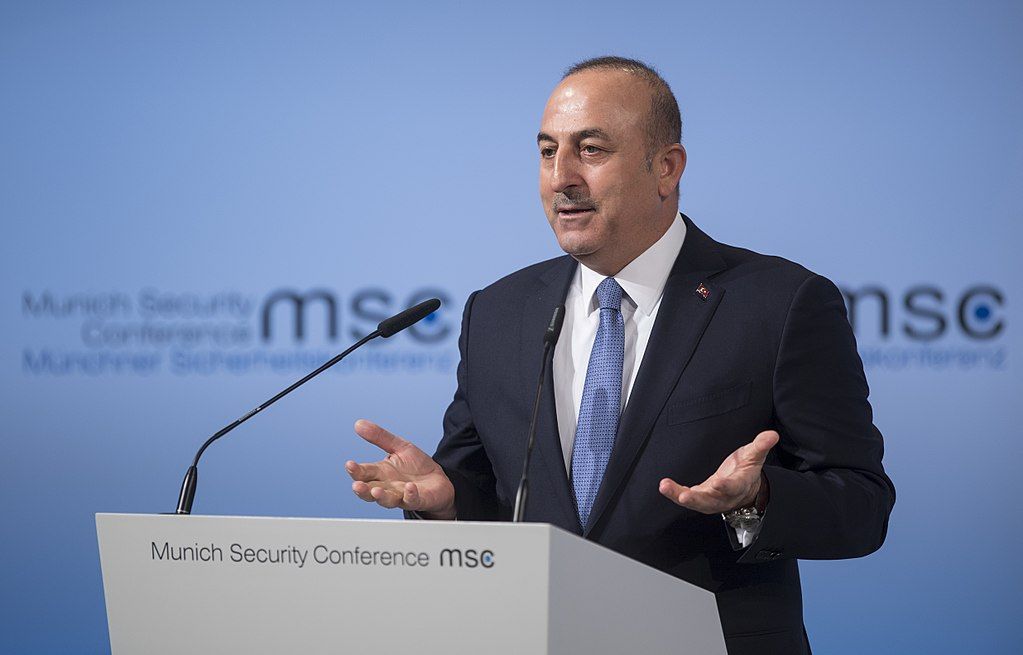
Yalim was not confined to Antikythera. He also raised the issue of Crete. A few days ago, the Turkish Foreign Minister Tsavousoglou, raised issue of sovereignty over 152 islands and islets throughout the Archipelago. Among them Fournoi, Oinousses and Gavdos. More generally, Turkey is putting forward an overall challenge to the status of the Greek islands, from the Ionian Sea to Kastellorizo and from the North Aegean to the Cretan Sea.
This projection is broadcast by official, semi-official and unofficial transmitters and aims: a. to create impressions and an image of sovereign ambiguity in the Aegean Sea with the global community as the recipient; b. to introduce more and more new issues in the supposed all-encompassing Greek-Turkish dialogue, so that the logic of Hoxha with the ox in the house can work; c. to fan the Turkish public opinion in the direction of the imaginary reconstruction of the Ottoman Empire at the expense of Greek sovereignty; d. to keep Greece in a constant defensive posture, causing feelings of fatigue and exhaustion.
So this is not some kind of graphic maximalism but organised strategic planning. The Greek side, however, does not seem to have understood the scope of Turkish revisionism. This is not an attempt to settle some technical border issues or even to extend the Turkish maritime zones, but rather to an attempt to bring the Aegean under Turkish control. The Aegean Sea not only as a sea, continental shelf, EEZ, etc., but as a set of islands, islets and seas.
Support from allies is currently uncertain. The US, especially the Pentagon and the State Department, have a deeper understanding of the geostrategic importance of the issue and the imminent imposition of sanctions on Turkey reflects the determination of US policy. There the problem is the transitional liquidity at the highest level.
Instead the European Union is vertical, blind, phobic and locked into the timeless pro-Turkism of German politics and bilateral economic interests. It does not understand, because of its self-enclosedness in the stereotypes of political correctness, that the neo-Ottoman horizon is not limited to the Adriatic. It is also unable to finally formulate a unified European strategy, perhaps precisely because its only substantial and immediate stake is European defence against Turkish expansionism through Greece towards the West.