After speaking with several business owners on Kythira who work in the tourism industry, we concluded that the tourist season on the island begins around July 15–20 and ends in late August.
The tourism professionals we spoke with, who provided us with the relevant details, represented hotels and lodging establishments with (negotiable) room rates ranging from 80 to 140 euros. Judging by the photos of the rooms, the prices they’re asking for the full season are quite realistic, with the caveat that Greeks’ disposable income for vacations has now dropped.
The first person we spoke with works at a business located in Agia Pelagia. He told us that June fell well short of their expectations, July has an occupancy rate of around 50% with noticeable gaps, and this is thanks to their decision to target groups that have significantly reduced their availability. August, so far, has an occupancy rate of around 90%.
The very kind gentleman we spoke with told us that his business—and, to a certain extent, the island itself— are kept alive by the Greeks of Australia who left after World War II, and now by second- and third-generation Australians, their children and grandchildren, are returning to discover their ancestral homeland. They are investing in the island and rebuilding the houses and the magnificent dry-stone walls that had fallen into disrepair during their absence. The next group making its presence felt is French citizens, who visit the island either with their families or in groups. They are followed by the British and the Dutch. The Greek presence—according to the interviewee—at this particular business has declined significantly, more so than in any other year, due to competition from Airbnb-style accommodations that offer lower prices and the general lack of disposable income that prevails.
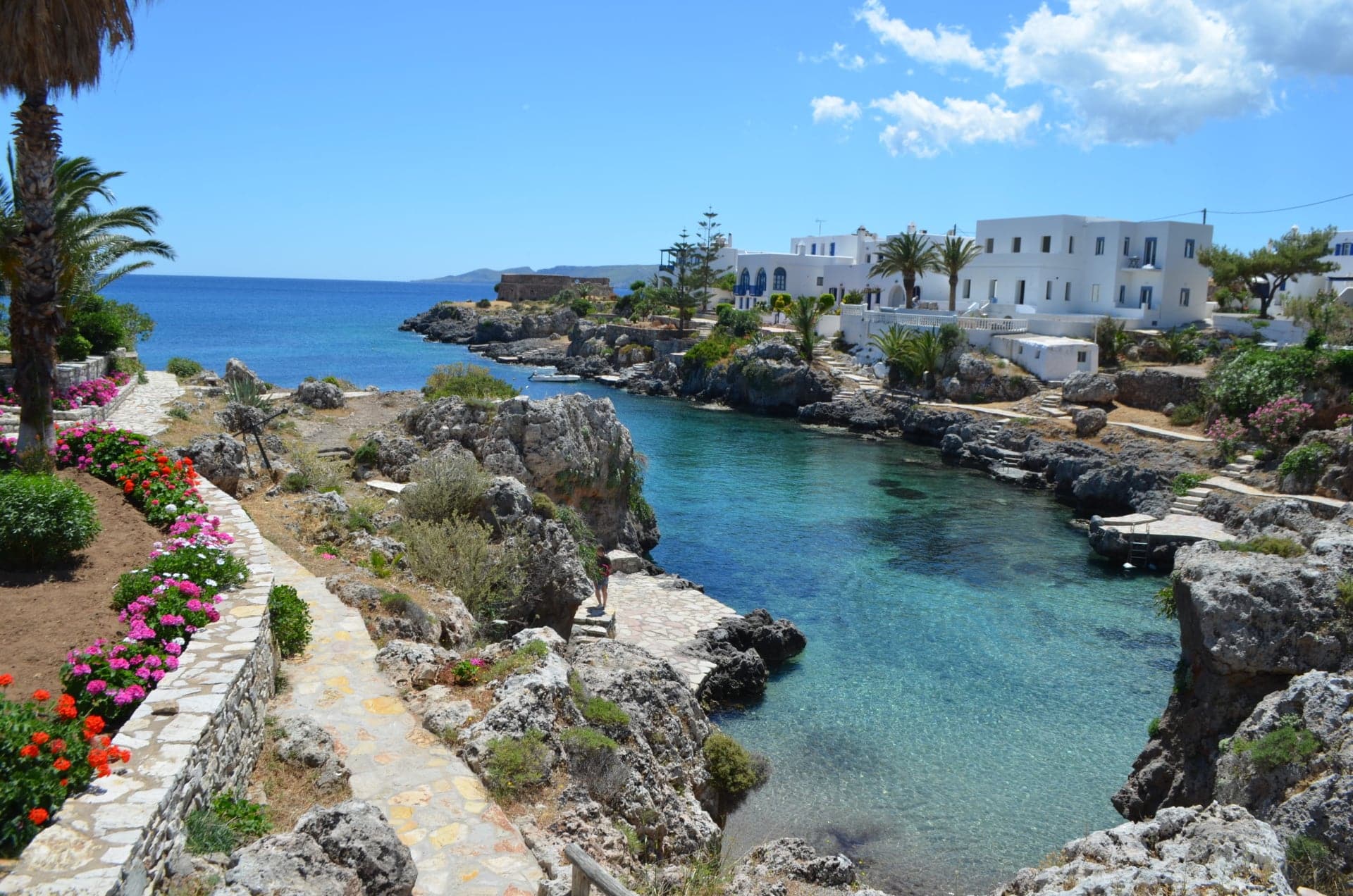
When we spoke with a business in the Avlemonas area, the picture was a little different. There, the majority of tourists were Greek and Italian, while occupancy for August stands at 80–90%. According to the woman we spoke with, June didn’t go well, July is performing moderately, on par with last year’s season, while August is trending very positively toward full occupancy. Of course, this particular business’s admission prices were very affordable.
In Mitata, our employee reported that the season got off to a very late start and that occupancy rates of around 95% were only seen in August. Notably, aside from June—when no hotelier mentioned occupancy rates higher than 50%—he told us that July is a «dead month» for the business. Once again, it was noted that «the Australians saved the day,» as they have the disposable income to feel comfortable with room rates.
Of course, in our case we’re talking about Australians and not Australians of Greek descent, which means either that the island has been exceptionally well-promoted by the Tsirigotes diaspora in that country or that Kythira’s tourism offering is a «perfect fit» for Australians. Turquoise waters, the absence of predators in the water (there are no species of sharks in Greece known to attack humans), and, in general, clean seas teeming with fish to observe, create a very attractive product for citizens of island nations. It should be noted that the presence of dozens of tankers anchored off the coast of Laconia does, to some extent, create fears, especially among businesses in the northwestern part of the island.
In Mylopotamos, a lovely village in the center of the island, business is particularly slow. Notably, there have been only two reservations so far, with July considered half-full and August at an occupancy rate of 75%. The majority of the clientele consisted (here as well) of Greeks living abroad. We received a complaint—which to some extent may pertain to municipal fees—stating that, even though the business was closed and had zero energy consumption aside from a small LED strip, the business’s electricity bill for the months of November through April amounted to €3,000. This is an exorbitant amount for a closed business and, in any case, something that should be investigated in general, as it is the cause of increased room rates. The business must be able to cover these expenses, and tourism entrepreneurs should not feel as though they are working just to make ends meet.
The situation is a little better for rental rooms, but most report occupancy rates of around 40% in June, about 60–70% in July, and are counting on August to turn a small profit. Of course, most business owners of rental rooms do not rely exclusively on this income; it usually serves as a supplement to their livelihood. Most owners of rental rooms who had to purchase equipment and cleaning supplies reported price increases of up to 30% for large commercial-sized packages, which drives up the costs for these typically small family-run businesses.
Two of the major restaurants we spoke with reported a decline in foot traffic—a finding that corroborates the hoteliers’ observations—as well as a drop in average check sizes compared to last year. To some extent, they assume that many of the visitors, especially Greeks, are cooking or eating something quick, having cut back on their restaurant visits.
Of course, in Chora, Kythira, when we contacted a restaurant, they confirmed that business had been slow in June—speculating, like others we spoke with, that it was due to the elections—but based on the order tracking system (and those don’t lie), they noted a slight decrease in the range of 5%–8%. It should be noted that Kythira is experiencing increased activity and is being visited regardless of the base, yet it paints a less bleak picture of the island than the one described to us by the other professionals.
Both in the rental market and in restaurants, there is confirmation of the increase in Australian visitors mentioned by hoteliers, who, along with the French, make up the majority of international visitors and believe that the easing of COVID-19 restrictions has led to an increase in bookings from the land of the kangaroos.
The last few years have been particularly difficult for Kythira, and several of our business owners have complained about the competitive advantage enjoyed by Airbnb, which they claim amounts to tax evasion and unfair competition.
While some of the owners with strong ties to the business community on Kythira spoke of many businesses slipping out of local hands, due to low tourist traffic and ending up in the hands of foreign conglomerates. This has been confirmed by at least four people and simultaneously represents a drain of profits and foreign exchange abroad. Perhaps for islands that cannot rely on tourism year-round—such as Athens—measures should be taken, or more islands should be included in social tourism programs.
Especially when we’re talking about islands like Kythira, with their unique character and wonderful people, it’s a shame to see that this season could be the last for some professionals in the industry, and government support is needed.
In closing, we’d like to thank all the professionals, owners, and employees who shared their time and insights with us, and we wish them, from the bottom of our hearts, the best for the rest of the season!