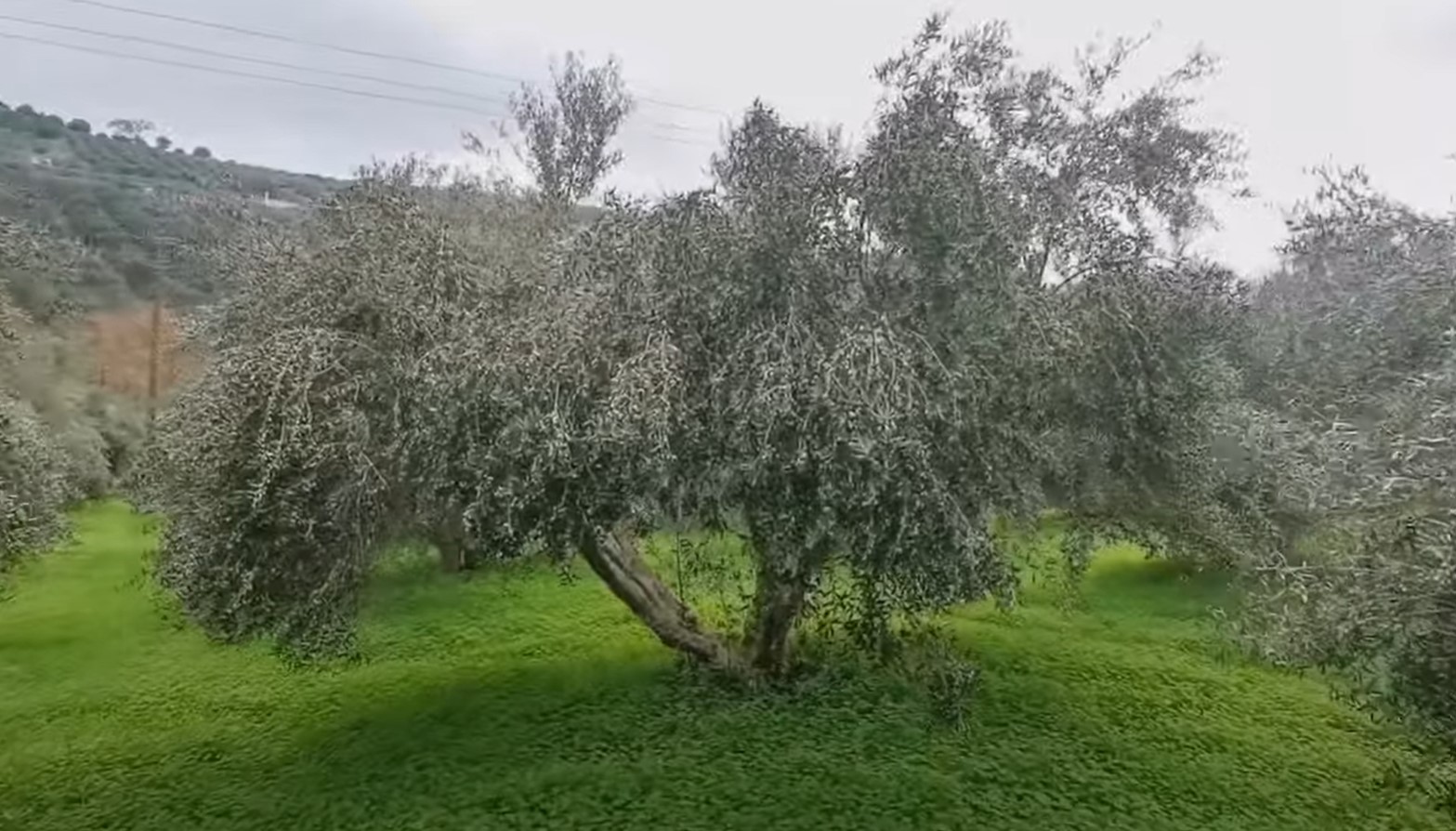
Agricultural warnings for fungal and bacterial infestations, which can cause a significant reduction in fruit set in the olive tree, are addressed by the agronomists of the Regional Centre for Plant Protection, Quality and Phytosanitary Control of Ioannina to olive growers.
Cycloconium
It mainly attacks leaves, forming characteristic circular brownish-yellow spots on their upper surface. The spotted leaves turn yellow and fall prematurely. In areas with a humid climate, the infestation can often lead to total defoliation, and if this occurs in successive years it can lead to total defoliation of the olive trees.
The onset of infections requires relatively low temperatures (10-20°C) and rain or extremely high humidity to keep the leaves wet for at least 24 hours.
A spray is necessary when the new growth is 5 cm long or the young leaves are 2 cm long. In case of a period of heavy rainfall a second spray is required.
Recommended fungicides:
Bordeaux slurry, Copper oxychloride, Copper hydroxide, Copper hydroxide, Copper sulphate tribasic, Potassium phosphonite, Trifloxystrobin, Cresoxymethyl, Cresoxymethyl + Difenoconazole, Pyraclostrobin, Tebuconazole, Tebuconazole + Trifloxystrobin, Difenoconazole, Difenoconazole + Azoxystrobin, Dodin (various formulations), etc.α.
Cultivation measures:
Appropriate pruning especially in the densest olive trees located in lowland and irrigated areas with high humidity, in order to thin the foliage and improve the ventilation and lighting conditions inside the crown of the olive trees, can significantly reduce infestations.
Cancer
The disease is caused by a bacterium that infects affected trees starting from wounds caused by pruning, pruning, frost, hail, hail, strong wind and is particularly favoured by rainy weather. The most characteristic symptom is the formation of tumours on the shoots and branches.
It is recommended to prune in dry weather, remove, remove and burn affected shoots that are dangerous sources of infection. Pruning tools should be regularly disinfected, large clumps should be removed with a knife and the wound should be dressed with a borage paste. After pruning, spray with a copper fungicide.
Kalokori
It is an insect (stink bug) that causes only locally significant damage to olive flowers and results in reduced fruit set. The susceptible vegetative stages are from flower bud development to yolking - beginning of flowering. It is recommended to control mainly on low flowering trees with one of the two following approved active substances, before flowering, if at least 6 - 7 insects per 50-60 cm long branch are observed.
Recommended insecticides:
- Fatty acid potassium salts of fatty acids
- Lambda Syalothrin
- In addition, it is recommended not to destroy the native weeds of olive groves until the beginning of the flowering of olive trees, in order to delay the movement of the insect from the weeds to the olive trees and thus reduce infestations.
Soot
In nurseries that were infested last year by coccoid insects and have developed sooty mould (black rot), carry out appropriate pruning to thin the crown and spray with the copper medicines mentioned earlier for cycloconium.
Nucleotide
The larvae of the folivorous generation of the insect can cause minor damage to the tender vegetation of olive trees but without reducing the expected production. It is therefore not recommended to use insecticides at this time of year.