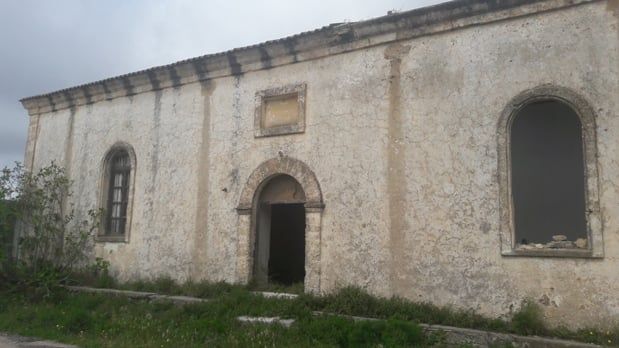
Ο Municipality of Kythira approved the expenditure for the «repair and change of use of an old School of the Anglo-Saxon School (ASTIKON) in a hall of cultural events in the River Kythira», having an appropriation of EUR 325 200.
This is a project of great importance, not only for the wider area of Potamos, but for the island of Kythira, since the «Urban School» is a historical landmark of our island, interwoven with a long history and tradition.
Since 2015, the Municipal Authority completed the studies for both the building and the surrounding area, fully matured the project and managed in 2019 to include it in the LEADER programme, through the Network of Municipalities of the Attica Islands in which the Chairman of the Board is Mayor of Kythira.
The thorough renovation and promotion of the historic building, the landscaping and planting of the surrounding area as well as the supply of the necessary items for the transformation of the area into a cultural centre are planned.
The English School of Potamos «Urban» - Historical review
The educational policy of the period of the British rule in the Kythera, is remarkable. The English built several schools and forced the Cypriots to send the boys to school. In order to accomplish this, they relieved the parents of the male pupils from compulsory drudgery in public works. The need for the construction of schools was increased by the migration to Kythera of inhabitants of the neighbouring Peloponnese during the Greek Revolution., as the British administration of the island ensured more peace and stability than in rebellious Greece. Thus, the population increased and so did the need for learning.
The English School of Potamos has been operating since 1824. In 1825 there were 87 local students and 3 foreigners. It operates 6 days a week, morning and afternoon. In 1827 there are 181 students enrolled with Gregorios Petridis as teacher. The School operated on the mutual teaching system and attendance was compulsory. Of the 181 students, 54 are transported by animal. These should come from the farthest distances, such as Logothetianika, Karava, Kusunari, Trifyllianika, etc. The prefect of each village was obliged to fill in lists with the names of the boys of his village from an age and above. From one such list of 1830, we see that Trifyllianika had 18 children aged 9 years and over. Based on these lists, the authorities knew whether the parents were complying with the compulsory schooling of their children. The age of the students in the River according to the lists is 7 to 29 years old. The Potamos All-school School operated like the other all-school schools on the island until the beginning of the 20th century, when a Boys« Primary School and a Girls» Primary School were established in Potamos. Its building then housed the Greek School of Potamos (Scholarchio) and then (in 1937) the semi-gymnasium or "Quadraxion Urban School", which was later abolished and merged with the Kythera Gymnasium.
Below is the relevant decision, as published in “Diavgeia”.