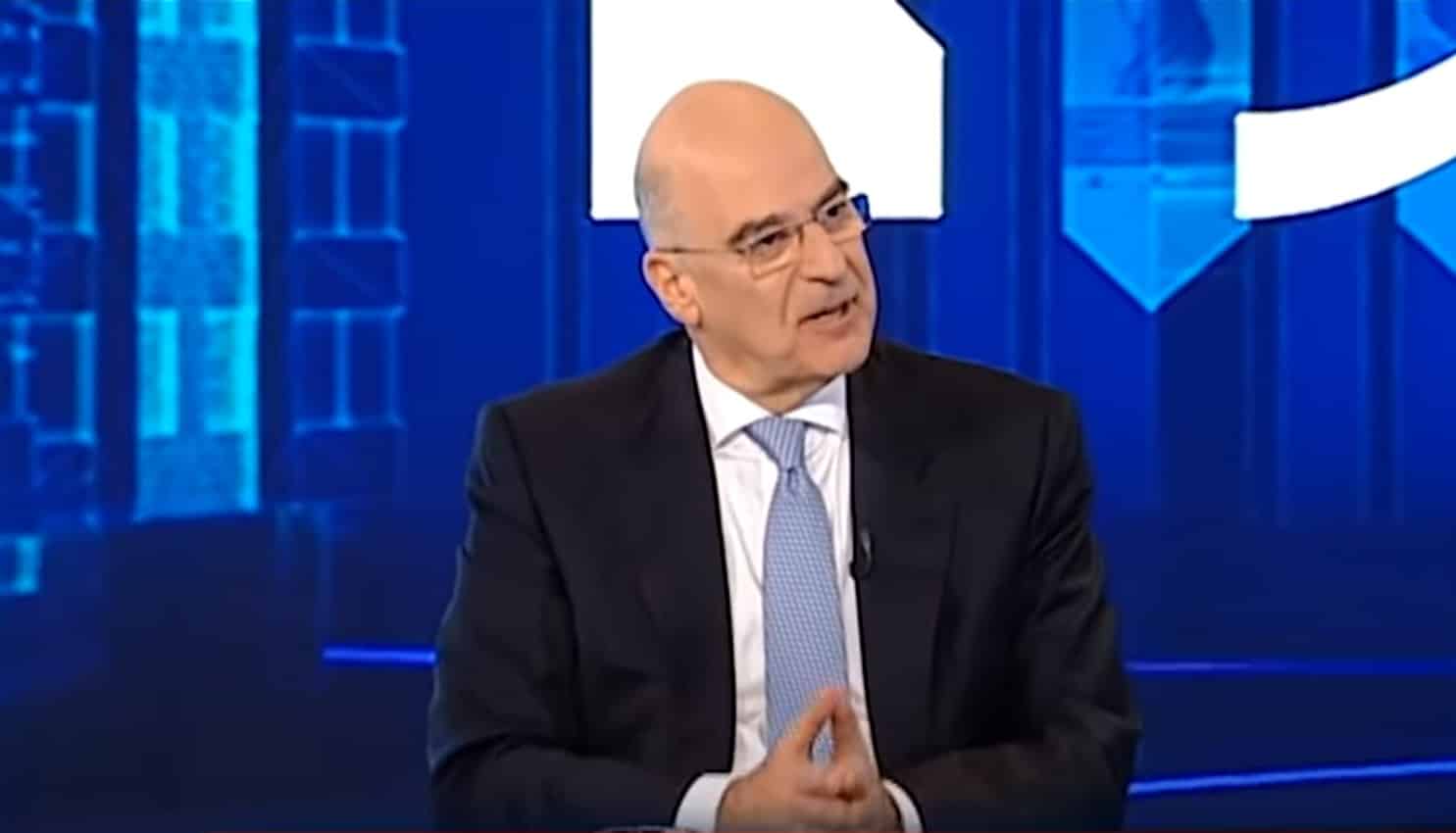
Greece is one of the first countries to sign such a wide-ranging framework agreement with the UK after its withdrawal from the EU. This is how a senior diplomatic source commented, among other things, on the agreement signed on Monday by the Greek Foreign Minister, Mr. Nikos Dendias with his British counterpart Liz Truss.
This «Strategic Bilateral Framework», as it has been described by the British, has essentially created the basis on which future agreements on almost all bilateral issues can be built. «It covers everything one can imagine that both countries are interested in», as the Greek Foreign Minister said. From defence and security to trade and investment. But also migration, education, culture, culture, health, tourism, maritime affairs, etc.
In addition to his meeting with his British counterpart, Mr.Dendias also met with the Deputy Foreign Minister for European Affairs, Wendy Morton and the MPs chairmen of the Foreign Affairs and Defence Committees, Tom Taggenthatt and Tobias Elwood, respectively.
His speech at the RUSI (Royal United Service Institute) diplomatic think tank, on the topic: «Enhancing security and stability in Europe and the Mediterranean.» In it, he elaborated on Greece's foreign policy, which, he said, revolves around five mutually reinforcing concentric circles. The first concerns Europe. The second is the Middle East and North Africa. The third is the Western Balkans. The fourth is the US and NATO and the fifth is the rest of the world and international challenges such as climate change, migration, cybercrime, etc.
Referring to Turkey, he described it as a «regional agitator» which, as Dendias noted, is trying to revive the «neo-Ottoman ghost» by threatening Greece with war if it exercises its sovereign rights.. While, as he stressed, our country has chosen a completely different path.
It is worth noting, however, as diplomatic sources noted, that Greece is aware of the very good relations between the UK and Turkey, which are the result of longstanding good trade relations and other interests. That is why the Greek government, always according to diplomatic sources, considers it of the utmost importance to communicate frequently with London and to remind it of the stabilizing role that Athens plays in the wider region of the Southeastern Mediterranean.