The mediocrities, sub-mediocrities, and anti-mediocrities that make up the Greek political and parapolitical world lack the stature to address and resolve historical problems. They might even collapse even if they were forced to wage war.
P. Kondylis (Theory of War, 1995)
- This statement by the late P. Kondylis was proven true just one year after it was made public. Then came the Imia fiasco, which proved the truth of his words.
- So much has been written lately to ensure that this tragic event does not fade from memory, and much more to convince us that it was, simply, an insignificant incident. I would add that politicians, who very rarely take responsibility for their actions, always attempt to cover up their sins or shortcomings by enlisting the collegial solidarity of the —the union—so that citizens will believe that those at the highest echelons of power are acting honorably, lawfully, successfully, and patriotically.
- I’m writing again today, 26 years after that grim day (January 31, 1996) of fiasco and national humiliation, with some information from the political backstage of that era that I have cross-checked.
Background
- The failure of the Mitsotakis government (1990–93)—which was simultaneously being undermined by Mr. A. Samaras—brought PASOK back to power, and very soon, came under the complete control of a clique led by the Prime Minister’s wife, Ms. Dimitra Liani. The Prime Minister, the late Andreas Papandreou, was seriously ill and too weak to shoulder the burdens of government.
Thus began a period of decline that evolved into complete decay, visible and palpable both within and outside the country. Neighboring Turkey, always lying in wait to carry out its plans, was fully aware of the situation.
The Imia is of crucial importance to the Greek defense issue because it was there that the web of Turkish claims in the Aegean began to unravel, in a calculated manner.
We thus see the appointment as Minister of National Defense of the late Makis Arsenis, an honorable politician but one known for his incompetence and lack of decisiveness (he never signed anything), a choice made by the clique. Subsequently, the seniority system was abolished within the leadership of the Armed Forces as well. Party loyalists are being appointed. The natural leaders have been sidelined! The frenzy of evaluations and appointments that followed made the New Democracy party’s serious mistakes within the military seem like mere missteps. Everything fell apart. The credibility and prestige of the leaders had been shaken; the morale and fighting spirit of the military had plummeted. Meritocracy went out the window…
Reliable testimonies
- Alexis Papachelas (Oct. 2, 2015)…. I experienced an incident that I often recall, and it angers me every time. While researching the Imia crisis, I discovered that a fateful role had been played by an officer who, on that night in January 1996, «crumbled» under the weight of responsibility. I tracked him down and visited him. I was faced with a truly «small man»; when I pressed him to find out what had happened, he began to cry and told me, disarmingly, «I know I should never have let it come to this… The party made me do it. I lost it that night—what can I say, but…» So, in a single night, Greece paid the heavy price for certain politicians« decision to appoint »one of their own” rather than a competent person.
- † Nikolaos Kouris, retired Air Force General, former Deputy Chief of the Hellenic National Defense General Staff
He writes in his book GREECE – TURKEY (p. 436).
The government lacked the necessary cohesion… There was no serious political oversight or coordination of the crisis from its earliest stages… The timing of Turkey’s attack was no coincidence. The country was without a prime minister. Greece was a stateless nation…
- † Yannis Charalambopoulos, former Minister of National Defense
He writes this in his book *CRITICAL YEARS* (p. 416).
The Turkish establishment planned the operation by taking advantage of the situation in Greece. The operation was carried out according to plan. Greece, with its uncoordinated actions, found itself trapped…
Toward the end of 1995, no one in the government was concerned about the country’s defense. Everyone in the ruling party was preoccupied with the battle over A. Papandreou’s succession. Deterrence had been completely abandoned.
The Facts
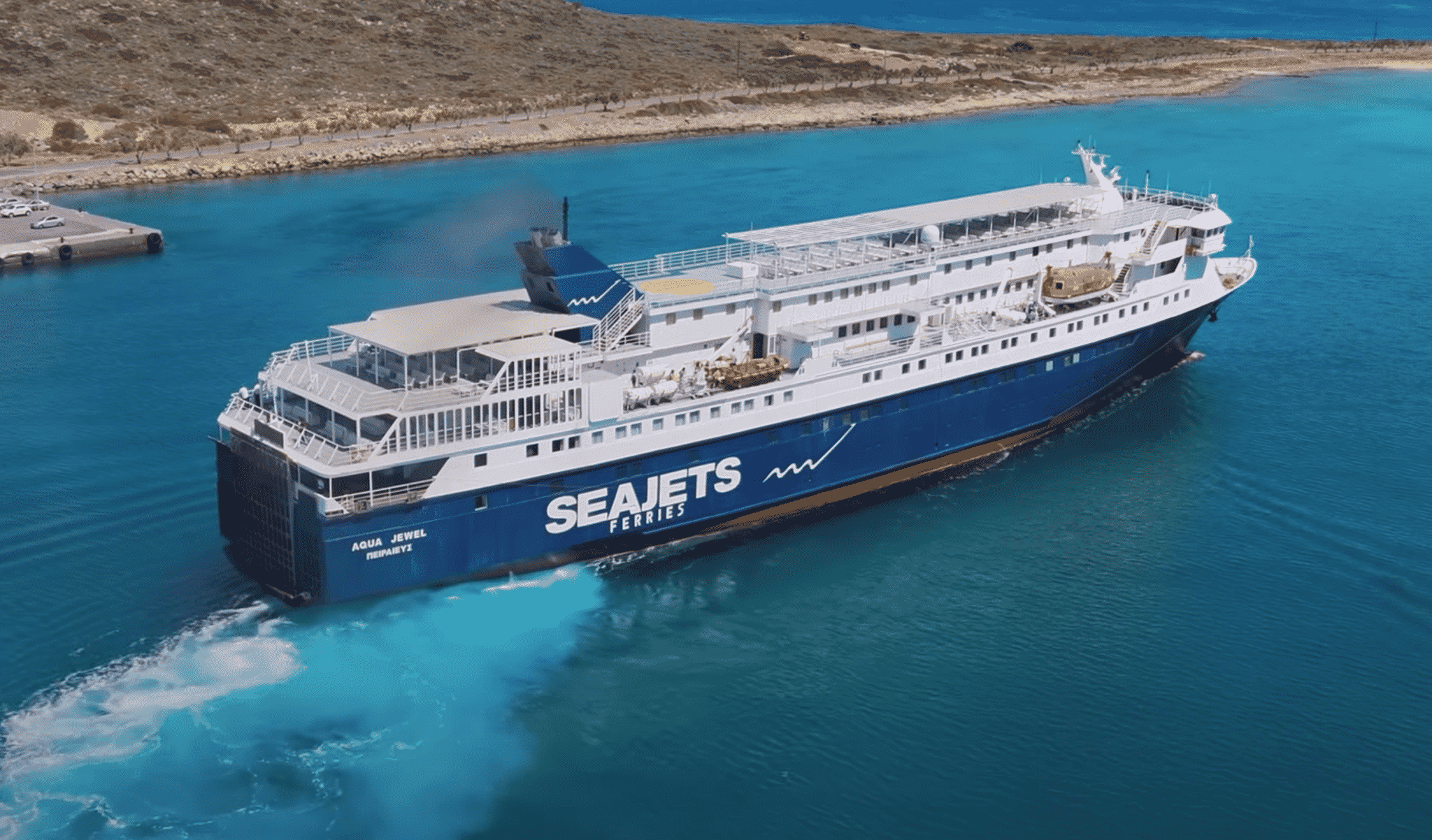
Events unfolded very rapidly, before our people could even keep up. The crisis began when the Turks sent the cargo ship Figen Akat to «run aground» on the Imia islets, as part of a plan. The problem was simple. The Ministries of Defense (Arsenis), Foreign Affairs (Papoulias), and Maritime Affairs (Katsifaras) were supposed to take the necessary actions in such cases. This would have involved decisive intervention, disengagement, and the enforcement of the maritime rules governing such situations.
But no one took any interest. They let the Turks handle the situation, allowing events to escalate so that their plan could be carried out.
- In early January, the Simitis government took office—unfortunately thrust into the thick of things—to manage the crisis, which stemmed from the incompetence and inadequacy of its predecessor, which had reached its peak. Mr. Simitis, caught off guard (completely ignorant of defense matters, fearful, and insecure), left in his post the In a state of complete confusion, the Ministry of National Defense appointed Mr. Th. Pangalos as Foreign Minister, even though he had been quarreling with the Commander-in-Chief and making the rounds on television for his rambling interviews.
On the other side, we saw a Turkish Security Council meeting and deciding to see things through to the end, while on our side, a motley crew had lost both their eggs and their baskets.
Mr. Simitis called for American intervention to prevent further escalation, when all was already lost; while speaking, pale and haggard, from the floor of Parliament «A power shortage has been detected» (sic). The Minister of Defense, and not the Metropolitan of Kynouria, is essentially responsible for this deficit. Nevertheless, Mr. Simitis, whom I consider less responsible for this disgrace, is allowing him to remain in his position, stating that «he must stay to complete his work.» (sic) What would the conclusion be? Perhaps And what about the legacy of Samos? After all, many officials from the previous government bear a heavy responsibility. I would also note that NOT A SINGLE military officer resigned in protest during that period of utter confusion, incompetence, and inaction on the part of the Ministry of Defense, which culminated in a fiasco.
Epilogue
For this national humiliation and the Turkish victory that marked the beginning of our current hardships, NOT A SINGLE politician was held accountable. Innocent as doves! An attempt was made to cover up the fiasco. The answer to the question remains shrouded in mystery: For what reason, and by whom, was the death mission ordered for the ill-fated helicopter carrying the three brave Hellenic Navy officers?;
The late K. Papoulias and M. Arsenis—the former became the first President of the Republic, and the latter was buried with the honors befitting a Prime Minister, with the eulogy delivered by then-Prime Minister A. Tsipras. Mr. T. Pangalos became Vice President of the subsequent PASOK government after having stated (in *Strategy*, Dec. 2010), following the Imia incident, that the country’s National Guard was counterproductive. Ms. Dimitra Liani is honored by the State and is accorded an honor guard.
Conspiracy theorists claim that the Imia crisis was mishandled It was allowed to develop in this way to serve as a pretext for unchecked military spending.
The fact that this fiasco did not in the least bit faze our reckless politicians is that Arsenis’s successor, the late Akis Tsochatzopoulos—in addition to his well-known «investments» in military equipment—appointed a contractor friend of his as president of the Foundation for Strategic Studies.
NOTE: The Imia fiasco did not serve as a wake-up call for the Greek political establishment, which remained short-sighted, irresponsible, predatory, and utterly unpatriotic. You know what has followed up to the present day. The aphorism of the late Kondylis, unfortunately, seems to have lost none of its relevance.
Mr. Fragos is a retired Brigadier General and a defense analyst.
University of Paris 1 DEA in Defense Policy.