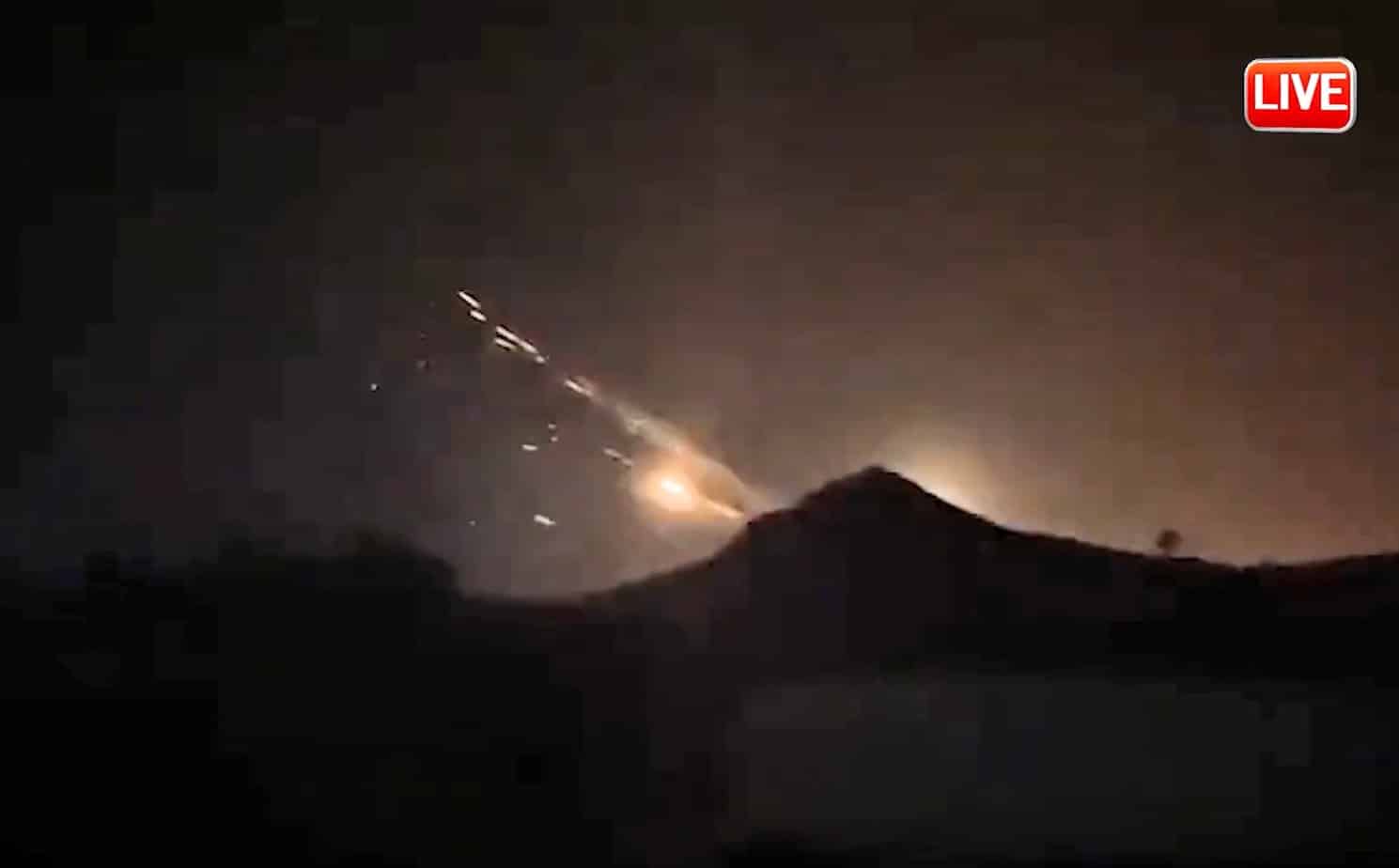
Clashes are raging today along the border between Armenia and Azerbaijan, as Baku’s forces, supported by artillery and unmanned aircraft, are attempting to «advance» into Armenian territory, Yerevan announced.
«Fighting» is taking place at certain points along the border, and «the enemy has not ceased its attempts to advance,» the Armenian defense minister said in a statement.
«Azerbaijani forces continue to use artillery, mortars, drones, and large-caliber rifles,» he added, accusing Baku of targeting «military and civilian infrastructure.».
These new large-scale clashes broke out overnight, and both sides are blaming each other.
Overnight, Azerbaijan accused Armenia of «large-scale subversive actions,» adding that Armenian fire had caused «casualties» among its ranks.
Armenia, for its part, accused Azerbaijan of launching «intensive shelling» of its positions shortly after midnight, targeting cities such as Goris and Sotk.
Armenian Prime Minister Nikol Pashinyan denounced an «attack» and held separate talks overnight with Russian President Vladimir Putin, French President Emmanuel Macron, and U.S. Secretary of State Antony Blinken to ask them to respond.
During these talks, Pashinyan stated that he hopes for «an appropriate response from the international community,» according to statements from the Armenian government.
Frequent exchanges of fire have occurred along the shared border between the two countries since the end of the 2020 war between Yerevan and Baku over control of the separatist region of NagNagorno-Karabakh.
Last week, Armenia accused Azerbaijan of killing one of its soldiers during clashes along the border.
In August, Baku reported that it had lost one soldier, and the Nagorno-Karabakh army announced that two of its soldiers had been killed and at least 12 wounded.
The two neighboring countries have fought each other twice—in the 1990s and in 2020—in the Nagorno-Karabakh region, an Azerbaijani enclave inhabited mainly by Armenians.
Six weeks of fighting in the fall of 2020 claimed the lives of more than 6,500 people and culminated in a ceasefire brokered by Russia.
Under this agreement, Armenia ceded portions of territory that it had controlled for decades, and Moscow deployed approximately 2,000 Russian peacekeepers to oversee the fragile ceasefire.