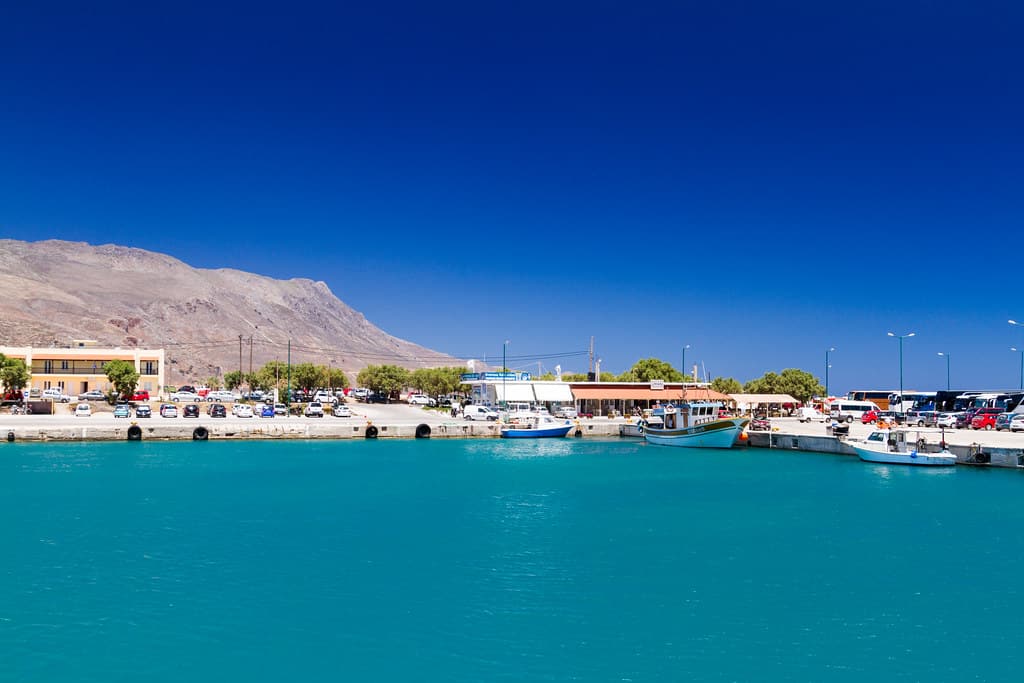
Crete is gaining a new major gateway on its western tip with the upgrade of the port of Kissamos. The port, located in the «Kavonisi» area» It is one of the most important, since It connects the island with Antikythira, Kythira, the Peloponnese, and Piraeus.
Already, the Chania Port Authority is moving forward with the procedures for the preparation of the study entitled «Study on the Update of the Spatial Plan and Environmental Impact Study for the Port of Kissamos,» approving the required amount and including it in the 2022 budget.
The preparation of the study had long been requested by the authorities and residents of the Kissamos area, and it had recently been the subject of discussion and consultation between the Mayor and the Municipal Council of Kissamos and the Chania Port Authority.
Six port departments
Under the new master plan, the port of Kissamos is divided into six port sections.
Coastal Shipping Division, Day-Cruiser Division, Commercial Division, Shipbuilding and Repair Division, Fishing Division, and Recreational Division.
At the same time, plans call for the development of a tourist area.
The Importance of the Port
In addition to the importance of the port, which connects Crete with Antikythira, Kythira, the Peloponnese, and Piraeus, ferries also depart from there for Balos and Gramvousa—destinations that attract a very large number of tourists—and the port also serves as a home port for fishing vessels.

Background: From 1996 to the present
The development of the port of Kissamos has literally gone through «forty waves,» as the relevant The proceedings began in October 1996 when the environmental conditions for the construction of projects were approved by a joint ministerial decision, with a validity period through December 31, 2006.
In the meantime, in 2002, following a request from the administration at the time, the Regional Authority approved the study for a new master plan.
In 2007, the Ministry of Merchant Marine approved the preliminary environmental impact study for the port as well as the master plan.
This was followed in 2008 by the decision to locate a tourist marina at the eastern end of the port, with a capacity of 180 berths for recreational boats, and that same year, a positive opinion was issued on the preliminary design for improvement projects and the master plan, following a preliminary environmental assessment and evaluation.
In April of In 2015, a ministerial decision established the bodies responsible for the environmental impact study and the new program plan And in the same month, the Port Authority decided to expand the existing land zone and establish a maritime zone.
However, this specific expansion was not approved by the General Directorate of Antiquities for reasons related to the protection of antiquities in the expansion area, which attest to the use of the site during the Roman and Byzantine periods.
A series of decisions followed, and the In 2020, it was finalized that the port's spatial planning would need to be updated rather than a general planning proposal accompanied by an environmental impact study or, alternatively, a dossier for amending the decision approving environmental terms for any new projects, and covering the entire area of the port’s land area, including the procedures for the siting of a tourist port.
Expansion of the pier at the Customs Office as well
At the same time, the Port Authority is moving forward with the procedures for preparing a feasibility study regarding the reconstruction and expansion of the pier at the old Kissamos Customs House.
The goal is to Relieving congestion at the main port of Kissamos with the docking of small vessels that provide tourist services to the surrounding areas. .
In this context, the following studies are required: bathymetric and topographic surveys, hydro-mechanical investigations, studies of port works, environmental impact assessments, electromechanical installations, and an underwater survey of the current conditions.