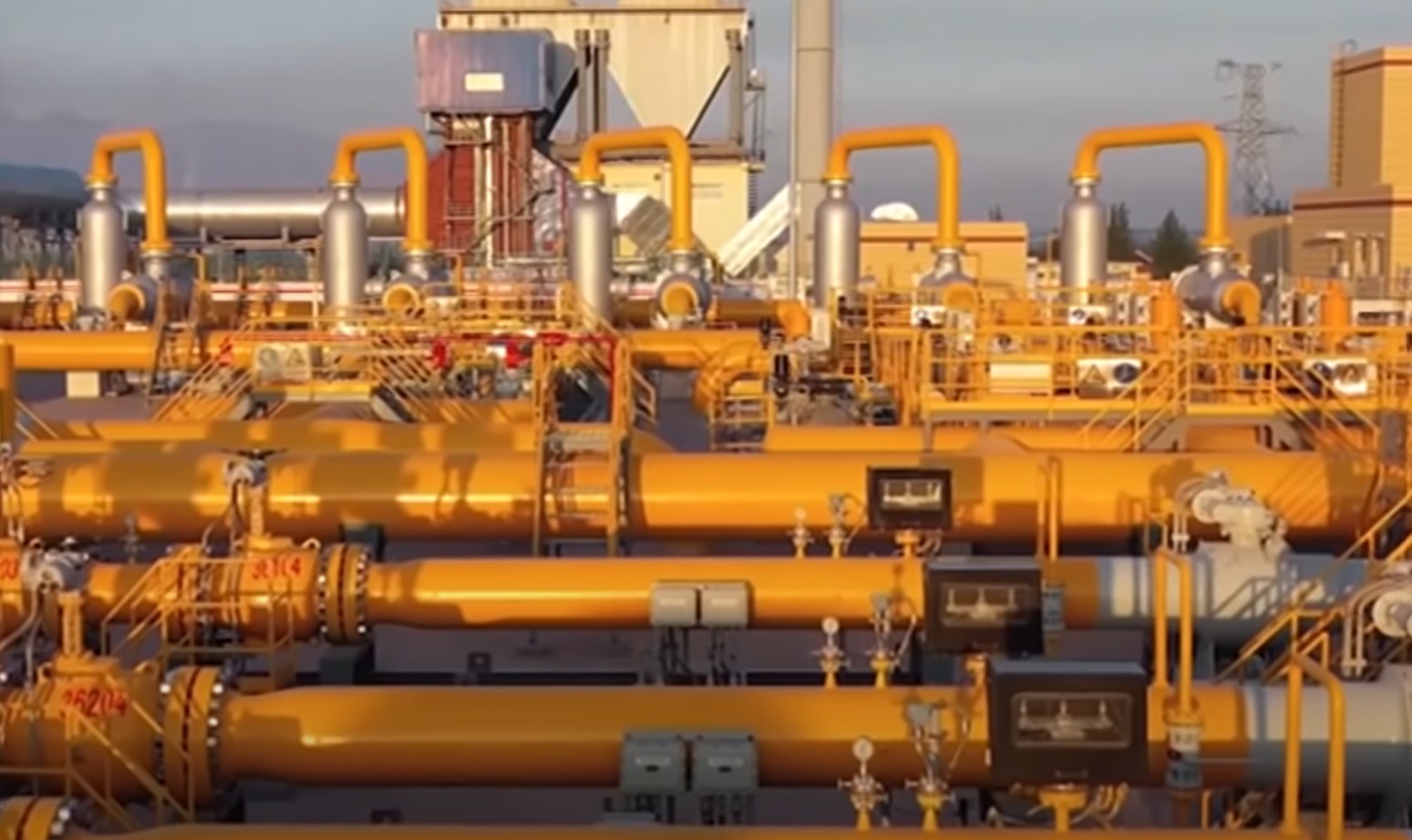
A specter is haunting Europe: the specter of a disruption in the flow of Russian natural gas. All governments, to varying degrees, are desperately searching for solutions. Of course, none of them is discussing the simple solution known as «peace,» simply because both sides—aggressor Russia and defending Ukraine—seem unwilling to discuss anything other than «crushing the enemy.».
Besides, in order to even discuss something like that in Europe, they would have to get permission from the U.S., which is out of the question…
In the meantime Citizens across Europe, who are paying exorbitant prices for energy, are being crushed, the global economy is collapsing and sliding into recession, and certain governments are also collapsing as they bear the brunt of the U.S.-China conflict.
To round out the picture, note that the OECD has already «revised downward» its global growth forecasts due to the war in Ukraine, as well as the strict lockdowns implemented by China to curb the spread of the coronavirus.
It now estimates that global GDP growth will reach 3% in 2022—down 1.5 percentage points from its December forecast… The World Bank, through its president David Malpass, is even more pessimistic, stating: «Looking at global GDP, it is difficult to see at this point how we will avoid a recession. ». The mere prospect of energy prices doubling is enough to trigger a recession"...
Now we’re moving on to our own issues. Europe continues to search for a unified approach, since it essentially told us to wait until October to discuss whether to impose a cap on natural gas prices… Of course, already Germany and France have decided to bypass the EU in order to begin seeking solutions to the energy crisis right away. Germany is effectively nationalizing the energy giant Uniper since it «absorbs» the increases in electricity prices so that they are not passed on to consumers.
France is nationalizing the country's largest utility company, EDF, and delisting it from the stock market.
European media outlets noted that it is unthinkable for the EU to have been bogged down for months in a debate over a problem that threatens to destroy the European economy.
The same media outlets pointed out the contradiction that Germany and France were pursuing the path of nationalizing large energy companies, while weaker countries were opting to privatize them.
A few days ago, the European Parliament decided that investments in natural gas and nuclear energy should be considered environmentally friendly, two energy sources that have been recognized as essential for addressing the climate change. It is clear here that the entire discussion revolves around the prospect of expanding the use of nuclear energy, since natural gas is in danger of being classified as an «essential commodity in short supply»…
In short, Europe once again finds itself unprepared in the face of earth-shattering changes. Multilingualism, the lack of leaders with authority, and the complete absence of commonly accepted energy policies are leading us into a difficult winter.
Please fasten your seatbelts…
Author of the article:

Journalist, member of ESIEA, member of the Board of Directors of R/S Athens 984