After the initial shock of pandemic we all began to look for what caused this unprecedented health crisis and what are the underlying causes of new infectious diseases such as COVID-19. The search led to climate change and in destruction of ecosystems.
Their impact on public health, the role played by the model of industrial agriculture, as regards the manifestation of new zoonoses and diseases, and the internationalisation of the consumption of exotic species and their integration into the food chain. All this was presented in the text «Agriculture and coronavirus: challenges and lessons for Greece and Europe», published by the Institute for Policy Alternatives ENA.
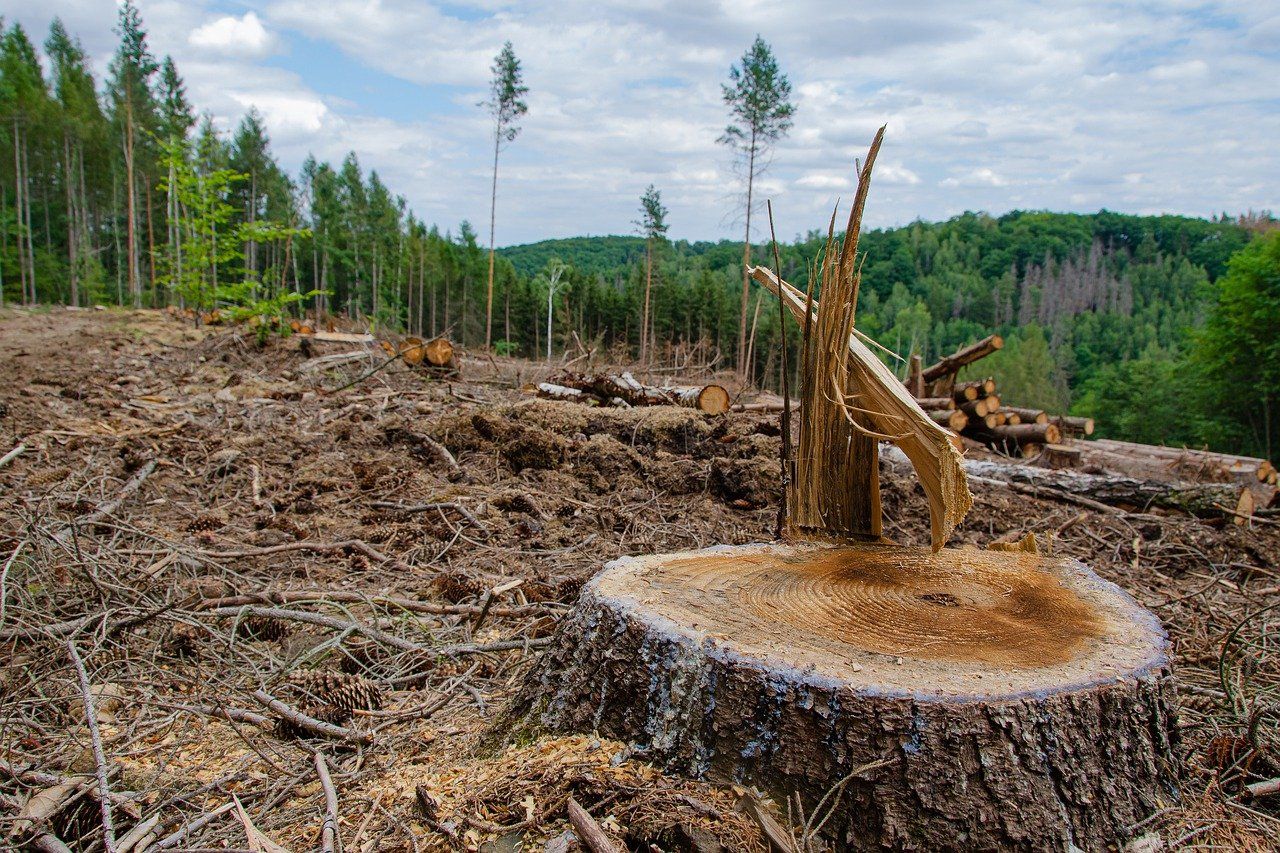
The debate continues and of particular importance is the publication in the British newspaper The Guardian of a recent study by Serge Morand's team at the French National Centre for Scientific Research, which shows that infectious diseases are more likely in areas of deforestation and monoculture plantation development, and epidemics increase when biodiversity declines. The same conclusion was reached in a paper published by the researchers in the journal Frontiers in Veterinary Science.
Even reforestation and the development of tree crops, the scientists point out, can increase the risks to public health, if they focus on a small number of species, as is the case with forests and commercial plantations.
The researchers note that this is because in a healthy forest with high biodiversity, natural regulation and disease control works. When such a forest is replaced by a forest of palm trees, eucalyptus or soybean cultivation, the specialised species are «wiped out», leaving room for rats and mosquitoes to thrive and spread pathogens to human and non-human habitats.
We must, they note, give more weight to the the role of forests on human health, animal health and the environment.
The new study further supports previous findings, which show that viruses are more likely to be transmitted to humans or animals when they live in or near ecosystems that have been altered by human intervention, such as deforested land, marshes drained for exploitation, mines and large housing projects and transport networks. The cases of Africa and Latin America are typical.
These are reinforced by both the growth of trade in goods and consumer behaviour. A quarter of the loss of forest land is linked to the production of products such as beef, soya, palm oil and timber, based on an intensive, industrial-style model of agricultural production. This problem is compounded by mining, which pollutes the soil, streams and rivers.
It is now understood that efforts to meet the growing food needs of the planet cannot be made at the expense of nature, the rural world and public health.
Conclusion: The increasing dominance of the industrial intensive production system in agriculture is seriously disrupting not only the protection and regeneration of the natural environment, the viability of small farmers and social cohesion, but also welfare and public health.
The need for a change in the production model in agriculture
All of the above reinforce the finding that economic and productive sustainability, social cohesion and environmental protection in rural areas constitute a triple challenge for rural policy and development. The European Commission's proposal moves in this direction and includes these challenges in the three general objectives of the new Common Agricultural Policy and the Green Deal.
The challenge for our country is also great.
The drafting of the national strategic plan for the new CAP gives us a unique opportunity reorient our agricultural policy towards a model of differentiated production of quality and identity products, geographical indications and organic farming, safety and certification. This is a model that is the opposite of the model of intensive and industrialised agricultural production, since diversified, high quality and high value-added production protects natural resources better, is more environmentally friendly and is characterised by high product quality and short value chains along the agri-food production chain.
The pandemic has further highlighted the value of such a model. It is time to invest in it, which is, after all, where our comparative advantage lies. Policies to boost the production of these products, however, require an increase in active demand for them, both on the domestic and international markets.
And how can this be done when production costs and prices are higher than conventional products? There are several ways to do this. Opinions converge on that:
- Firstly, a relevant European trademark for these products that will be their ambassador in the markets and guarantee consumer confidence.
- Secondly, VAT should be reduced on them.
- Third, the country should adopt a green public procurement policy strategy. The public sector can and should use its influence to support such policies on products and services that contribute to environmental protection and public health.
We have already mentioned in the past, for example, the possibility for the state to give priority to these products in school meals, public institutions or factory canteens. Copenhagen has already become the first European capital city with 100% organic products in public canteens. Vienna has followed the same example too.
Obviously, not all countries put organic and quality products high on their agenda (and cannot quickly change production and consumption habits), nor can the producer be limited to initiatives of the State alone. What is needed, therefore, is the strengthening of a long-term demand, which, combined with both a reduction in the cost of producing these products (investment in innovation and agricultural extension could help) and support from the State, will make a decisive contribution to the sustainability of such a production model.