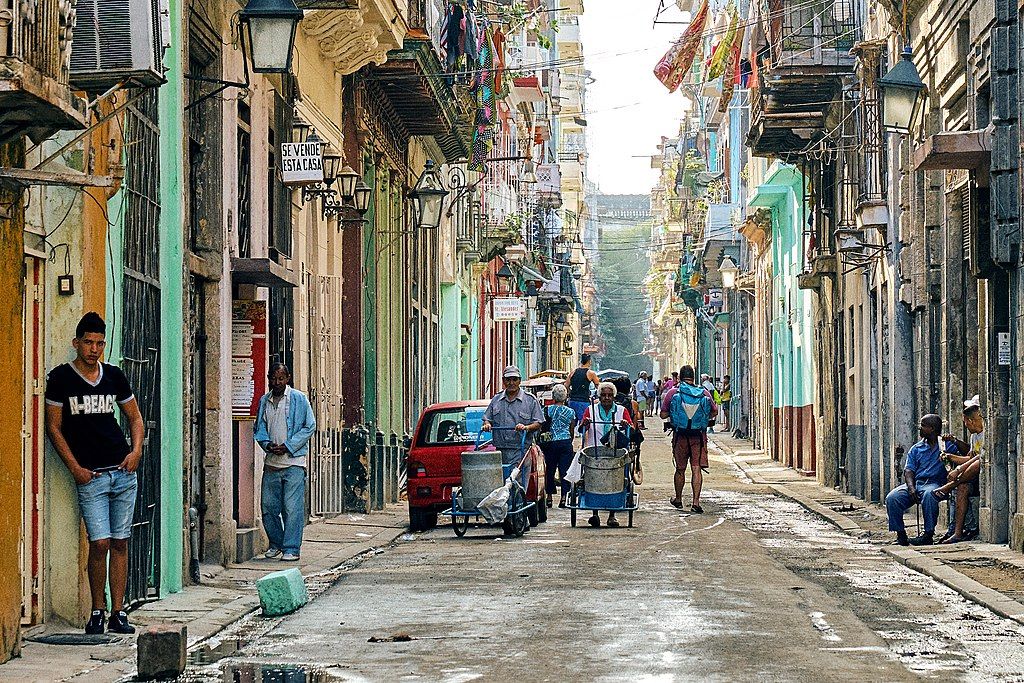

«Cuba has been prepared for coronavirus since 1959», wrote the American Don Fitz, a psychology researcher for 25 years at the state hospital in St. Louis. A point that has found little time and space in the international media, even though the Henry Reeve International Medical Brigade «intruded» into the news with its missions in Italy and in other countries in the midst of pandemic. With over 3,700 health volunteers in 53 missions in 39 countries to respond to the COVID-19 -and over 65 in 59 other countries-, was rightly nominated for Nobel Prize.
Although the small, island Caribbean country with the high moral stature βIt has been cut off from its large neighbour, the USA, for 60 years, has recently managed to become a role model in dealing with the pandemic, although the focus has been one-sidedly on the vaccines of the multinational giants, from which they expect very large profits. With public health in mind, the Cubans have closed the borders and kept the epidemiological data low (13 deaths per million) «bleeding» the economy - the borders were opened in November but after the increase in cases to around 150, from the new year, a 72-hour test is expected to be required for visitors to enter the country.
Cuba's vaccine production policy is also in line with the logic of relieving the population and the poor countries. At the same time, in order to save their economies, the developed countries of the West are spending huge sums of money in order to secure more doses, not caring whether they will reach the rest of the world.
This contribution of Cuba was recently praised by a representative of the Pan American Health Organization (PAHO), which is subject to the World Health Organization (WHO), as the country participates in the COVAX programme WHO and the Coalition for Epidemiological Preparedness and Innovation (CEPI) to distribute vaccines worldwide.
The Cuban revolution had as its first priority the eradication of illiteracy and the guarantee of public health. Surprisingly, the US embargo has helped it to become self-sufficient, having developed in the research field for effective and cheap drugs and vaccines, such as those against meningitis and hepatitis B.
It already holds 2,438 patents according to a 2018 Nature paper and develops around 8% of the vaccines in clinical trials worldwide. Εexports medicines and vaccines to 48 countries through the state-owned umbrella company BioCubaFarma, which consists of 32 companies, 65 business units and 21 research institutes and employs over 20,000 people in 80 production facilities.
Two vaccines are already in clinical trials (more on Soberana 01, Soberana 02, but also Abdala and Mambisa on the official website rpcec.sld.cu/en/home) and, according to officials, efforts are being made to vaccinate all Cubans in the first half of 2021.
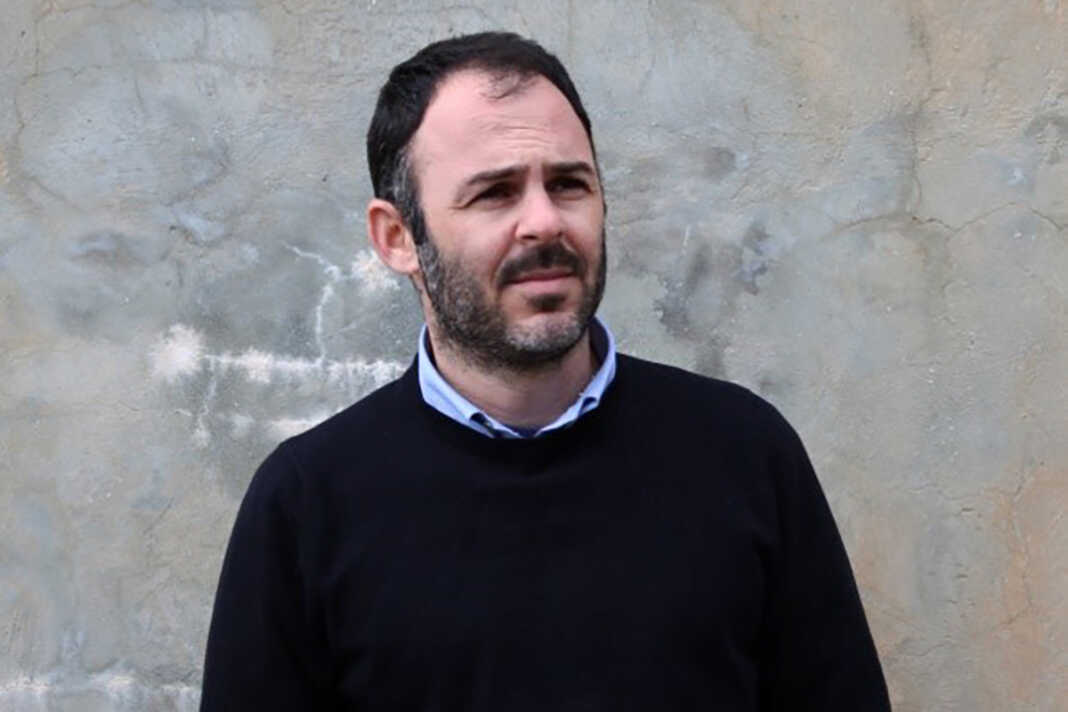
For all this, for the developments in vaccines and given that in Cuba 95% of Covid-19 patients recovered, Documento spoke with Fabrizio Chiodo, researcher of the Italian National Research Council (CNR), which since 2013 has been an integral part of the Finlay Vaccine Institute (IFV) in Havana.
What is the current situation in Cuba regarding the pandemic?;
First of all, I should mention that there are different scenarios in dealing with it. Countries that prioritise the economy over public health are facing pandemic waves. And that's what's happening in Italy, for example. Other countries, in which the health of citizens comes first, such as Cuba, have done extremely well. Cuba has a strong network of doctors, academics and scientists. The citizens trust them and the government.
All of them are directly linked to family doctors, who are the first line of defence. As a result, very few cases have occurred. Initially a strict lockdown was imposed and house-to-house tracing of cases was carried out, especially in the vulnerable part of the population. There was already a plan for such infectious diseases, as Cuban doctors had helped African countries in the fight against Ebola. Cuba had strong bases and it was obvious that it would limit the spread of the virus.
How did you receive the news that the Finlay Institute was recently awarded for its outstanding contribution?;
It's fascinating, as the eyes of the scientific community have been on what the researchers at the Finlay Institute have achieved. Cubans are proud not only of the low number of cases but also for their superior treatments. They are proud that an island in economic exclusion has four vaccine candidates in clinical trials. One of these is in phase two, the only one in all of Latin America.
How many vaccines is Cuba developing and what kind?;
Four vaccines are being developed. We could have a different formula for a different target population. Also, it is scientifically sound not to start with a product thinking it will remain unchanged. These are subunit vaccines. Instead of transmitting the genetic material of the virus to the host, we directly introduce a piece of the full spike of the virus and combine it with immunosuppressants. For the Soberana 1 vaccine we are using a platform that Cuba has already used in the past against meningitis B in children and even infants. So a very secure and stable platform. For Soberana 2 we use the concept of a conjugate vaccine. And this is a strategy that Cuba used in the past against pulmonary streptococcus. Plus their production is cheap. We can produce enough and - importantly - they remain stable at room temperature.
How do we know if a vaccine is safe?;
We see this mainly in the first phase of the clinical trial. It is especially in the second phase that safety and the potential for strong side effects or adverse effects are really tested. In general, vaccines are very safe. In the third phase we measure efficacy and success. Previous animal testing has been done and this clearly and conclusively shows the safety data. As a scientist I cannot think of anything that does not work properly in vaccines, even from powerful and arrogant companies like Pfizer. Remember that pharmaceutical companies do not do business primarily with vaccines. If we had vaccines against most infectious diseases tomorrow, we would actually destroy big pharma.
Can a coronavirus mutation, such as the one in the UK, affect vaccine studies?;
This is a more contagious mutation that will have an impact on the British health system. At the moment there is no risk to the effectiveness of the vaccines that have been designed.
What kind of side effects are observed?;
Based on reports from published clinical trials, these are usually local reactions. Maybe some pain and inflammation at the vaccination site. Very rarely headache and classic allergic reaction. Aspirin causes more allergic reactions than many vaccines. In general there are side effects, but they are more like local adverse reactions.
Who should be vaccinated first in a country?;
There is no prescription for this. Everyone's vaccination strategy starts first with the vulnerable part of the population and all those working in the health system. Perhaps protecting youth would be a good strategy too, because they move around more. But we don't have many doses for everyone. So countries have to decide. I appreciate that they have great epidemiologists and vaccinologists who know what needs to be done.
Can a person who has Covid-19 be vaccinated?;
We don't know the answer. That's why we recommend that these people also get the vaccine at some point, if possible.
If someone has been vaccinated against Covid-19, can they transmit the virus?;
This is the $100 million question! We really don't know. Moderna is the first to show some of this data, which is really positive. We think the spread will be ruled out by these antibodies.
How long will the immunity from the vaccine last? Is it likely to be administered annually, like the flu vaccine?;
We will have to see how things develop. It depends on the type of vaccines, what the impact on the community will be and how the virus will evolve. But there is a chance that we may need an immune boost to get the body to «remember» immunity.
What about pregnant or lactating women? What about children and infants?;
These categories are not included in the clinical trials of course. As far as we know, vaccines are very safe during pregnancy and lactation. And the same for children and infants. However, we have to wait. But while mRNA vaccines and non-viral have never been used and tested in children, the platform of subunit vaccines we are exploring in Cuba are approaches we have always used and in children for 15 years.
Will vaccination be compulsory? For example, in order to travel?;
There is no recommendation from the WHO. I don't know if we will have that kind of pattern of immunity to travel.
With which countries has Cuba agreed to channel the vaccine it will produce?;
BioCubaPharma exports vaccines and medicines to almost 45 countries, so I think there are already discussions with WHO and others. Cuba is open to all countries, there are no restrictions.
Now is a vaccine necessary or do we need to focus on a drug?;
The vaccine is always the best, cheapest and safest option. Get a few micrograms once or twice in your lifetime and you are protected. To develop an antiviral drug takes a lot of time and there are many unwanted side effects, daily treatment with grams or milligrams of chemical compounds.
What kind of drugs does Cuba use to treat patients with Covid?;
In Cuba 95% of patients recovered. They were treated with higher level drugs, monoclonal antibodies, immunomodulatory peptides.
Is there competition between countries and companies in vaccine development? Will everyone have access?;
When Canada asks for nine doses per capita and Pfizer says yes, you can see that it is unfair. Most African countries will have access to the vaccine in 2023 or 2024. I believe that WHO and other organizations will ensure a distribution that is more equitable. The Cuban vaccine also could play a key role in this.