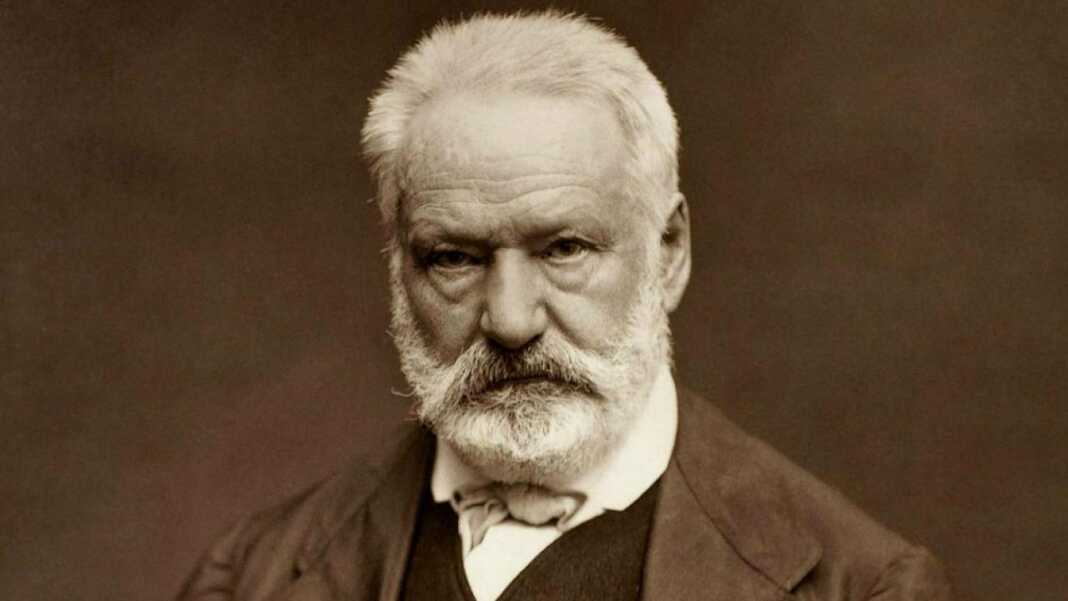
Victor Hugo (Victor Marie Vicomte Hugo) is the most important representative of the French Romantic movement. He was born on February 26, 1802, in Besançon (BesançonHis father was a military man and general in France from 1809. As a teenager, he realized his aptitude for literature and began translating Latin works and writing his first poems. Recognition came quickly. In 1817, he was awarded a prize by the French Academy for one of his poems. His establishment in literature came with the publication of his poetry collection «Odes and Ballads» in 1826. He was characterized as a revolutionary of Romanticism thanks to «Cromwell.» In 1829, he published «Oriental Poems,» inspired by the Greek Revolution of 1821.
Victor Hugo was a fervent philhellene throughout his life. Until the Cretan revolution in 1866, he followed the struggles of the Greeks with interest. He continued to write plays, such as «Erganis,» and in 1831, he published his famous novel «The Hunchback of Notre Dame.» In 1841, he was elected a member of the French Academy. In 1843, he lost his newlywed daughter and her husband in a drowning accident. For ten years he published nothing, clearly affected by the loss of his daughter. Later he became involved in politics and evolved from a conservative to a radical democrat. He was elected deputy of Paris, later opposed Napoleon III, who overthrew the republic in a coup, and was persecuted until he was forced to flee secretly to Brussels. He remained in exile for 20 years. He continued to fight Napoleon III by writing manifestos against him, while in his poetry collection ’Punishments’ he praised the triumph of world democracy.
In 1862, he completed his most famous novel, Les Misérables. He returned to France in 1870, with the proclamation of the Third French Republic. His entry into Paris was triumphant. With the victory of the Paris Commune in 1871, he left the country again. That same year, he lost his son Charles, and shortly afterwards his daughter Adèle was admitted to a psychiatric hospital. In 1873, he also lost his son François. In 1876, Victor Hugo was proclaimed a Senator for Life of the French Republic and in the following years became the idol of French left-wing radicals. In the last years of his life, Hugo received the love of the French people, identifying himself with the very idea of the homeland.
Victor Hugo died on May 22, 1885, at the age of 83. His funeral took place on May 1.ηJune, with two million French people accompanying the great poet from the Arc de Triomphe to the Pantheon.