Plants in the interior of our home give us a nice aesthetic, but we have to be careful about our choices, as some are dangerous to our health.
In particular, there are seven dangerous plants that can cause a number of serious problems for our bodies.
The 7 most dangerous plants we should not have in our home
Hemlock
The spotted hemlock plant (Conium maculatum) is a herbaceous plant with a heavy odour, reminiscent of mouse urine, which becomes stronger when the leaves and fruits are crushed. It has a bitter taste that causes nausea.
This plant is native along farm roads, in uncultivated natural areas and generally in damp and shady places. It is quite widespread in Attica and Megarida. Conaine belongs to the ganglioplegic drugs, i.e. it affects the peripheral nervous system. Specifically, hemlock causes:
- Loss of muscle strength
- Dilution of peripheral vision
- Involuntary tremors and spasms from the reflexive power of the spinal cord
- Brain hibernation
Oleander
This plant (Nerium oleander) should under no circumstances be confused with bay laurel, as its leaves are quite toxic and can cause death. It is a fairly common plant in nature and is often found as an ornamental in gardens.
This plant is found along streams and torrents in dry and hot areas. It is also a very common ornamental species so it is likely to be seen in gardens in cities.
Consumption of even one leaf is enough to cause death in young children and larger doses for adults. In particular, the toxic properties of the plant are due to its milky juice containing the substance oleandrin. Contact of the juice with the skin can cause: blistering, irritation, pain.
Consumption of the plant can lead to: Abdominal pain, vomiting, diarrhea, visual disturbances, tachycardia, heart dysfunction
Itamos
Itamos, also known as Taxus baccata, is a special plant. It is a tree toxic in all its parts, except the seed coat. In addition to toxins, it also produces substances such as taxol, which has been discovered to have a strong anti-carcinogenic effect.
Itamos belongs to the conifers and is usually found sporadically in forests of other trees, mainly spruce. It is most common in limestone soils in the mountainous areas of mainland Greece. In large quantities consumption of the plant can cause: colds, shortness of breath, convulsions, heart failure
Mandrake
Mandrake was considered a plant with magical properties since ancient times and was often used in religious ceremonies. In fact it is a plant with several poisonous, aphrodisiac and hallucinogenic substances which give it its mythological properties.
This plant can be found in Crete and the Aegean Sea, as well as in some areas of the Peloponnese, Sterea and Thessaly. Its habitat is the semi-mountainous areas with soils of limestone rock.
Mandrake carries several alkaloid compounds that, although poisonous, have medicinal properties, for example scopilamine and apoatropine. For this reason, many doctors of antiquity, such as Hippocrates, used it to treat diseases, snake bites and as an anaesthetic in operations.
These alkaloids act on the central nervous system, so symptoms of mandrake poisoning are:
- Loss of vision
- Delirium
- Repression and death
Invalid
Aconite (Aconitum napellus) is considered the most poisonous plant in Europe, as even contact with it is enough to cause poisoning. In some areas it is called wolf-killer because the ancients used its poison to kill wolves. It is most likely that they anointed spears and arrows with it to make them more deadly.
This plant is herbaceous with a height of 50cm to 1.5m and an erect stem, rarely branched. It is very common in the Peloponnese and in particular in the area of Laconia. It needs moist humusy soils and therefore often grows near rivers and shady places with humidity. It is often found near stables and sheepfolds.
Aconite contains a multitude of toxic alkaloids, proteins, malic acid and aconic acid. These compounds make it deadly, mainly because of the alkaloids that affect the central nervous system. The most poisonous alkaloid in the plant is aconitine. The lethal dose of aconitine for humans is 3-4 mg, which is equivalent to 2-4 g of fresh tuber (root).
Belladonna
Atropa belladonna is an entirely poisonous plant, but it also contains several medicinal substances. In our country we find it mainly in Northern Greece, in shady forests and calcareous soils.
This plant contains substances such as atropine, hyoscyamine and scopilamine, which are poisonous but also have therapeutic (or narcotic) properties. Its fruits may give the illusion of being edible, especially because of their sweet taste, but they are toxic.
Symptoms of its consumption are:
- Dry mouth
- Burning sensation
- Shipping
- Synchronicity
- Delirium
In higher doses it can act as a hallucinogen (due to scopolamine) and causes: Hallucinations, Disorientation, Delirium/
Ricinus
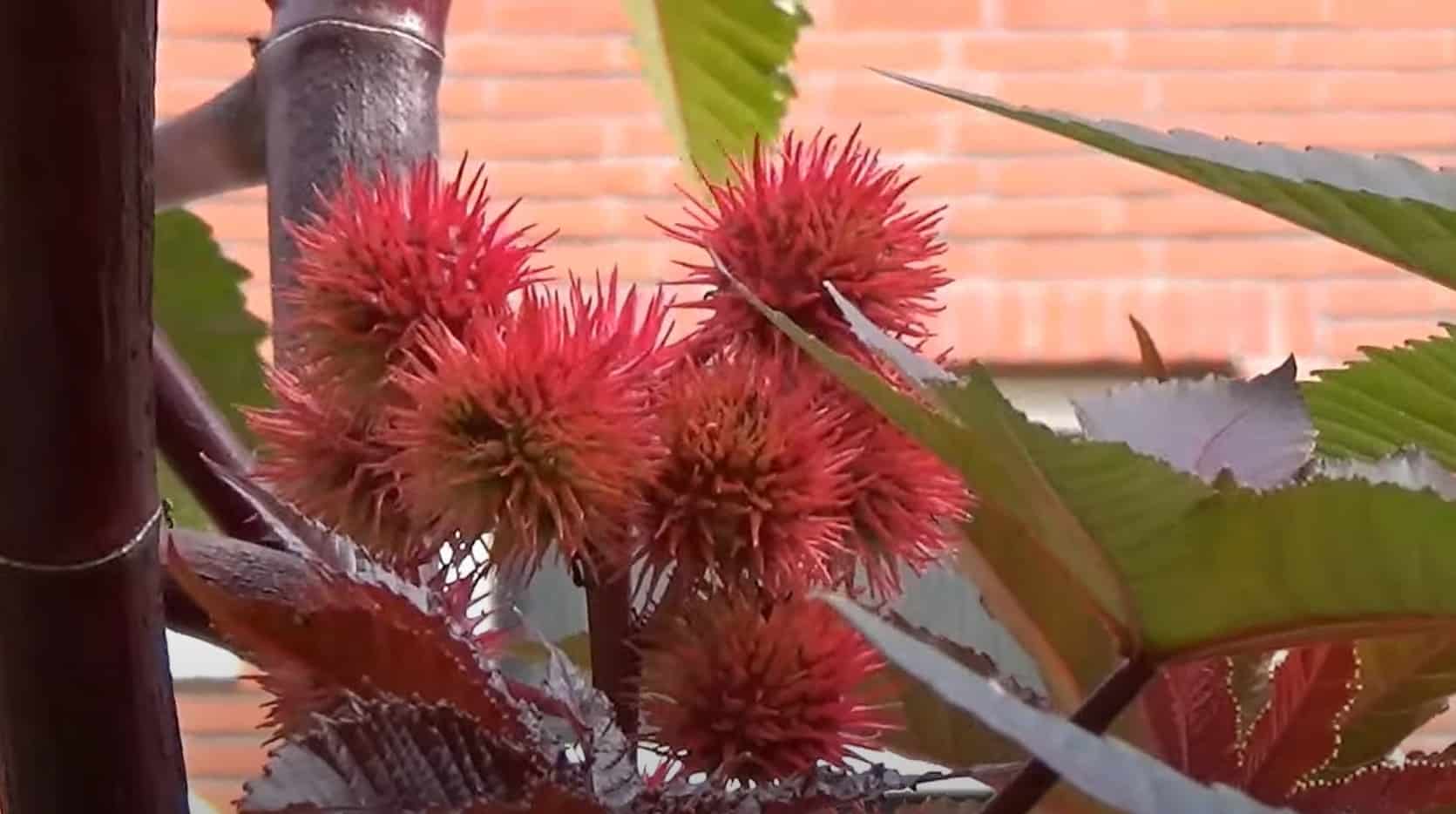
This plant (Ricinus communis) is one of the deadliest plants in the world. Interestingly, this plant, also known as resinoladia, is a very common garden ornamental and is the plant from which castor oil is produced.
The main poisonous substance of the plant is ricin (a lectin, a protein attached to carbohydrates), which is found in large quantities in the seeds of the plant and in smaller quantities in the leaves.
Ricin is a type 2 ribosome-inactivating protein (RIP) with potent cytotoxic activity since it inhibits protein synthesis. Unfortunately there is no antidote for this toxin. Amazingly, the well-known castor oil is produced from the seeds of the plant, which we can use without any problem. This is simply because the high temperatures used to make castor oil denature this toxic protein and deactivate it.
Ingestion of ricin causes:
- Shipping
- Vomit
- Diarrhoea
- Dysphagia (difficulty swallowing)
- Internal bleeding that appears as melena and haematemesis
- Failure of the pancreas, liver, kidneys and gastrointestinal tract
- While inhaling it can lead to coughing and fever.