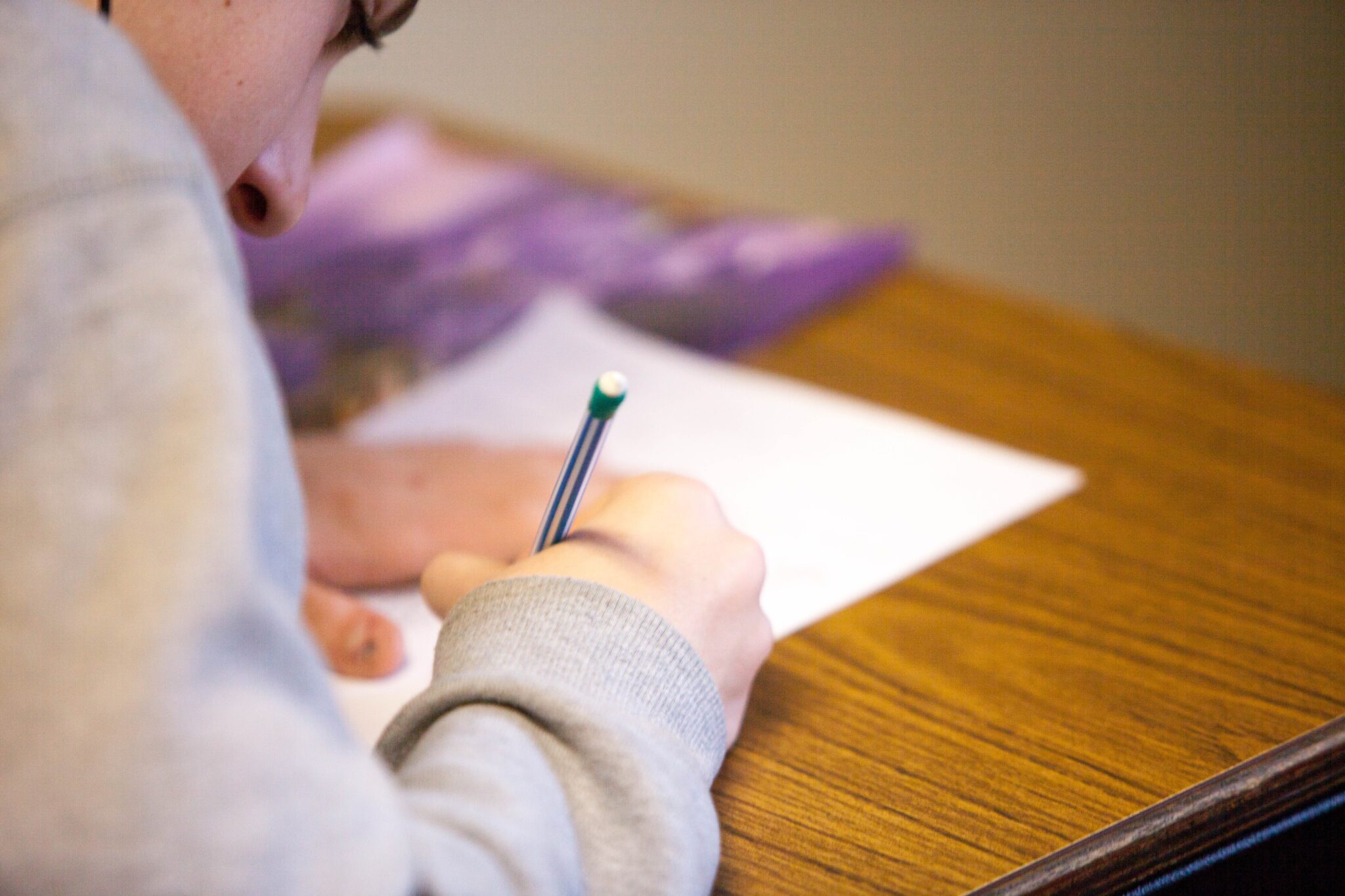
As the national exams approach, our communication with the children-candidates becomes more difficult. Sad platitudes, our own rejections that find the opportunity to come out and say «hello» to our brat, angry words, high expectations, all are hidden or appear in the words that an anxious eighteen year old on the threshold of the exam, takes in their stride. So, before you blurt anything out, read the communication tips from psychologist and special educator, Dimitra Kouri. And if you can't apply them, embrace the phrase: Silence is golden!
What you should not say to a child who is taking Panhellenic exams
- «Don't be nervous»: a useless and trite phrase to say to a person you know is nervous and has every reason to be. We say it awkwardly when we don't know what else to say. Prefer them mild exhortations for relief from stress, such as: «Go for a walk», «Talk to your best friend», «Think that in a few weeks you'll be diving off the pier». If nothing comes to mind, extra-verbal communication is best and surrounded by a warm wordless Embrace.
- We take out of our vocabulary offensive adjectives, such as: «lazy», «uneducated», «unworthy», «insensitive», etc., which destroy the child's psychology and of course the relationship between us.
- We do not count down«You're in the final stretch», «Three days left», «Come on, by this time tomorrow, you'll have done your maths...». The stress will hit red.
- We do not advise. We leave this role to the teachers: «Wake up, the early bird catches the worm» and «Go to bed early», «Repeat» and «Drink your juice» cause more tension than help the situation.
- We are not saying - or implying - that a possible failure of the shame. Phrases like: «You'll make me proud if you get into university» or «A doctor's kid can't get in anywhere» are a big burden on our children's little shoulders.
- We avoid the first person plural referring to the exams and the child's future. We do not say: We gave, we studied, we repeated, we stressed, we didn't write well... We are not the candidates.
- We don't throw sparks for domestic or interpersonal quarrels of the press: «I told you so‘, »A good day is just around the corner«, »You did him all the favors...«
- We do not compare our child with friends/classmates/friends« children etc. We don't say for example: »Semeli, who has been studying all year, is still doing revision« or »Andreas will have a lesson with the maths teacher the day before the exam".
- We don't turn back the clock to we compare our child with us themselves as candidates. We don't say, «When I was taking the national exams, I studied until the last minute.» Never mind that nine times out of ten we don't tell the truth.
- We are not referring to the past«I've been telling you all year to study» or «you've been watching Netflix series in April». The old man is old.
- «I didn't get a pair of shoes for tutoring with the best teacher.» We do not use expressions in order to raise the feeling of guilt. We are not referring to the money we spent, the money we spent going to tutorials.
- Even if our child is a «favorite» in the national exam race, we do not underestimate the difficulty of the task. We don't say «It's a walk in the park for you», not only because we burden the child with a huge responsibility for success, but also because you never know what will happen in the exam. If something goes wrong, the disappointment will be very difficult to manage.
- We do not recount ominous events, such as: «Katerina's son, do you remember what a good student he was? Well, he blacked out and didn't understand the pronunciation».
What will help a child who gives Panhellenic exams
- We show in a gentle way the Interest us: «What is it that stresses you out the most? Do you want to talk about it?»
- We say: «I am/we are next to you for whatever you need» instead of «Why don't you tell me what you have? What do you want me to do?»
- We use verbs that indicate empathy: I understand you/ I understand/ I feel/ I care.
- We can share our own stressful experience in the exams only if our child wants to listen to it. We start in the first person and maintain that, «I've been through this process too» It's not another opportunity to admonish.
- We reward the effort showing our child that we understand not only the exams, but also all the difficult moments of the past year: For example: «I know how much it cost you to stop your practices this year.».
- We tell him that we are not waiting for the test results to identify the Value his. We know our child deserves it and we admit the absurd: He is called upon to prove the value and skills he has built up over the years, in just three hours, in front of a piece of paper.
- «The Panhellenic exams are not the end of the road, the road is long for successes and failures. Whether we succeed or not we have gained in knowledge.» Not to be forgotten.
- We honour the oft-told but so comforting phrase: «Everything will be fine!»
What to do when the child does not do well in the Panhellenic exams
- We do not exaggerate, we don't say «well done», for example, when our child hasn't done well at all, because it's like making fun of them. We say: «You made your effort and that is very important. Now you know the process better, and you know yourself better.».
- We do not become pushy in order to find out whether or not he'll retake the national exams. We are allowing time. We say: «You have time ahead of you to decide what to do,» instead of «What are you going to do?» or «Why don't you retake the exam?» Our child needs time to grieve. We can explain to him that he will have other opportunities in his life, either to retake a national exam or to pursue another path.
- We remind him that the Panhellenic exams are a moment in a span of time: our life. Everything can change with or without a second attempt.
- We remind him that in any case he is expecting a carefree summer. Rendezvous for any start in September.
«Failure is the mother of success», say the Chinese. They know.