The government of the New Democracy has treated the design of the country's Strategic Plan for the new CAP with unimaginable sloppiness, characteristic lightness, resting on communication fiestas and not on substance. Many times last year, we condemned this criminal tactic of the political leadership of the Ministry of Rural Development and Food.
Unfortunately, our proposals on the major issues of the new CAP, our calls for a substantial dialogue with the productive bodies, for a strategic approach to the critical issues and even for a substantial dialogue within the framework of the Parliament and its procedures, were «a voice crying in the wilderness». And the briefing of the members of the Committee on Production and Trade by Minister Livano, literally on the sidelines, was largely prefatory, rife with vague generalities and generalities, while the major issues at stake were presented in very broad, general terms and without the reasoning strategy.
The consequence of this attitude is that, just 20 days after the submission of the Strategic Plan, the political leadership of the Ministry, on the occasion of the planning for coupled support for cattle farming, was already forced to make promises for the first changes to the Strategic Plan.
However, the ink of the Strategic Plan has not had time to dry and after the cow farmers, the olive growers and their organisations are following, and all over the country they are sounding the alarm about the impact of the ND Government's proposal on the viability of possibly hundreds of thousands of small olive farms.
Unfortunately, while in many areas of our country the olive is almost a monoculture, which provides the sole income of farmers, it supplements the income by supporting many small-scale professionals and has a positive impact on the entire economy of these regions, η The government of the New Democracy has treated the olive sector in the framework of the National Plan for the New CAP without a strategy. Thus, the expected multifaceted and drastic reduction of aid will lead to the further abandonment of olive cultivation, but also to the extensive undermining of both this «national» product and the rural economy and life in the countryside.
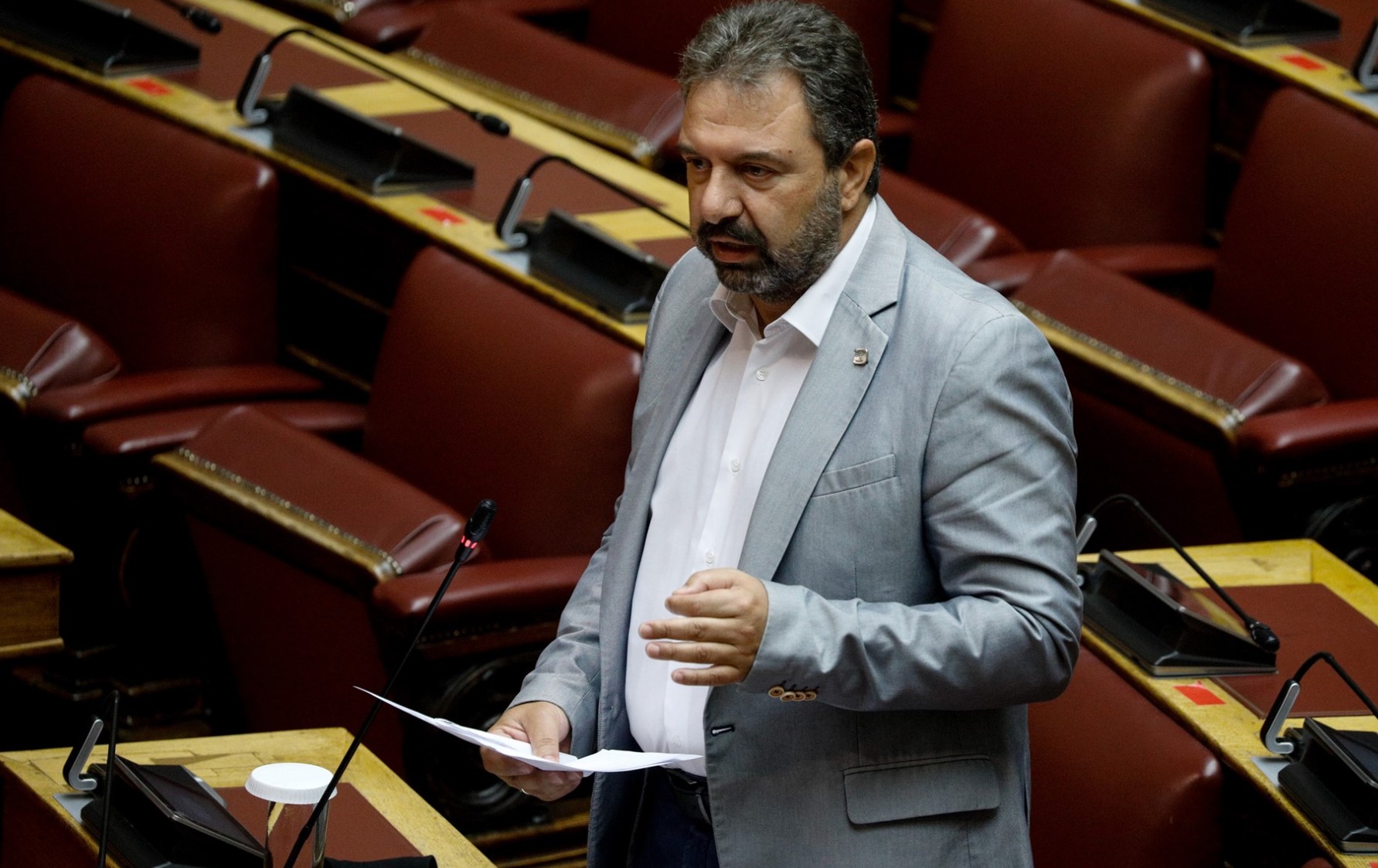
In a Question tabled today by Minister of Rural Development of SYRIZA-PS Stavros Arachovitis and co-signed by 45 more deputies and councilors of SYRIZA-PS, We ask the Minister of Rural Development and Food, even after the fact, to answer the burning questions about the future of this national product in the context of the new CAP and the National Strategic Plan submitted a month ago.
Below is the full text of the Question:
Athens, 31 January 2022
QUESTION
To the Minister of Rural Development and Food
Subject: «Impact on the country's olive sector from the proposal of the National Strategic Plan for the New CAP»
The SYRIZA government, convinced that scientific documentation is the safest way for the strategy of agricultural policy, commissioned the Agricultural University of Athens to carry out a study which is also available to the government of the South-West. According to this study of the Agricultural University of Athens, the high dependence of the viability of small and medium-sized farms on direct payments is highlighted. Therefore, while this data is available, with the new year and after the submission by the government of the National Strategic Plan (NSP) for the new CAP, there is a strong concern in the ranks of olive growers in the country, as the direct payments intended for olive growing are estimated to be greatly reduced in the new programming period.
In the light of the ESF, the budget for the Basic Payment that producers will continue to receive amounts to €4.39 billion for the whole five-year period, i.e. the annual payments that will be maintained will be reduced by at least one eighth (an annual reduction of more than €80 million). In addition, however, the convergence of entitlements is expected to lead to reductions in direct payments which will also affect olive cultivation.
Also, the so-called redistributive aid, while introduced precisely to smooth out inequalities and support small farms, the Greek plan excludes producers with areas of less than 10 hectares. Thus, in addition to the horizontal reduction in the basic aid, because olive cultivation is the crop par excellence where the average plot of land in our country is small, the proposal tabled by the New Democracy Government means that olive farms will be the ones that will be mainly excluded from the redistributive aid, also because of the EUR 250 threshold.
Finally, the green aid which was a significant amount received by all producers is being abolished and the ecological schemes which are on a voluntary basis will not be able to adequately replace the amounts received as green aid by all producers, including olive growers. And for small farms, which overwhelmingly dominate many of the country's predominantly olive-growing areas, even if they are over 10 ha, so that they receive marginal redistribution, it is doubtful whether access to the eco-schemes will be feasible and economically advantageous, since it will entail additional costs in order to join them.
Consequently, with the NAP submitted by the New Democracy Government, olive cultivation will probably receive the largest cumulative reduction of all direct payments under Pillar I of the new CAP. Taking into account the extent of the dependence of olive growers' income on Pillar I direct payments over time, as highlighted by the study of the Agricultural University of Athens, the ND Government's proposal puts the viability of possibly hundreds of thousands of farms in direct doubt.
Because the drastic reduction in aid, the increase in production costs, the lack of labour due to the ideology of the New Democracy government and the reduction in production due to climate change have already led many olive groves to abandonment or to uncompensated olive production, with a corresponding loss of economic income and significant employment in the hinterland, as well as painful consequences for the environment, the climate and soil erosion.
Because in many regions of our country, the olive is almost a monoculture which provides the sole income of farmers, supplements the income by supporting many small-scale farmers and positively affects the whole economy of these regions,
Because the high cultivation costs combined with the stagnant olive oil prices in previous years have already led to the abandonment of olive cultivation in many regions, with huge economic, social and environmental costs,
Because with its proposal, the government of the Southwest directly questions the viability of possibly hundreds of thousands of farms, leads to the further abandonment of olive cultivation and to the extensive undermining of this «national» product of the rural economy and rural life,
Will the Minister responsible say:
- What is the government's strategy for this “national product”?;
- What are the resources per category of direct payments estimated to be directed to olive farms under the new CAP?;
- What is the geographical breakdown by region of this aid?;
- Is there a reduction and what percentage of aid that will remain available for olive cultivation compared to the current CAP?;
- What is the number of olive farms that will not receive redistributive aid and whether the impact on the economic viability of these farms has been assessed?;
- To which of the ecological schemes is it estimated that olive growers will be able to access and what are the resources earmarked for them, so that there will be substitution of part of the amounts received from greening and what is the estimated substitution rate?;
- Does it intend to review or will it keep the market districts of the current programming period as they are?;
- How does the government intend to make up for these losses?;
The Questioning Members of Parliament
Arachovitis Stavros
Alexiadis Tryfon
Anagnostopoulou Athanasia (Sia)
Vardakis Socrates
George Varemenos
Vetta Calliope
Yannoulis Christos
Gara Anastasia (Natasha)
Gkiolas Ioannis
Higoumenidis Nikolaos
Manolis Thrapsaniotis
Dionysis Kalamatianos
Kasimatis Nina
Katsis Marios
Kafantari Chara
Kokalis Vasileios
Malama Sunday
Mamoulakis Charalambos (Haris)
Constantine Markou
Meikopoulos Alexandros
Michaelides Andreas
Mouzalas Ioannis
Barkas Konstantinos
Bournous Ioannis
Moraitis Athanasios (Thanos)
Xenogiannakopoulou Mariliza
Papailiou Georgios
Papanatsiou Aikaterini
Perka Theopisti (Petite)
Polakis Pavlos
Poulou Panagiou (Giota)
Ragousis Ioannis
Santorini Nektarios
Sarakiotis Ioannis
Skouroliakos Panagiotis (Panos)
Betty Scoofa
Syrmalenios Nikolaos
Olympia Teligioridou
Tzoufi Meropi
Triantafyllidis Alexandros
Famellos Socrates
Filis Nikolaos
Haritou Dimitrios (Takis)
Hatzigiannakis Miltiadis
Christidou Rallia