Closure of over 1,000 landfills across the country, regeneration of the Lake Karla, life in the Asopos river and extensive reforestation are some of the bets that Europe has placed and won in our country over the last 40 years, helping to improve the environment. Behind the green footprint and the success stories of dozens of environmental projects in Greece there are hundreds of millions of euros spent by Brussels with the ultimate aim of improving the quality of life of its citizens. And the challenges do not stop here. The EU's next big gamble is the de-lignification and the smooth transition of Megalopolis in the Peloponnese and Western Macedonia to the new era.
Peloponnese: From uncontrolled landfills to decontamination with 100 million euros from the EU's best man.
Sixteen years after Greece's first condemnation by the European Court of Justice for the operation 1.125 illegal landfills, the country has been trying to keep up in recent years with the European way of management of Waste. Indicatively, the Peloponnese, the «queen» of landfills in the country with the most formal and informal dumpsites, is close to a definitive cure for a chronic environmental issue.
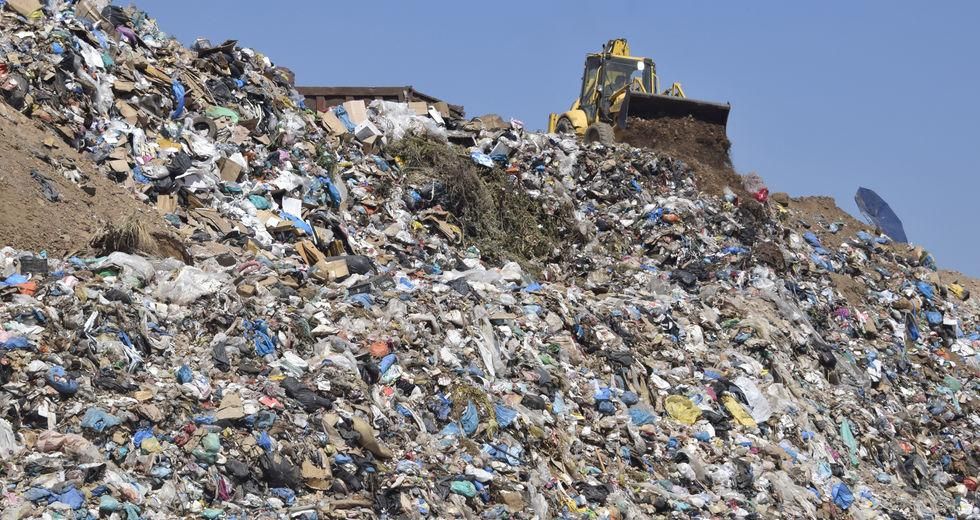
The long road of «disappearance» and rehabilitation of dozens of landfills in the region started in 2006, using the Region European funds which so far exceed the EUR 100 million. «Η Region is our full of dozens of unregistered and unlisted garbage dumps. There are too many landfills that had been remediated in previous years and began to pour garbage on rehabilitated landfills because they had nowhere to go,» he told ethnos.gr the Regional Governor of the Peloponnese Panagiotis Nikas. As he explained, the landfill closure programme will continue in the coming period. «There is funding to rehabilitate three more landfills one in eastern Mani, one in Tripoli-which is the largest-and one in Ermionida from the programme “Antonis Tritsis”».
The queen of landfills acquiring the largest waste management system in the country
But apart from the «disappearance» of landfills, the Peloponnese put aside the controversies of mayors who had been opposing for years the signing of the contract for the construction of waste management plants with PPP. By funding totalling €125 million, of which the EUR 62,5 million come from a subsidy NSRF, The implementation of the new waste management system in the Peloponnese Region, the largest of its kind in the country, started three months ago.
Panagiotis Nikas: We are finally closing the issues with the open landfills
«Already the works are being constructed and the 3 main waste treatment plants (WTPs) and an equal number of landfill sites (CHYTY) in Arcadia, Messenia and Laconia, as well as two waste transfer stations (SMA) in Corinthia and Argolida are in the process of being implemented. And before the summer, there will be garbage collection in areas with serious problems. In the coming months we will finally close the issues with open dumpsites», he added. Nicas.
According to the plan, private parties will take over the management of waste for the next 28 years Corinthia, Arcadia, Argolida, Messinia and Laconia. This will also stop the transport of garbage from the Peloponnese in processing plants in the Amfissa and in Kozani. According to its design, it will produce green energy, making it an environmental infrastructure with zero energy footprint.
The implementation of the project using cutting-edge technology, solves the environmental problem of Region of Peloponnese, with obvious benefits for tourism, education and new quality agriculture, which is a strategic objective for the country. The project is expected to create 600 jobs during the construction period, 200 permanent jobs during the operating period and a large number of parallel jobs. With the integrated waste management, ensure compliance with the applicable and applicable legislation and European laws, the protection of the environment is enhanced and the quality of life and health conditions of citizens are improved.
Carla: How Europe believed in the regeneration of a dried-up lake
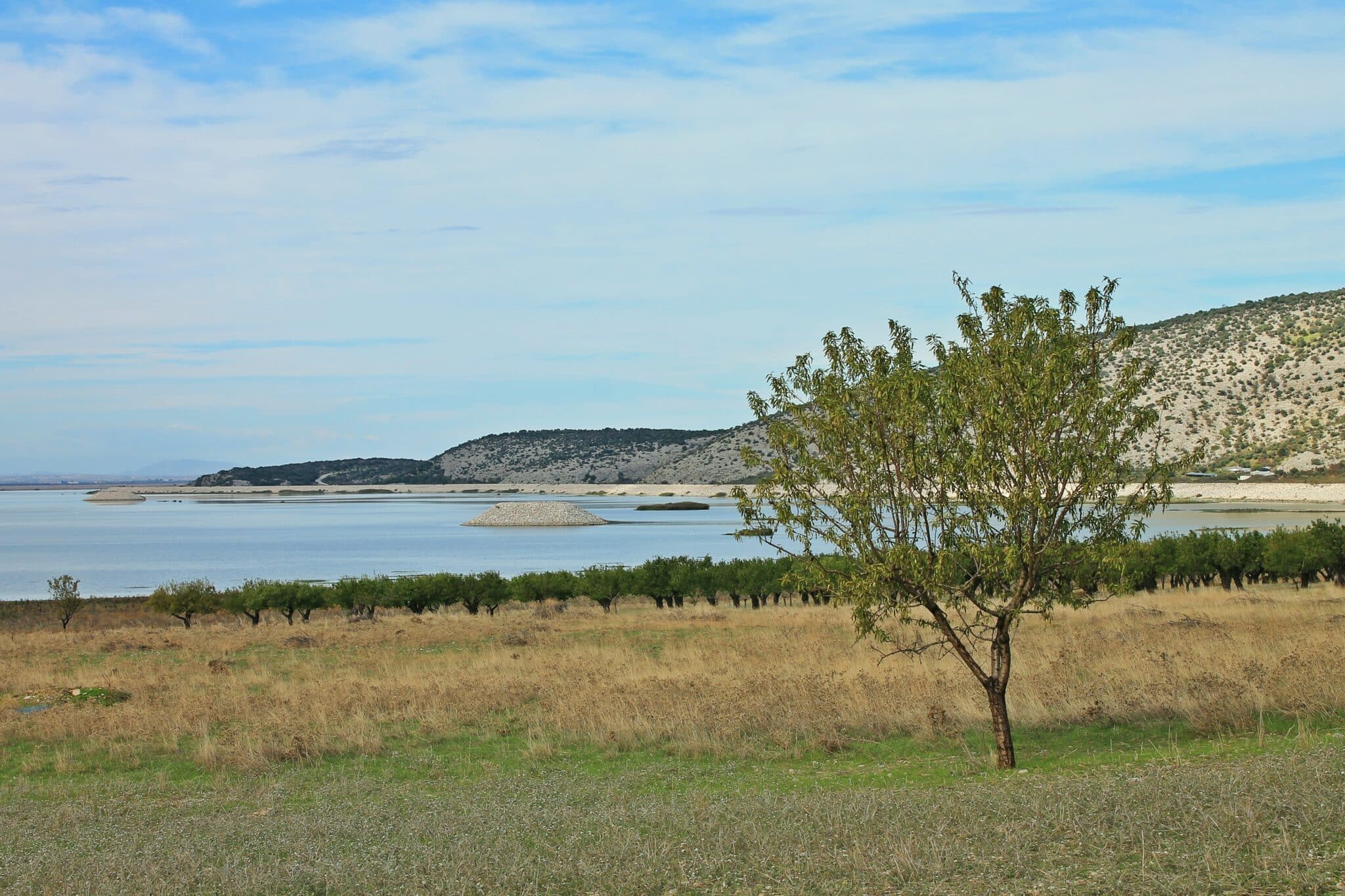
Ο 84-year-old Zisis Chatzizisis was born in Channels and until he was 25 years old he lived with Lake Karla- as he was a fisherman. He was one of the hundreds of fishermen who lived from the lake to the 1960. The clock of time, however, stopped abruptly on the 1960s, when the Greek state decided the drainage and as a result, many of the fishermen in the area, having lost their jobs, sought a better life abroad.
Sixty years later, the European Union «believed» in regeneration of the Lake, invested 250 million euros for this purpose and from 2018 life in the Lake Karla he came back. The restoration of her life Carlas-of the second Europe's largest wetland- is a pilot for European programmes, combining environmental protection and development dynamics. It is a visible symbol of European cohesion policy, one transformation, not just the lake but of a economy.
Kostas Agorastos: One of the largest environmental projects in Europe
«The Karla is the largest environmental project in the world. Balkans and in Europe in recent years. It is a environmental, cultural, tourism, irrigation and water supply projects» said in ethnos.gr the Regional Governor of Thessaly Kostas Agorastos. With the reconstitution of the Carlas 184 species of birds and 14 species of fish have returned to the area. There is an increasing movement of tourism and birdwatchers. Palaeolithic settlements have surfaced and a modern museum has been established in the canals.
At the same time, they are watered 15 thousand acres in the area while farmers have stopped drilling into the soil, which has stopped the cracking. In addition, drilling has been carried out and completed in the area of the municipality of Volos all the infrastructure until the water gets there. «We are waiting for the water table, we are studying the quality of the water and as soon as we are ready we will be able to supply water to the municipality of Volos». Along with Lake Karla, many flood control works were carried out. «And along the way 40 km that the Pinios to get into Lake Karla watered 150.000 acres of fields. It has changed the production in the region and the income of farmers» added Mr. Agorastos.
How Europe changed the course of the river Asopos
A decade later (1970) than the one that dried the Lake Karla the sinful history of the Asopos River began to be written. At 1970s every unscrupulous businessman buried the waste in the dirt and then he'd pour cement so they wouldn't show. In 2004, environmental degradation «hit red» in the area when analyses by the State General Chemical Laboratory detected for the first time high concentrations of chromium in drinking water drawn from the underground aquifer. On the initiative of local actors and funded mainly by the European funds launched an effort to change the direction of the history of Asopos and to revive.
«The financing of the OCT Asopu a total of more than €300 million from mainly Community, but also national and private funds, will allow to address one of the most important greater environmental problems of the country and Southeast Europe and at the same time the birth of an economic enclave with the potential to create thousands of new jobs,» he told ethnos.gr o Regional Governor of Central Greece Fanis Spanos.
Fanis Spanos: An emblematic example of multi-level governance and community building
As Mr. Spanos in Asopos, a strategic effort is maturing to turn back the clock on environmental degradation. «An effort that started with the initiative of my predecessor, Costas Bakoyannis, to bring together at the same round table disparate parties, producers, industries, citizens, institutions and collectives. But also the Attica, the Municipality, the central state, the European Union, a flagship example of multi-level governance and the application of the principle of subsidiarity, which is the quintessence of Community action».
At this «table» was born the Asopos Integrated Spatial Investment. A strategic framework of actions and interventions for the decontamination of Asopos and the development of a modern industrial park in Oinofita, in place of the current anarchic concentration of factories.
«A project that in the false dilemma «Economy or Environment?;»responds that development and the protection of nature and health are - and should be - inseparable companions. The stakeholders serving the OCHE Asopu methodically, step by step, until what we all expect and owe to our citizens becomes a reality. And for me, personally, it is a great strategic gamble. A bet that we will win together as Stereohellenes, as Greeks and as European citizens» concluded Mr. Spanos.
The experiment of de-lignification and European weapons
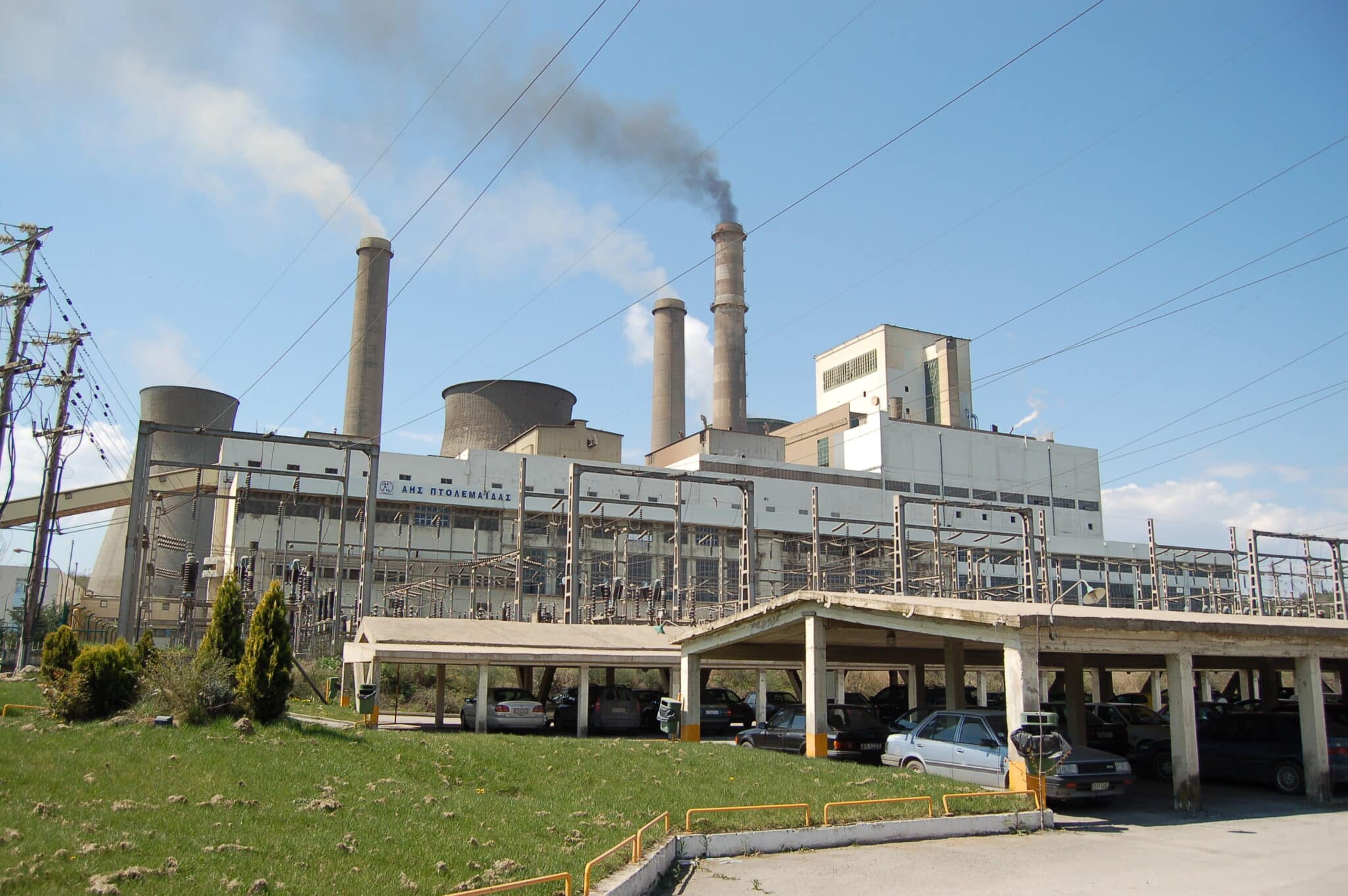
And they may have been cured in the last thirty years and with the help of Brussels dozens of environmental plagues in the country, European bet is the transition of the Western Macedonia but also of Megalopolis in the new era after de-lignification. In 2022 the 4 units of Ag. Demetrios and the 2023 the 5th - together with Megalopolis 4 and the unit of Florina. As regards the new plant Ptolemaida 5 will continue with lignite until 2028, when there will be fuel change.
Η Ptolemaida Kozani and the wider region, supporting up to the 45% of GDP them in the Mining and in the production stations of the DEI are currently facing the shock of a violent transition to an era without them. The challenge is great, as are the Risks. The President of the GENOP PPC George Adamidis, who comes from the area, spoke of the risk of a repeat of the nightmare scene that was set up in the Manchester the 1984, when the Margaret Thatcher closed 20 mines with 20.000 workers. Against this bleak picture, European and national resources are earmarked for the two lignite areas, amounting to EUR 5.05 billion, without taking into account the appropriations of the new NSRF. Among others, these include 16 flagship investments out of a total of 70 investment projects and an estimated 8,000 new jobs will be created.
Nikos Sarris: Europe must back us to survive the next day
«The process of degumming started many years ago. Unfortunately, our region was unprepared on all sides and our politicians had not taken the necessary decisions and society and the business world had not taken the necessary decisions,» he told ethnos.gr the President of the Chamber of Kozani Nikos Sarris and added: «For there to be a next day - we are not talking about growth; we are talking about sustainability the region should be supported financially with programmes from the Europe. With work programmes we can train and retrain those who will lose their jobs. And that's where Europe comes in. It's a bet for the Brussels that wants to change and impose carbon change in these areas.».
The Commission holds the key to the next day
Overall, the Gross Value Added (GVA) in Western Macedonia and Megalopolis is estimated to shrink by €1.3 billion over the 2020-2029 decade. This assessment is included, inter alia, in the drafts of the Territorial Fair Transition Plans (TTPs), which were sent, a few days ago, for consultation to the bodies of the two regions and will soon be sent to the Brussels. The approval of the Commission is the «key» that will open the floodgates to European funds from the three pillars of the Just Transition Mechanism, i.e. the Just Transition Fund, the InvestEU Special Regime to attract private capital and the European Investment Bank Loan Facility for public investment.
«The Fair Transition Fund, for which I had the honour to be the general rapporteur of the European Parliament and which was adopted by a significant majority, is the first important milestone in the implementation of the flagship initiative of the European Commission for a Green Europe. For a climate-neutral economy by 2050. For the practical implementation of the Paris Climate Agreement,» he told the ethnos.gr Manolis Kefalogiannis, MEP of the New Democracy and Rapporteur for the European Parliament on the Fair Transition Fund.
As explained by the MEP of the New Democracy with the Fair Transition Fund attempts to support in a socially just way the areas affected by the transition to the green economy. «The Green Deal, climate-neutral Europe is a flagship policy of the European Union. Because we have to hand over to the new generations at least a clean Europe».
The Fair Transition Fund bet
The big bet for the Checkout, the ambitious goal is to effectively support the areas most affected by delimitation and to decisively support the people of these areas. In a socially just manner. «With the Fair Transition Fund focus on social cohesion and job creation. To effectively help those regions that are dependent on lignite, as in our country the Western Macedonia and the Megalopolis. Inclusive. Without leaving anyone behind,» added Mr. Kefalogiannis.
A billion to the Peloponnese for the apologization of Megalopolis
According to Panagiotis Nikas, Regional Governor of the Peloponnese in total in Megalopolis almost a billion euros will come from national and European funds. «You understand the money given by Europe is too much. And the crucial thing is to use it in the right way. Η Megalopolis it is the area most affected and that is where the highest incentives should be given, not in neighbouring areas. Because if we spread out the ‘trahana’ and apply the same criteria to Tripoli and in Honeymoon, obviously it will not be selected after the Megalopolis. Megalopolis should have the highest investment incentives and the highest subsidies. We are pleased with the process and the way the discussions with the Fair Transition Fund». Nicas.
George Amyras: Brussels is an ally in reforestation
In addition to the de-lignification bet on the Europe remains the restoration of all burnt areas in the country. In the last seven years at least €75 million have been allocated for afforestation and infrastructure. The reforestation programme will continue in the coming years and will be financed with €310 million from the Recovery Fund. This is the largest afforestation programme ever undertaken in the country. She has 10-year term (by 2030), provides for the taming and reforestation of a total area of 500.000 acres that have been burned, deforested or degraded will enrich the country with 30 million certified trees. «Forests belong to people, nature and ecosystems and the leadership of the Ministry of Environment and Energy is willing to restore them from damage caused by natural disasters and to shield them from potential risks. And in this effort the European Union is our ally,» he said. in ethnos.gr the Deputy Minister of State for Environmental Protection George Amyras.