Hyoscyamus albus L.
Syn. Hyoscyamus varians Vis., Hyoscyamus major Mill., Hyoscyamus aureus sensu Gouan, non L.
Solanaceae
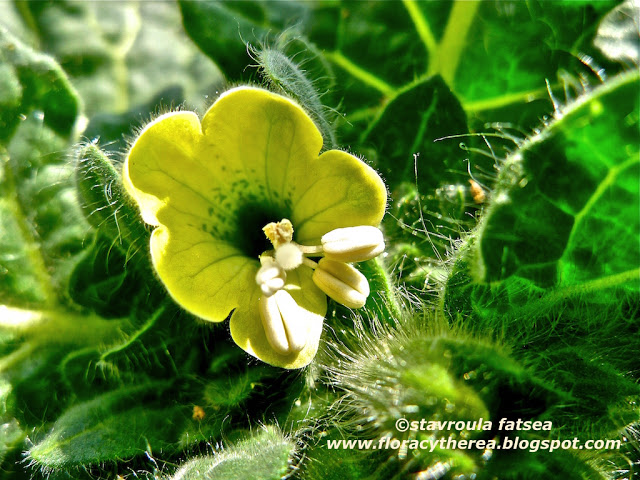
An annual or biennial plant with hairy leaves and a strong scent. It reaches a height of 40–50 cm. It blooms from late March through June in rocky areas, wastelands, and ruins.
Originally native to Eurasia, it has now spread throughout the world. All species of the genus are toxic and extremely dangerousif consumed raw. They contain three potent alkaloids with medicinal properties—atropine, hyoscyamine, and scopolamine—which are used in the pharmaceutical industry after undergoing special processing. They have sedative, antispasmodic, and analgesic effects.
The medicinal properties of henbane have been known since ancient times. Dioscorides describes three species (Hyoscyamus niger, Hyoscyamus aureus, and Hyoscyamus albus) and prefers the third species because he considers it to have a milder effect. He used various preparations made from the leaves, seeds, and root to relieve toothaches (a use we still see today in Cretan folk medicine), eye inflammation, and generally as a pain reliever.
…There are, however, three varieties of this plant: one bears purplish-red flowers, leaves resembling those of the myrrh tree, black seeds, and hard, spiny husks; the other has apple-like flowers, softer leaves and lobes, and the seed is yellowish-brown, like that of the erysimon. Both of these are considered to be manic and cause dandruff, and are difficult to use. The third, however, is the mildest and easiest to use for medicinal purposes, oily, soft, and downy, with white flowers and white seeds; it grows by the sea and in ruins. The white one is therefore to be used; but if this is not available, one should use the blond one, and reject the black one as the worst. (4.68)
The name comes from the ancient Greek words *ys* - *yos* = pig and *kyamos* = chickweed, because, according to one tradition, pigs can eat the plant without being poisoned. .