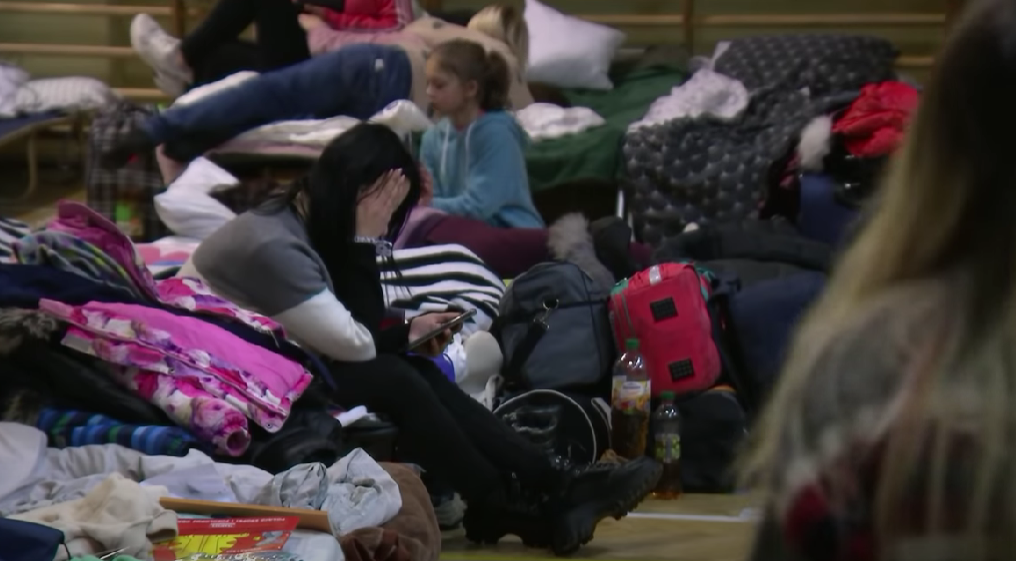
»I haven't been outside since the war started, and I'm running out of food," said, on the evening of Wednesday, March 2, said 31-year-old Ukrainian singer-songwriter Zi Faámelu. As she watched the apartment building where she lives in Kyiv gradually being evacuated by its residents, she, having nowhere to go, remained isolated for a week behind tightly shut doors and windows. Her acquaintances and friends had scattered to safer places both within and beyond the country’s borders.
Zi is a transgender woman who was born in Crimea one year before the dissolution of the Soviet Union. Until just a few days ago, she was living alone in the Ukrainian capital, far from her family. «Unfortunately, my parents, who still live in Crimea, don’t believe that Russia is attacking the country. They’re convinced that the Ukrainians themselves are attacking their own people. They’re so misinformed that I can’t find any common ground with them. It’s very sad what’s happening because their child here is in danger,» she says, visibly disappointed.
Stopped at the border because she is transgender
As this text is being written, Zi manages to escape the chaos in Kyiv and attempts to reach the country’s border, making a single plea to the authorities: to let her through. With her passport listing her gender as «male,», She fears both possible incidents of transphobic violence and the possibility that she will not be allowed to leave the country due to the general mobilization of men between the ages of 18 and 60.
«I haven’t changed my documents because I would have to undergo dozens of humiliating tests to prove that I’m a woman. I didn’t want to go through that, so I decided to keep my male passport.”. Someone once told me that I’m not a person, but just a figment of someone’s imagination. Trans women in Ukraine feel invisible. It’s as if we don’t exist. They treat us as if we’re playing with dolls, as if we’re just pretending to dress up (in women’s clothes). »Right now, in particular, I can’t stay silent; I want the United Nations to hear me,” she says, vividly painting a picture of a war within a war.
At noon on March 5, Zi posted on her Instagram profile that she had reached the border. Shortly afterward, as she described in her posts that what she feared most had happened, my attempts to contact her failed. «By sheer luck, I passed through the first border checkpoint along with some other women. At the second checkpoint, they recognized me and want to send me back. I’m stuck here, and they won’t let me through. I can’t say exactly where I am for safety reasons. I need someone with influence to come get me, to help me get out of here. Honestly, I don’t know what might happen to me.».
In the early hours of March 6, he messaged me online to let me know he was safe and well. She hasn’t slept at all for the past four days, but she’ll soon try again to leave Ukraine from a different location. ’They refused to let me cross the border because my passport says «male.» As they told me, they can’t break the law. They don’t care that I’m a woman. They’re just doing their job. Change has to come from the government.”.
At the same time, Zi is posting some of the dozens of transphobic messages she receives constantly on social media: «Stop crying and go fight. You were born a man. You’ll never become a woman. Accept it and go back to defend your homeland.».
«LGBTQI people in Russia are suffering»
Sasha, a 25-year-old transgender woman who has been 540 kilometers west of Kyiv since last Wednesday, feels just as terrified. As she was leaving her home and walking toward the train station in the Ukrainian capital to catch a train to the city of Lviv, she heard a loud explosion at the telecommunications and television tower that was being bombed just a few blocks away.
«I was on the street with a suitcase, trying to leave, to save my life, while people were being killed behind me. I couldn’t put off this trip any longer; I no longer felt safe,» he tells Magazine a few hours after her arrival.
Although she was born in Rivne, she had moved to an apartment in Kyiv. As a teenager, she worked as a model—a field she hoped to return to professionally after the COVID-19 pandemic ended—while also making plans to study cosmetology. Before the Russian invasion, she had only one dream: to get her papers in order and live a peaceful life. To be able, without any fear, to feel and express herself freely as a woman. «Step by step, I was moving toward my goal of changing my details on my official documents. Only then would I feel truly free.».
Far from her family, who are in the western part of the country in a location that is safe for the time being, and with her friends having already fled their homes in the early hours of the invasion, Sasa was left all alone. ’I’m not in a relationship, nor do I live with anyone, so I was left completely on my own. I had to get out somehow. I talk to my mom 25 times a day now.«.
With the current martial law prohibiting all able-bodied men from leaving, except for those actually fighting in this war, Sasha fears the terrifying possibility of being stopped at the border. ’Since the name and gender on my passport are male, the authorities won’t let me leave the country. I’m afraid that, even though I can’t serve in the Ukrainian army, they won’t let me cross the border.«.
The doctors whom she asked to email her at least a confirmation that the amendment of her documents was in progress were unable to comply, given the situation that is keeping them away from the hospitals. The information she receives daily from the border is anything but encouraging. The thorough checks she hears are being carried out make her escape impossible, leaving her feeling trapped.
«The fact that I’m trans doesn’t define my entire identity. I’m a woman who wants to live like all the other women in our society. We may not have found solutions to all our problems in Ukraine, but our voices aren’t silenced when we oppose the government. We didn’t live under a regime of fear. What will happen if the Russians happen to prevail? Russia is an extremely hostile country toward LGBTQI people. It has terrible laws that prevent citizens from speaking out against the government, demonstrating, or protesting about anything. LGBTQI people bear the brunt of this pressure; they are suffering.».