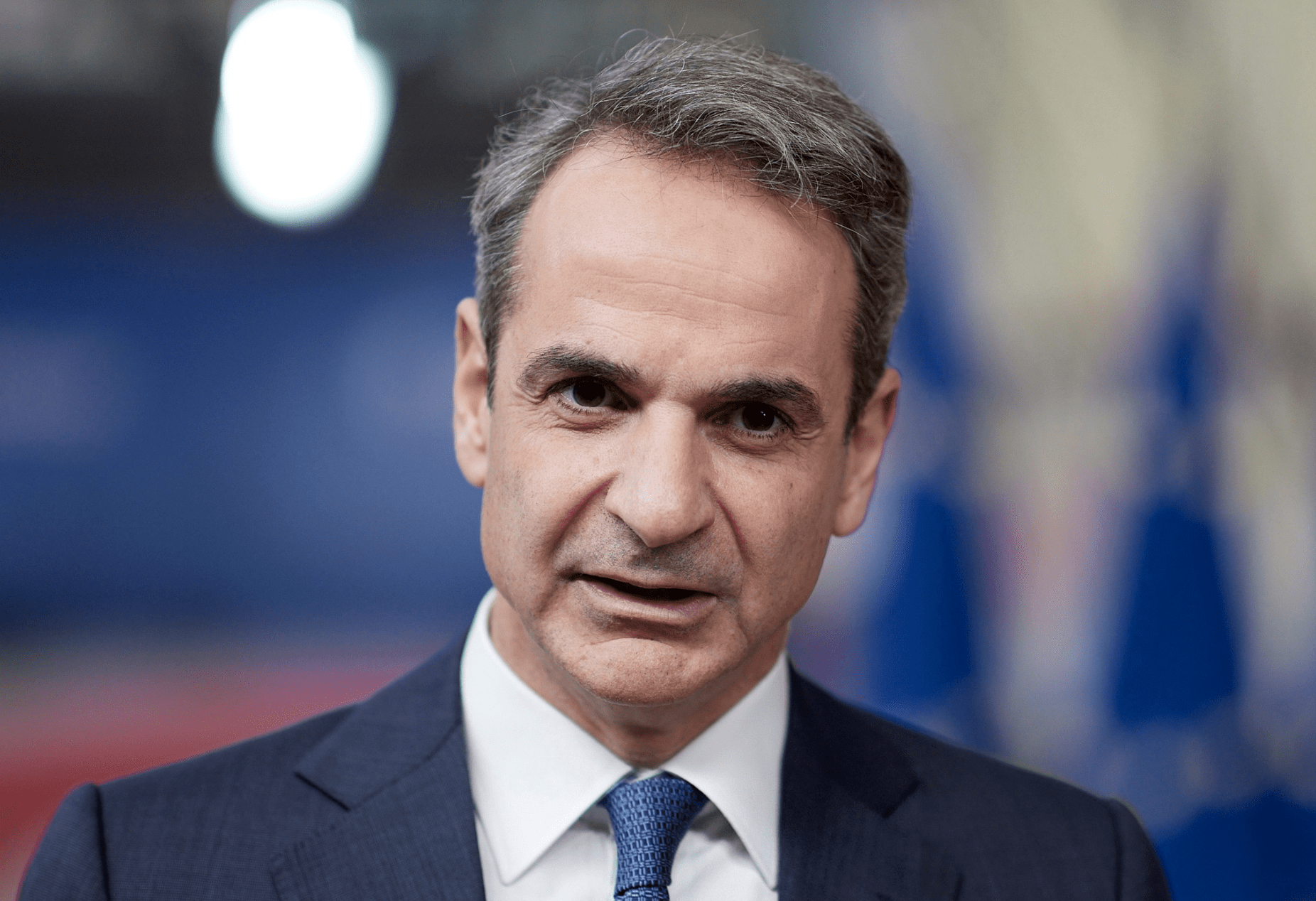
The election of Kyriakos Pierrakakis as president of the Eurogroup is not a neutral or technical development. It is a purely political choice that reflects Kyriakos Mitsotakis’s strategy of shifting critical decisions outside the national sphere, shield the government from the social backlash that is coming, and continue austerity with a European stamp of approval.
The official confirmation of the candidacy and the election on December 11 do not change the essence of the matter. This move is not about the «prestige of the country,» but rather the prime minister’s need to control—as much as possible—the context within which the next difficult decisions will be made.
Pierrakakis was not chosen at random. Coming from the modernizing wing of PASOK, he joined New Democracy in 2019, marking a strategy that Mitsotakis consistently pursued, the absorption of the reformist Center, a political movement that had already lost its ideological coherence and social relevance. From Floridis and Chrysochoidis to Skertzos and Mendoni, New Democracy «borrowed» figures, rhetoric, and agenda items, constructing the image of a centrist government that, in practice, implements hard-line right-wing policies.
Pierrakakis, with his carefully crafted technocratic profile and the aura of «credibility» he cultivated during the years of the bailout programs, was the ideal figure to symbolize this transformation.
The presidency of the Eurogroup is anything but a technical role. This informal and opaque body has been the primary mechanism for shaping European economic policy during the crisis. From the memoranda and primary surpluses to the «reforms» imposed as conditions for financing, the Eurogroup has had an enormous impact on the lives of millions of people, with Greece at the center; the shadowy figure of Dijsselbloem has been indelibly etched into history.
Its president does not change the rules. However, he sets the agenda, the framework, and the political tone of the discussions. And that is precisely what Mitsotakis is seeking to do: not to alter the European economic line, but to manage it through communication to his own advantage.
This timing is no coincidence. The period of fiscal easing is coming to an end. Deficit and debt rules are being reinstated, growth is slowing, and surpluses are once again mandatory. Greece is entering a new cycle of strict fiscal oversight.
In this context, a Greek president of the Eurogroup offers the government a crucial political advantage: the ability to present harsh austerity measures not as its own choices, but as «unavoidable European decisions.» This serves as a mechanism for political relief and a condition for the survival of the government’s strategy.
At the same time, Pierrakakis’s election serves as a response to the erosion of Kyriakos Mitsotakis’s international image. The wiretapping scandals, serious concerns about the rule of law, the erosion of press freedom, and criticism from the European Parliament have left a deep mark. The response does not come in the form of a policy shift, but rather by placing «his own» people in key European positions.
The support for Manfred Weber is no coincidence. The European People’s Party is looking for predictable figures of «centrist credibility» who will not challenge fiscal orthodoxy. Pierrakakis’s manifesto letter, with its emphasis on fiscal discipline, a unified economic strategy, and the digital euro, confirms a clearly neoliberal direction that reinforces technocratic opacity and limits democratic accountability.
The crucial question is not whether Greece «won» the Eurogroup presidency. It is what kind of policy this election portends. The experience of the 2010s has shown that when economic policy is dictated by doctrines of austerity, the burden always falls on the same people: workers, small and medium-sized business owners, young people, and the unemployed.
The Eurogroup will not become more socially oriented just because its president speaks Greek. On the contrary, the government will gain yet another excuse for cuts, the dismantling of the welfare state, and market-friendly reforms. This is simply a continuation of the same policy: austerity with a human face and power without accountability.
This is the story—this is reality
Story: The government presented Pierrakakis’s election as a «national success.» It speaks of an upgrade in the country’s international standing, of «Greece’s return to the center of European decision-making,» and of confirmation that the era of crisis has definitively come to an end.
Reality: The Eurogroup is not a forum for national representation but a mechanism for enforcing specific economic rules. Its president does not negotiate on behalf of his country, nor does he «represent» the people. He ensures that everyone complies with the prevailing policy. Anyone who speaks of «national interest» from this position either does not understand or is deliberately concealing the role of the body.
Story: A Greek at the helm of the Eurogroup will be able to show «understanding» for the needs of the South and serve as a bridge for dialogue during these difficult times.
Reality: Understanding is not a political category in the Eurogroup. The rules on deficits, debt, and surpluses do not change based on good will or national origin. The return to strict fiscal discipline is already a given and will be enforced regardless of who is in power. The difference lies in who will present it domestically as «inevitable.».
Story: Kyriakos Pierrakakis, with his technocratic profile, embodies moderation, stability, and seriousness.
Reality: Technocracy, divorced from social goals and democratic accountability, is not neutral. It is a political choice. And in Europe, it has repeatedly served as a tool for imposing austerity policies without any political cost to those who decided on them. This «neutral» face is exactly what the markets need.
Story: The nomination bolsters the government's standing in Europe.
Reality: This is an attempt to cover up the damage, not an institutional upgrade. Wiretapping scandals, issues regarding the rule of law, and the erosion of press freedom have seriously damaged the prime minister’s image. The answer is not a change in policy, but the appointment of individuals who are completely under control to key European positions.
Story: Greece would «benefit» if a Greek minister were elected president of the Eurogroup.
Reality: Greece has nothing to gain if the very same policy that led to social exhaustion simply changes hands. On the contrary, the government gains yet another pretext to present cuts, surpluses, and the weakening of the welfare state as a supranational necessity rather than a conscious political choice.
That is what is really at stake. Not «national success,» but managing the next phase of austerity with as little political cost to the government as possible.