

The taxpayers in I.E. They are very often forced to pay to repair environmental damage, while the companies responsible avoid the costs, the European Court of Auditors said on Monday.
The European Union's Executive Committee will propose rules this year to require companies to identify and address the risks posed by human rights and the environment in their supply chains.
However, to date, the EU regulation has had a mixed track record in holding those responsible for environmental damage caused in Europe accountable, and in some cases, companies are not required to comply, the auditors noted in a report.
«Those who pollute must pay for the environmental damage they cause,» said the report's author, Vioreil Stefan. «Until now, however, European taxpayers have all too often been forced to foot the bill that others should have paid.».
The auditors examined a sample of 42 environmental remediation projects, supported by 180 million euros in EU funds, to address issues such as industrial pollution and contaminated landfills in Italy, Poland, and Portugal.
About one-third of the funds were spent on «orphan pollution,» where contaminated sites had been damaged so long ago that those responsible could not be identified or held accountable. In other cases, EU taxpayers footed the bill for cleanup because the company responsible was insolvent.
The auditors stated that the EU should close the loopholes in the legislation that allow companies to get away with it. This could include lowering the emission limits that large industrial facilities must meet in order to obtain an operating permit.
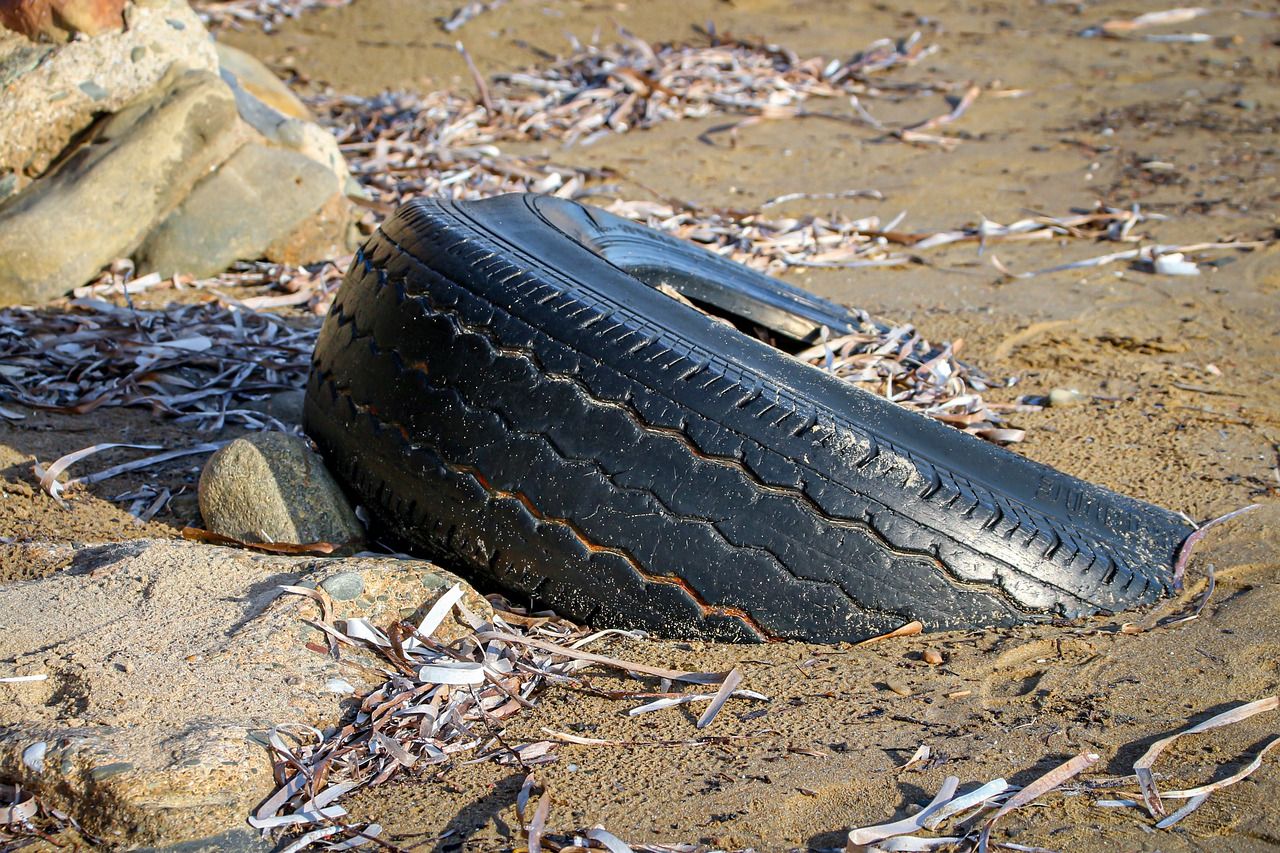
Under EU law, companies are liable when they cause «significant» environmental damage, but the auditors noted that the law needs a more specific definition of such damage.
Brussels could also consider legislation requiring companies to have insurance, cash reserves, or some other form of security to ensure that if they cause environmental damage, they will be able to pay the costs, the auditors said.
Reactions to the new measures
Meanwhile, the new measures to reduce plastic waste in the European Union have drawn sharp criticism from environmental protesters, who argue that they do not go far enough, while manufacturers, for their part, are concerned that these rules could lead to the adoption of different standards across the bloc.
In an effort to reduce pollution, the EU banned a range of single-use plastic products on Saturday, such as straws, plates, cutlery, and cotton swabs, while bottles must contain more recycled plastic.
The directive, which also requires member states to reduce the consumption of certain single-use items, took effect in 2019, but Member States had until July 3 to transpose it into national law.
«Single-use plastics are a symbol of today’s society, and phasing them out is an obvious first step in the fight against plastic pollution,», said Frédérique Mongodine of the NGO «Seas At Risk.» «However, we cannot rely solely on the political will of national governments,» she emphasized.
Only eight member states have notified the European Commission of the measures they have adopted regarding the implementation of the directive, according to the Commission’s database. Most have adopted «barely the minimum requirements» or are missing some of the required measures, according to the NGO Zero Waste Europe.
In other countries, such as Poland and Bulgaria, the transposition of the directive into national law is still underway or has not even begun.
Plastics manufacturers have also criticized the new rules, saying that they threaten to fragment the market if some countries comply with the EU’s requirement for 30% recycled content in consumer plastic bottles by 2030 while othersopt for more ambitious targets.
This could force some manufacturers to produce different products for different countries, which would not be economically viable, according to an industry source.
Plastics Europe, which represents manufacturers, called on the Commission to ensure that the guidelines leave no room for misinterpretation, so that Member States do not adopt different rules.