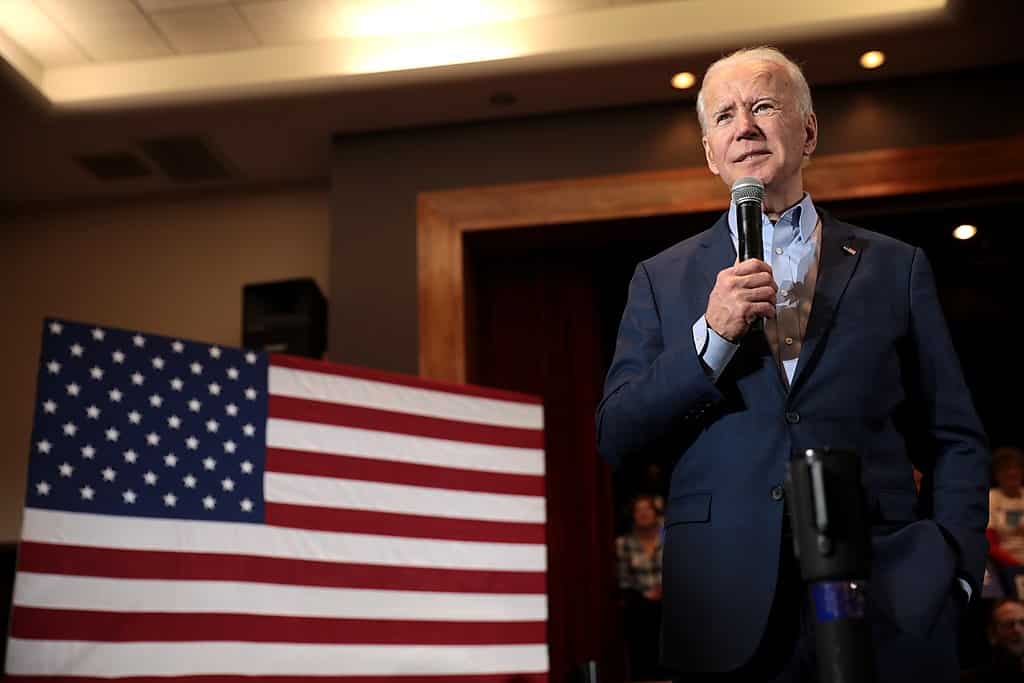
The U.S. president will have been in office for 100 days the day after tomorrow Joe Biden. By partially fulfilling one of his key campaign promises, Biden is moving forward with minimum wage increase to $15 an hour, for now only for those working in cleaning, food service, and construction on behalf of the federal government. The minimum wage will increase by 37% in March 2022 from the current rate of $10.95 per hour.
It remains to be seen, however, whether the U.S. president will implement a similar increase in other sectors (fast food, gas stations, etc.), with the minimum wage having remained stuck at $7.25 per hour since 2019. The provision for its increase, which had initially been included in the $1.9 trillion economic relief package bill, was removed due to opposition from Republican senators and Biden’s desire to secure bipartisan consensus.
The at least partial fulfillment of the demand to raise the minimum wage to $15 per hour It is a significant victory for the new militant labor movement that has emerged in the U.S. in recent years. Biden agreed to this request, Yielding to pressure from the left, while at the same time seeking to block the path toward further radicalization of the Democratic Party.
Of course, an increase in the minimum wage is not enough on its own to mitigate the growing social inequalities in the U.S., which seemed unaffected even by the pandemic of coronavirus and the restrictive measures.
According to a recent article in the Financial Times, the average compensation for CEOs of the 3,000 companies in the Russell stock index rose by 6% last year. At the largest companies included in the S&P 500 index, CEO compensation—including bonuses and long-term stock awards— reached $13.3 million in 2020, marking an increase for the eleventh consecutive year.
In contrast, the average compensation for employees at S&P 500 companies fell by 17% last year, causing the ratio of CEO pay to employee pay to skyrocket from 182 to 1 to 227 to 1.
By Moses Litsis