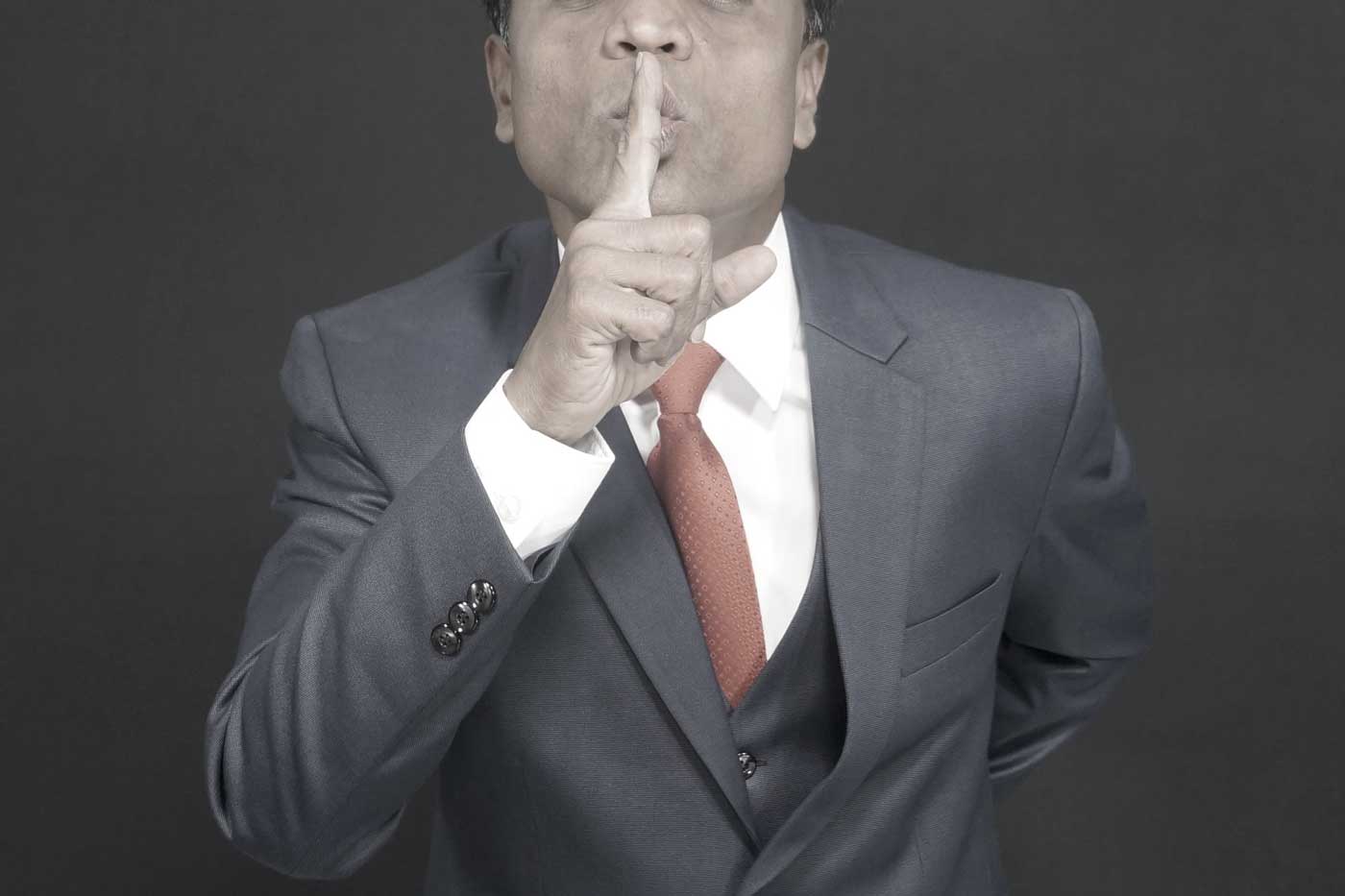
Dimitra Kroustalli was forced out of *To Vima* following pressure from the Maximos Mansion.
Elena Akrita's article in *NEA* was censored because it was «offensive.» Our colleague resigned.
Panos Haritos’s show on ERT was abruptly canceled for «unknown reasons»…
The show hosted by the multi-award-winning Giorgos Avgeropoulos was canceled.
The strikers (especially at Alpha and Star) are being threatened because they are striking to prevent the number of employees at each national television channel from being reduced.
We are living in a dystopian reality that raises questions about journalism and, by extension, democracy.
The issue of «freedom of the press» has now become a matter of the quality of democracy. The reason is simple: No one is prevented from saying what they want, but if that message doesn’t reach the citizen, it’s as if they hadn’t said it at all! If journalists write something that does not have the approval—or even the tolerance—of the owner or the government, they are forced out of their jobs or into self-humiliation. When Akrita’s article is cut or Kroustalli is forced out (for her strongly anti-SYRIZA columns…), what message do the rest—and especially the younger journalists—receive? It’s not easy to say «no» at a time when opposition media outlets have been severely restricted and cut off from advertising… «No» can mean unemployment or even a career change.
Furthermore, with regard to the information provided by television channels, when citizens watch a program where, in theory, the guests are «divided» into government and opposition supporters, there is a pretense of «objectivity.» Except that the majority of hosts are consistently pro-government, as are the majority of the «guest» journalists…
«So everyone else can express their opinion, but we can’t?» these fellow presenters object. «You’re in favor of Akrita and Haritos freely expressing their views, but we’re not allowed to express our own?»;
Let’s be clear: The problem is one-sidedness. The suppression of any opinion that deviates even slightly from the «official line,» because that is what the major media owners agreed upon with the government. The «stifling» of any dissenting opinion and the suffocating restriction of opposition discourse. Those of us who have worked in key positions in the media know this well: Owners always seek to control what is broadcast by the media outlets they control. In the past, there was greater tolerance for differing opinions, perhaps because we journalists were more determined to demand greater freedom, and we were defended by journalist-editors, while there were also owners for whom the media wasn’t just a «side job»… Eleni Vlachou and Christos Lambrakis are a few examples.
The data released by KINAL are revealing, covering the period from October 15 until the lockdown was imposed—during which government officials and New Democracy representatives appeared on television channels 210 times, SYRIZA 90 times, and the Movement for Change 19 times… What can the KKE and MERA25 say about this???;
The issue of freedom of speech—the ability of journalists to express their own independent views and not act as «carriers of the party line»—is a matter of democracy. It concerns all journalists, all democratic citizens, all democratic parties, and of course it is not limited to the present moment…
Social media is a viable outlet, but even there, certain sites have problems, mainly with fake news and the easy and unchecked reproduction of «news» stories.
What is certain is that journalism is now being discredited, and the public views the news with skepticism, thus creating fertile ground for all kinds of dangerous views. These views are dangerous for democracy, for public health (e.g., anti-vaccine advocates), and for the development of tomorrow’s citizens…
It seems we are heading toward an unprecedented situation. Everyday life will not reflect what the majority of the media is portraying. The image presented on television (primarily) will not match reality. And unfortunately, this is a recipe for division and social tension at a time when a collective response is needed to address the unprecedented problems facing the country.
Author of the article:

Journalist, member of ESIEA, member of the Board of Directors of R/S Athens 984