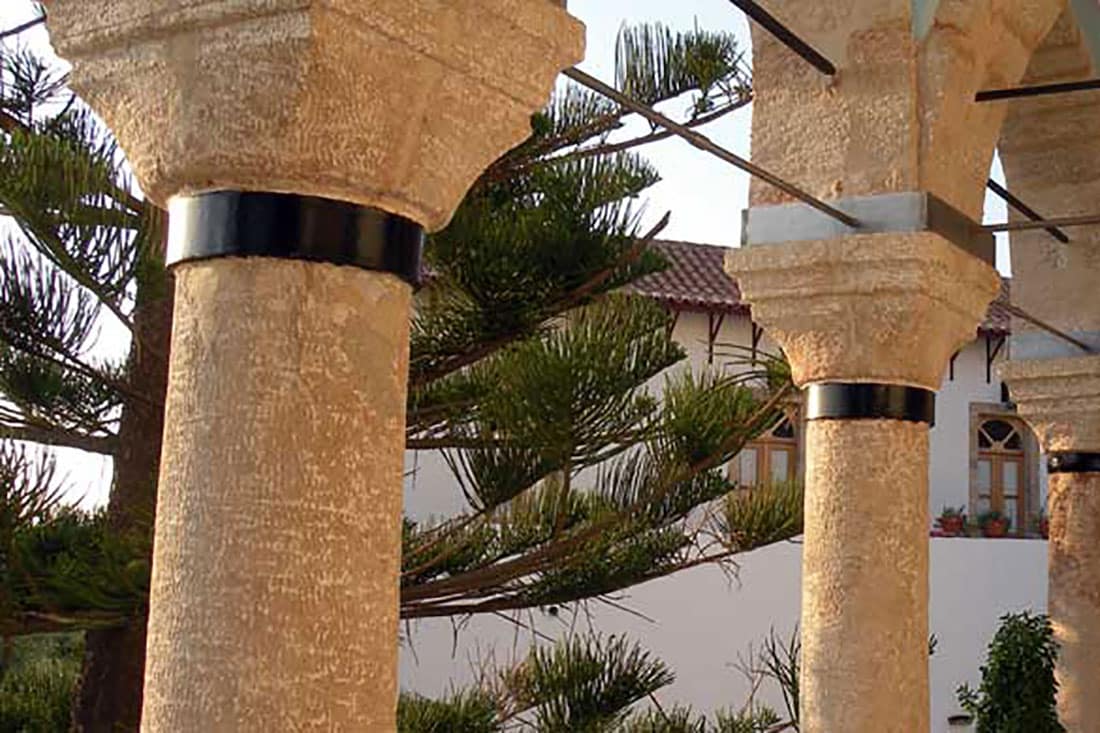
There are certain places beyond Greece’s geographical borders that still harbor the spirit of Hellenism. One of these is Koukloutzas in Smyrna (now Altındağ). A suburb that for decades served as the unofficial «capital» of the Kythirian diaspora in Asia Minor, rightfully earning the nickname «Greater Kythira».
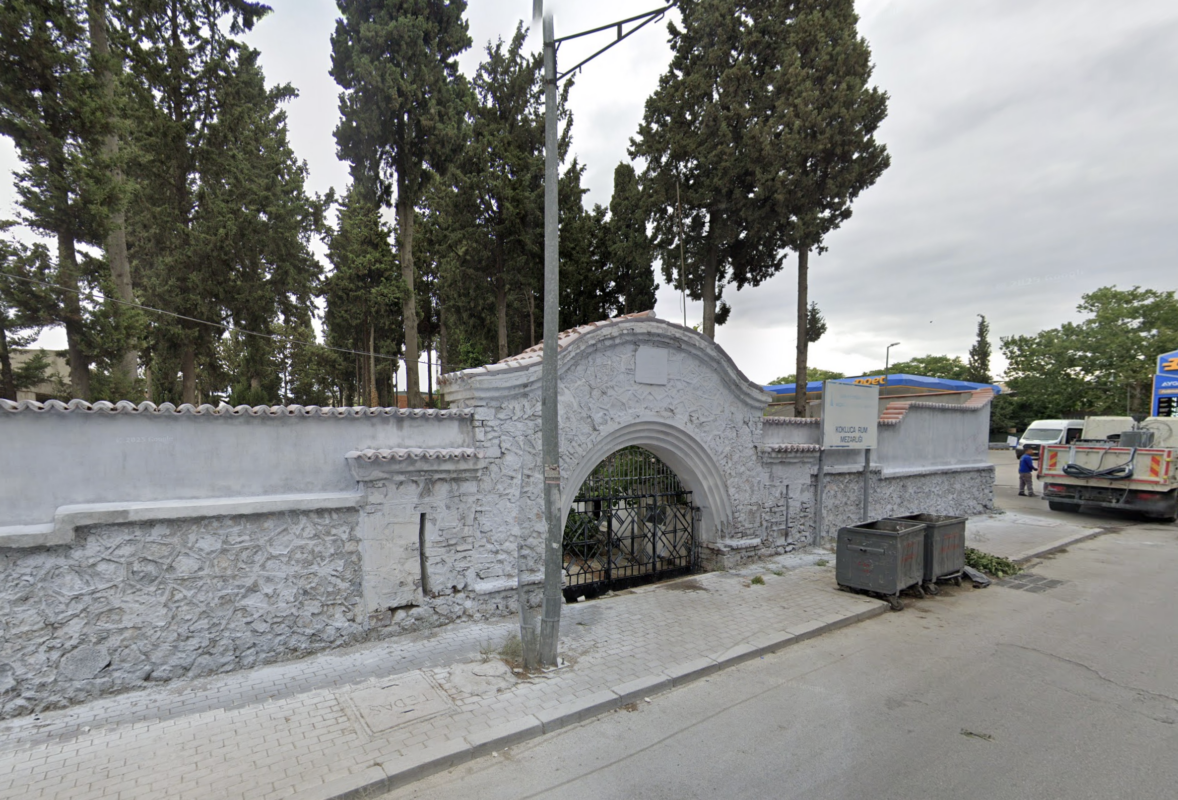
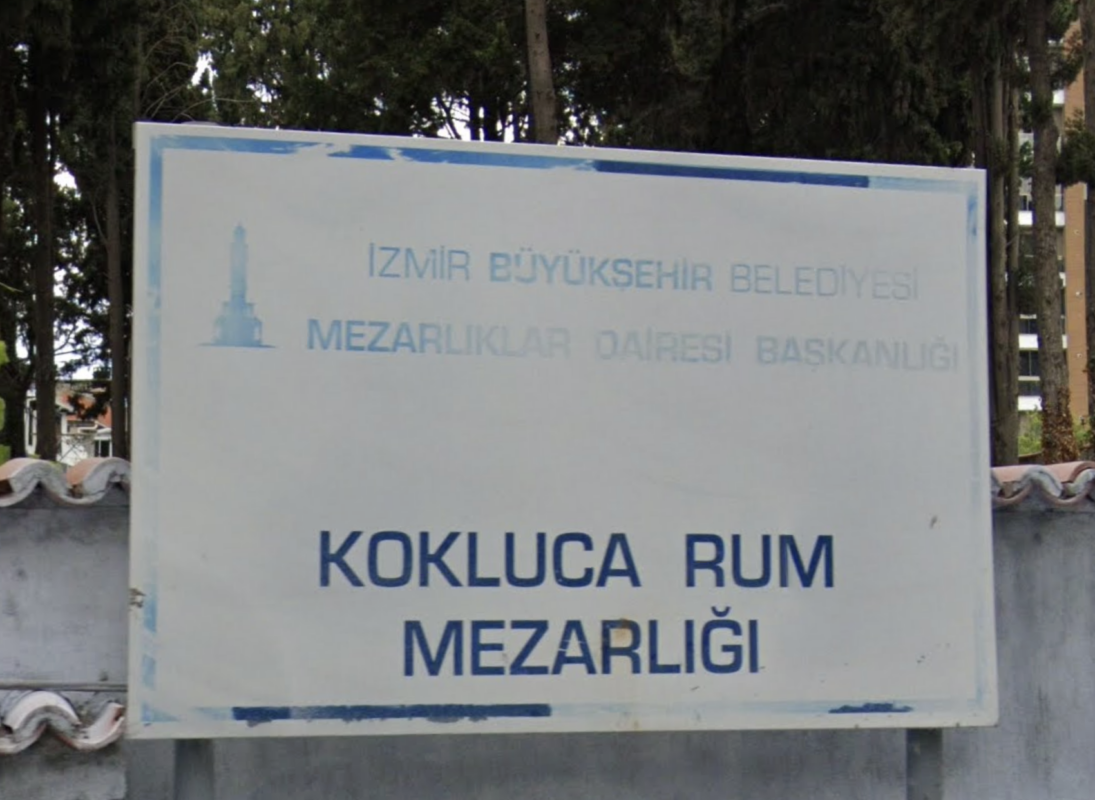
Today, the location of the Greek Orthodox Cemetery of Koukloutza, as indicated by the official municipal sign that reads «Kokluca Greek Cemetery», it evokes memories of a time when the Tsirigo style flourished along the coast of Ionia. Behind the tall stone wall with its traditional arch and the characteristic tall cypress trees lie the ancestors of a community that excelled, created, prospered, and was ultimately violently uprooted in 1922 with the destruction of Smyrna.
How Koukloutzas Became a Tsirigotikos
The mass migration from Kythira to the coast of Asia Minor reached enormous proportions during the 19th century. The island’s poor, rocky soil, combined with the rapid commercial growth of Smyrna, led thousands of Kythirians to seek a better life. In the early 20th century, of the approximately 5,000 Greek residents of Koukloutza (located just 6 kilometers from Smyrna), The 2,600 were of Kythirian descent. According to sources, the total number of Tsirigotes in the greater Smyrna area was around 15,000, perhaps even more.
Asylum for «British Nationals»
The settlement of the people of Kythira in Koukloutza had not only economic but also diplomatic benefits for the local Greek community. Since the Ionian Islands were under British protection (until 1864), the people of Kythira held British passports. Taking advantage of the «Conventions» (special privileges granted to European citizens in the Ottoman Empire), they transformed Koukloutza into an informal, inviolable «sanctuary.» If a persecuted Greek from another region managed to find refuge in the Kythirians’ quarter, the Ottoman authorities were reluctant to intervene for fear of a diplomatic incident with Great Britain.
Professional and Social Dominance
The Tsirigotes of Smyrna did not merely limit themselves to survival. They completely dominated the city’s economic and port activities.
- The Maunieris: They controlled the loading and unloading of ships, as they owned the barges at the port of Smyrna.
- Social Contribution: Their strong organization led to the founding of the «Kythira Brotherhood,» which provided crucial support for the operation of schools—including the legendary Evangelical School of Smyrna—hospitals, and churches.
Uprooting and Memory
The Asia Minor Catastrophe of 1922 marked the tragic end of this thriving community. The «Tsirigotosmyrnians» took the path of exile to metropolitan Greece. Many of them settled in Thessaloniki, giving their new homeland the name of their beloved suburb: Neos Koukloutzas (the present-day Municipality of Evosmos). Others built new lives in Attica, mainly in Vyronas and Piraeus, bringing with them the industriousness and nobility of Smyrna.
Today, the boundary wall of the «Kokluca Greek Cemetery» stands there to remind us how a small Ionian island managed to take root in the soil of Ionia, writing one of the most glorious and, at the same time, tragic chapters of our modern history.
—
For the historical documentation of this special feature, information was drawn from the following sources:
Special Studies on the Kythirians of Smyrna:
- Kasimati, Koula (2014). Smyrna: Greater Kythira. The Kythirians in Ionia (18th–20th centuries). Athens: Gutenberg Publications & Society for Kythirian Studies. (It is the most comprehensive and up-to-date account of the Kythirian presence in the region.).
- Kalligeros, Emmanouil P. (1993). The Kythirians of Smyrna and the Lost Homelands. Athens: Society for Kythirian Studies.
- Leontsinis, George N. (1987). The Island of Kythera: A Social History (1700–1863). Athens. (It provides a detailed analysis of the privileges enjoyed by the people of Kythira in Asia Minor as a result of the British Protectorate over the Ionian Islands.).
History of Smyrna and Its Surroundings (Koukloutzas):
4. Kararas, Nikos (1955). Villages of Bournova: Hatzilaris – Narlikioi – Bounarbasi – Koukloutzas – Naldoukeni. Athens: Association of Smyrnaeans. (A firsthand historical account of the suburbs of Smyrna and the composition of their population).
5. Anagnostopoulou, Sia (1998). Asia Minor, 19th century–1919: The Greek Orthodox Communities: From the Millet of the Romioi to the Greek Nation. Athens: Hellenic Letters.
Regarding the resettlement of refugees in Greece:
6. Kokolias, Apostolos K. 90 Years of Vyronas. At the Foot of Mount Hymettus. (It describes in detail how the people of Kythira from Koukloutza established new communities in Vyronas and Neo Koukloutza / Evosmos, Thessaloniki.).
7. Foundation for Hellenism (IME). Encyclopedia of the Greek World, Asia Minor. Entry: “Koukloutzas” (Online source).