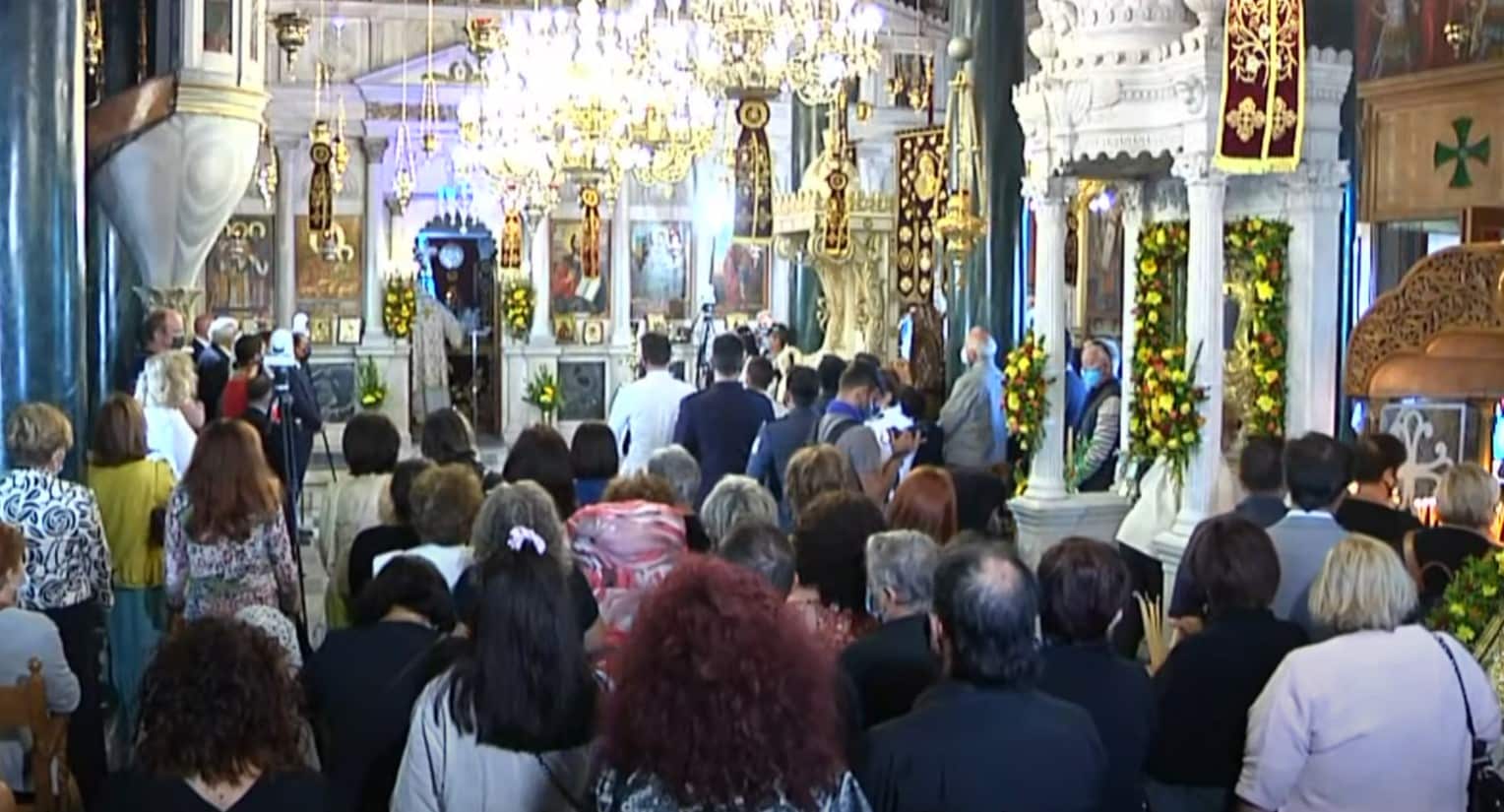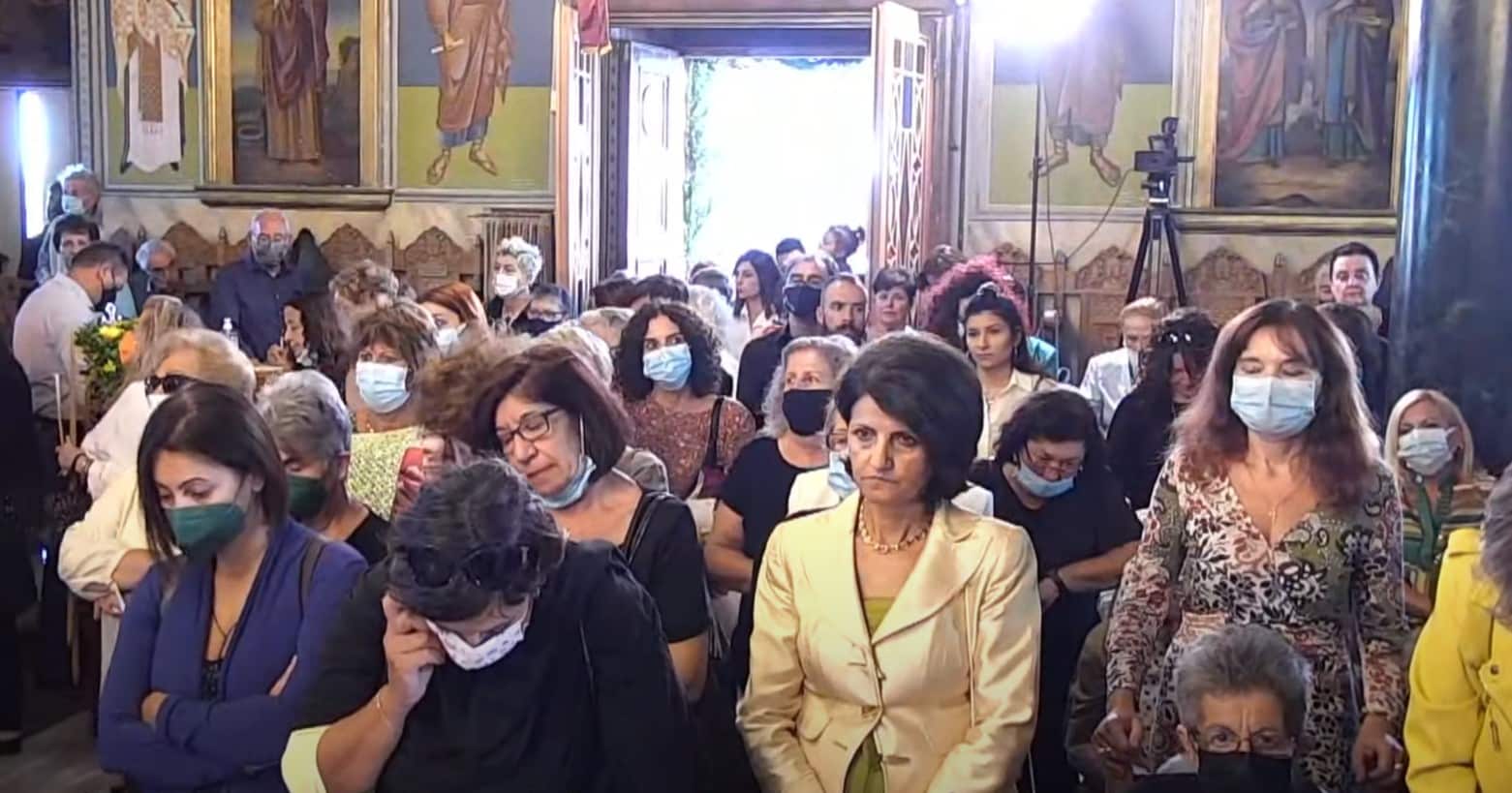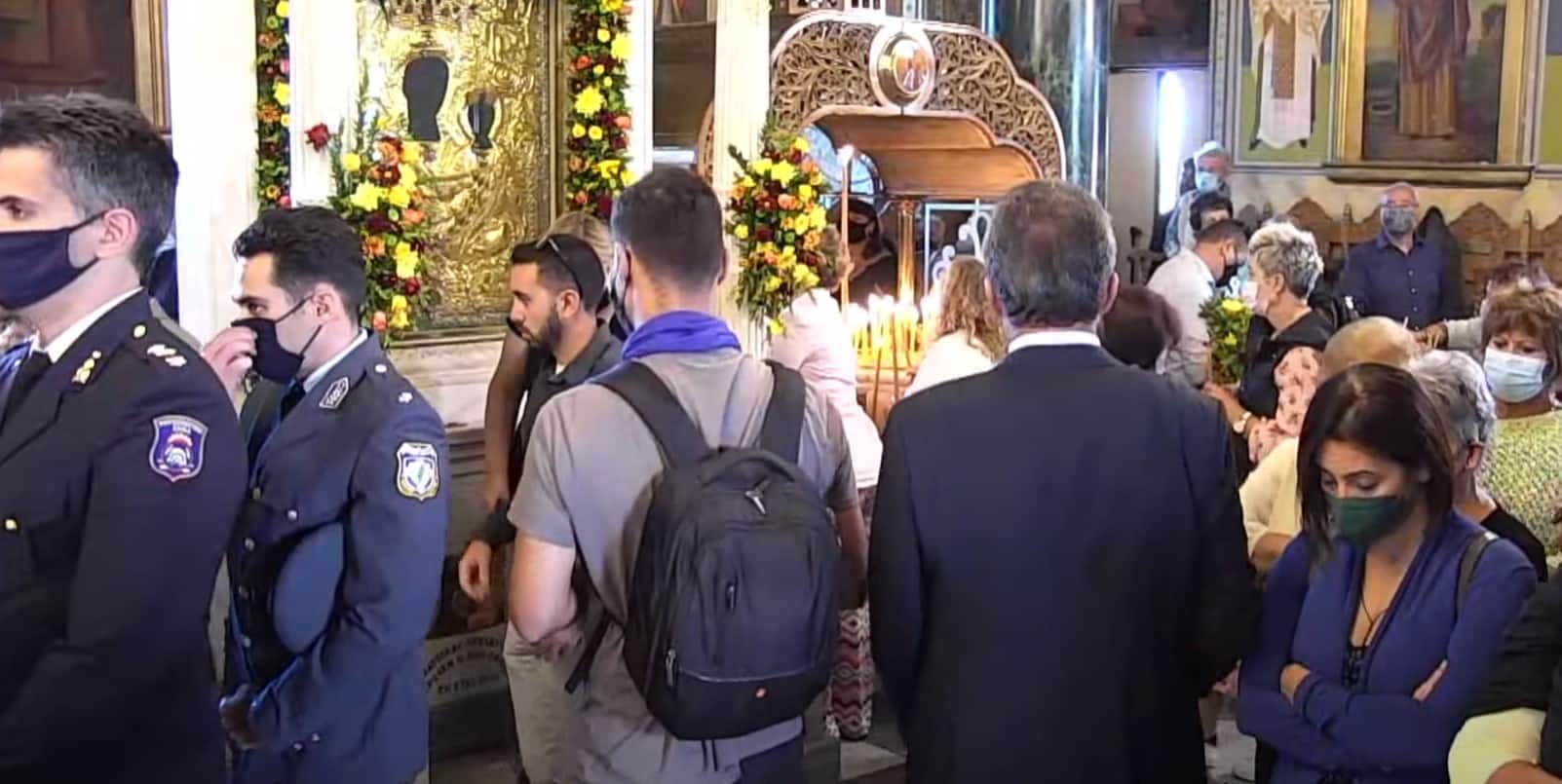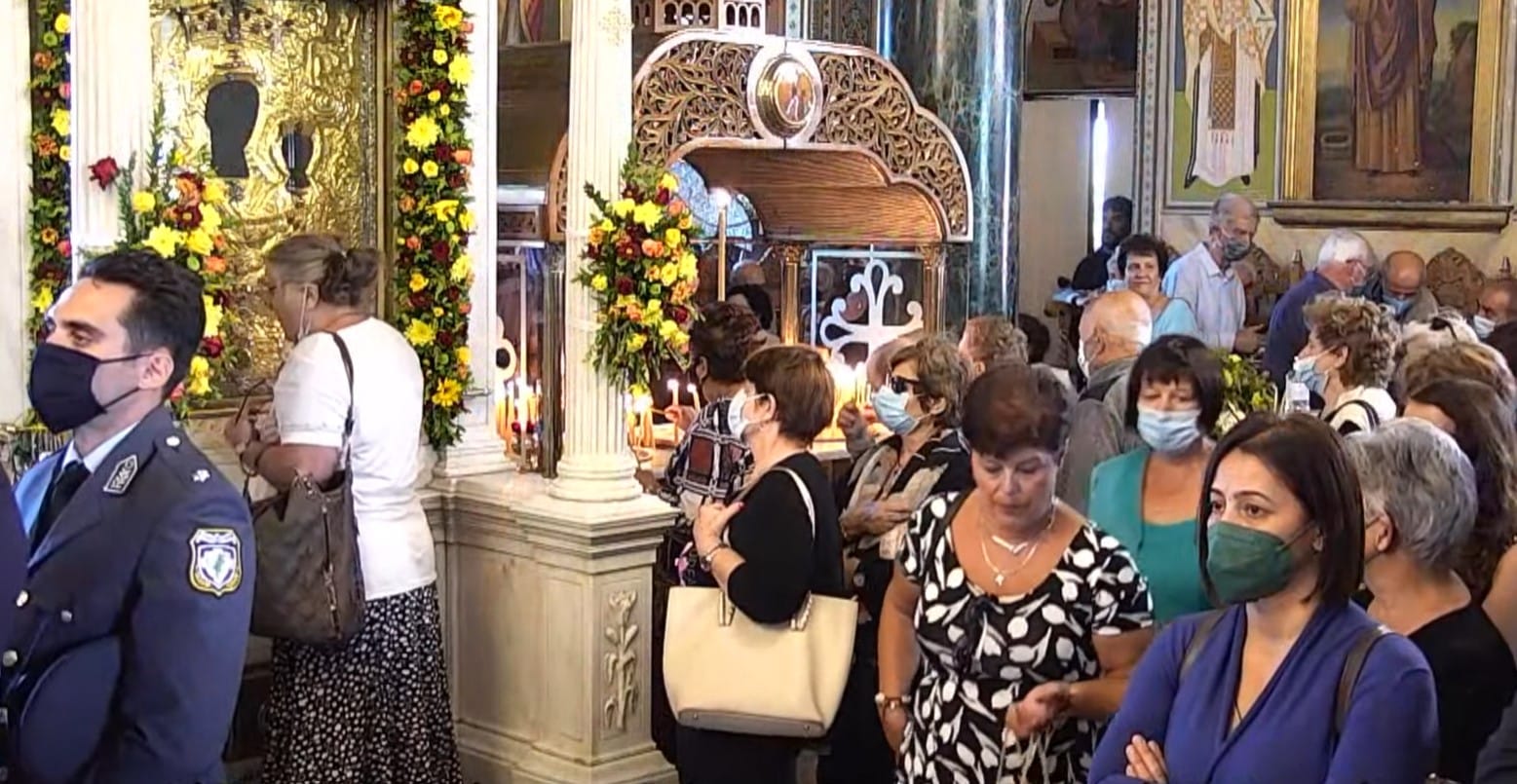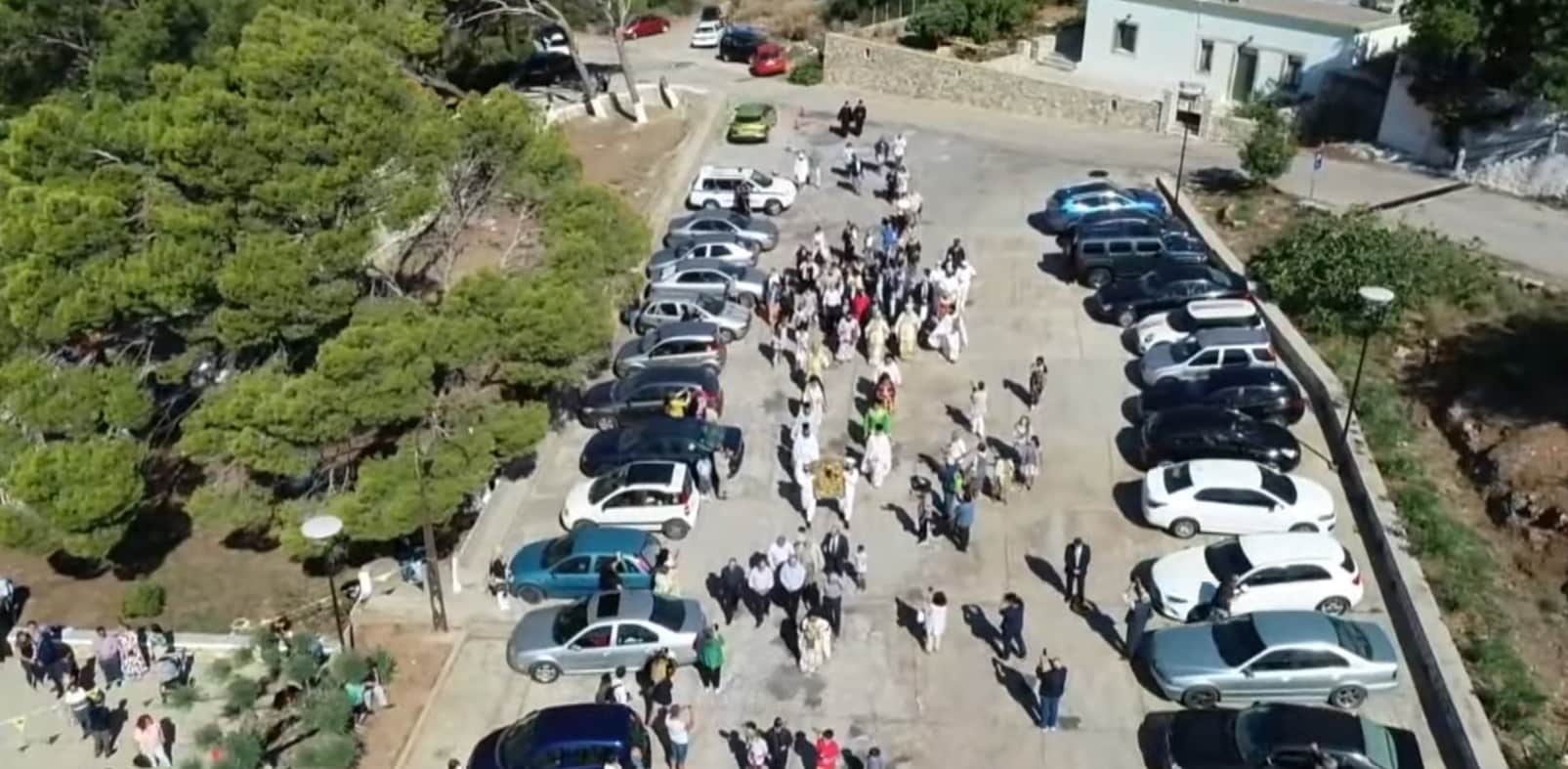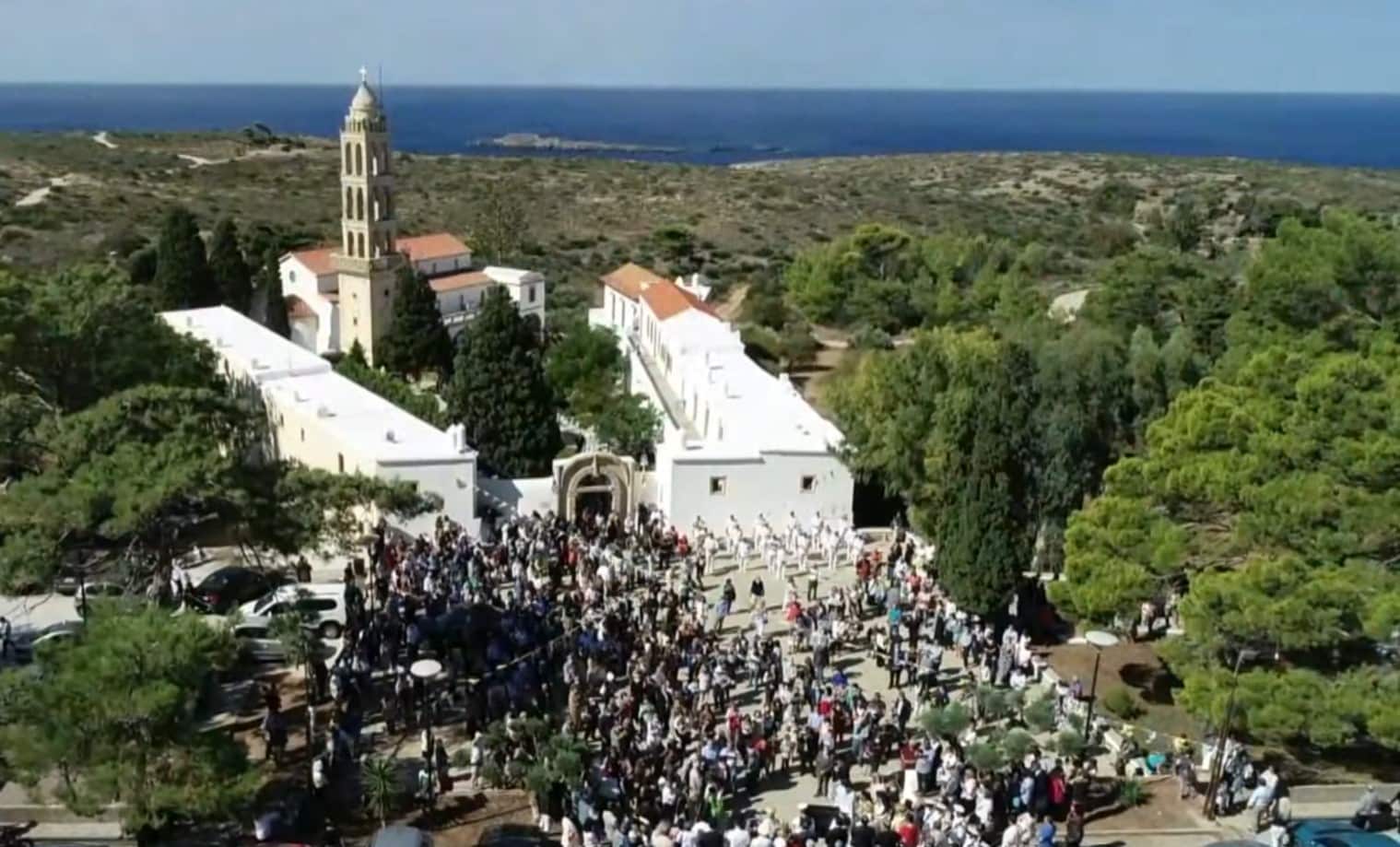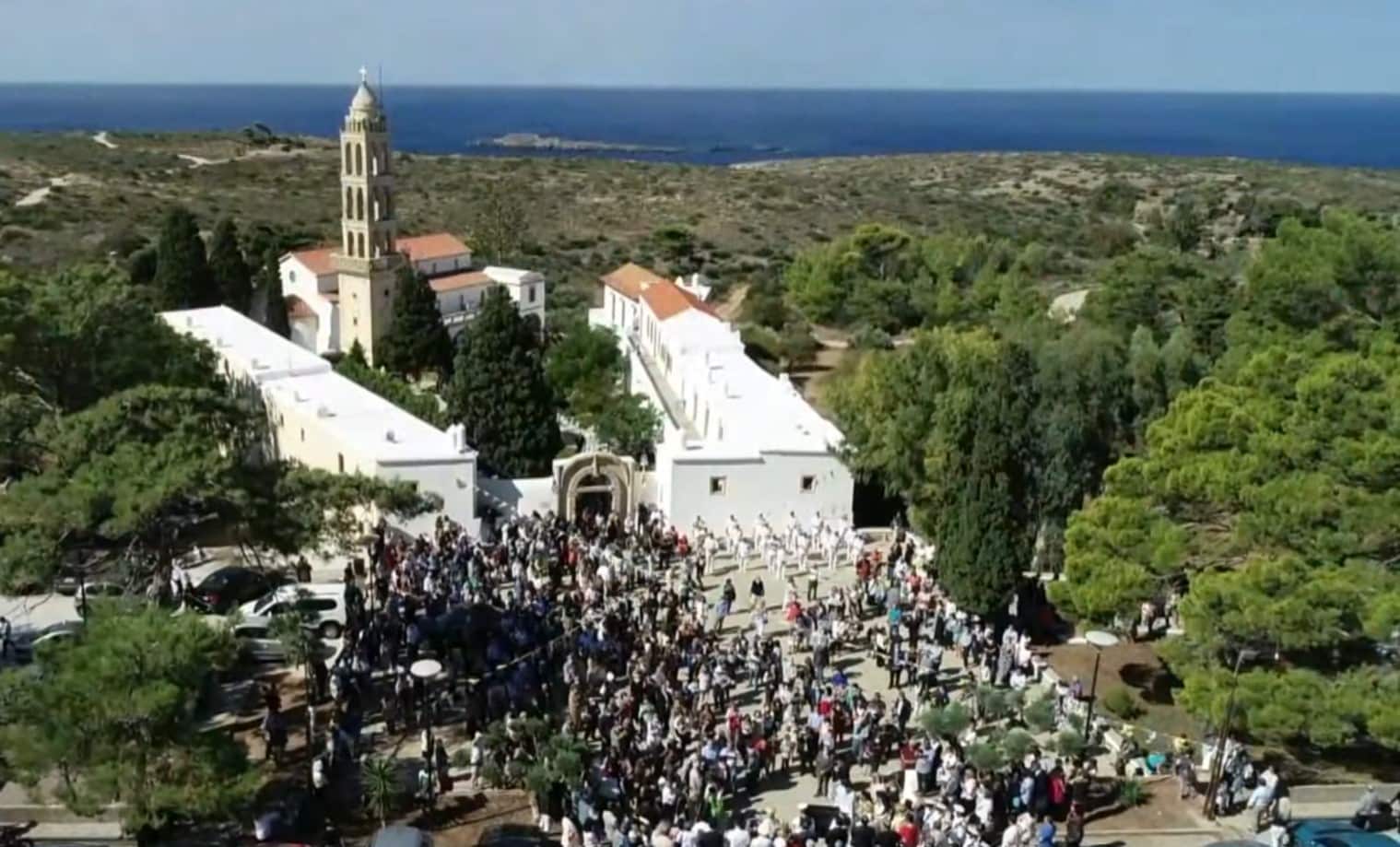
The Kythera celebrated this year the grace of Virgin Mary of Myrtidiotissa, patron saint of the island, of the Kytherians everywhere and of all Orthodox Christians everywhere.
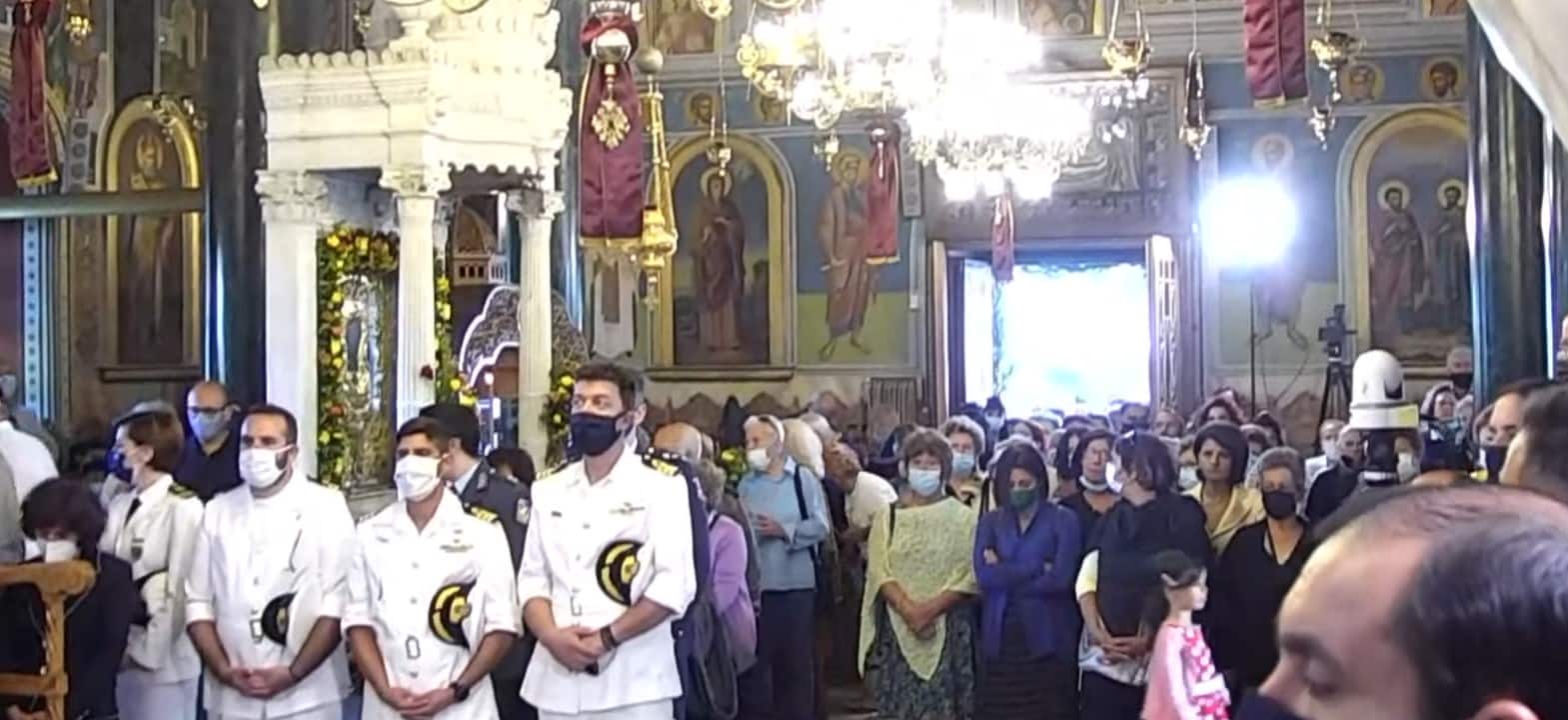
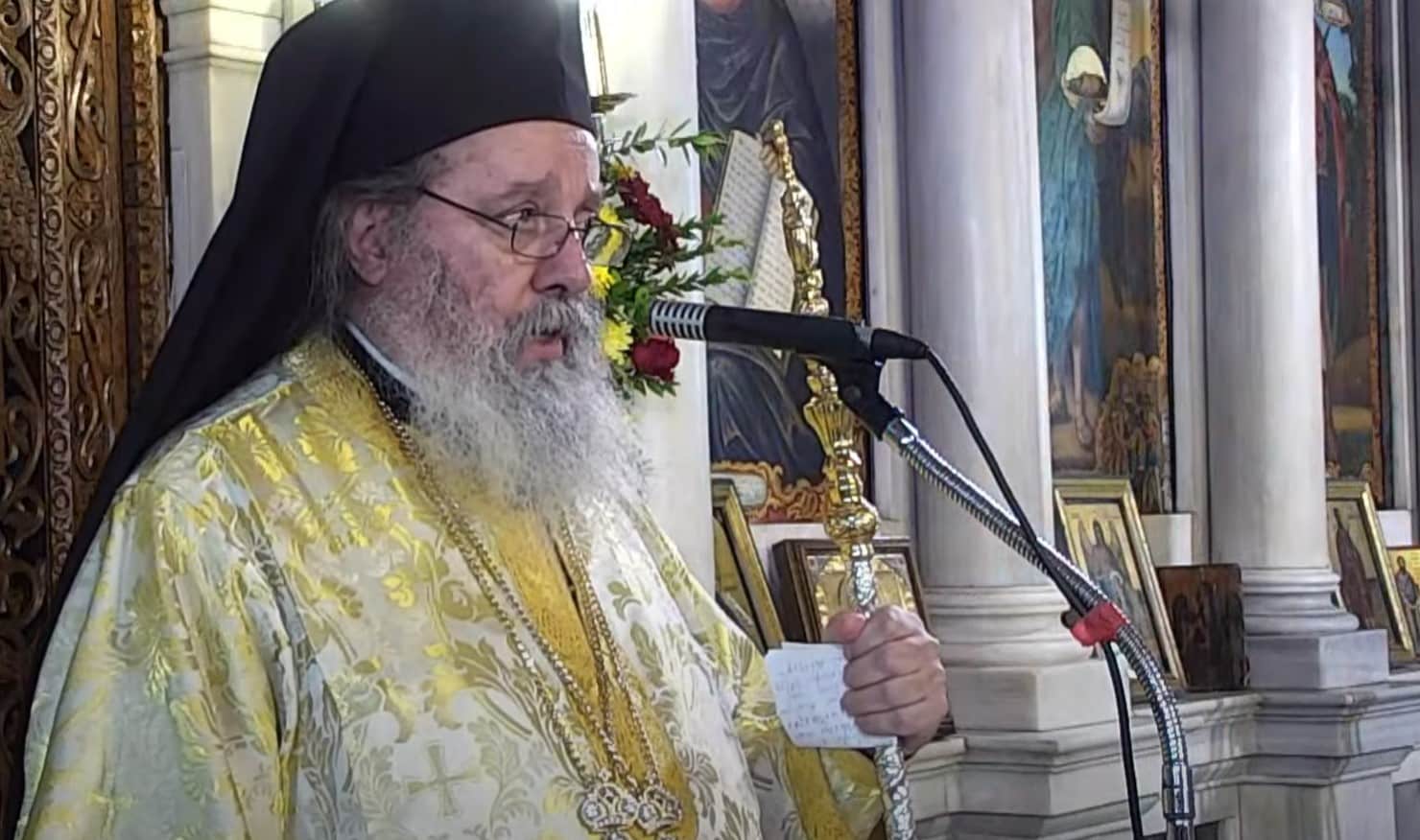
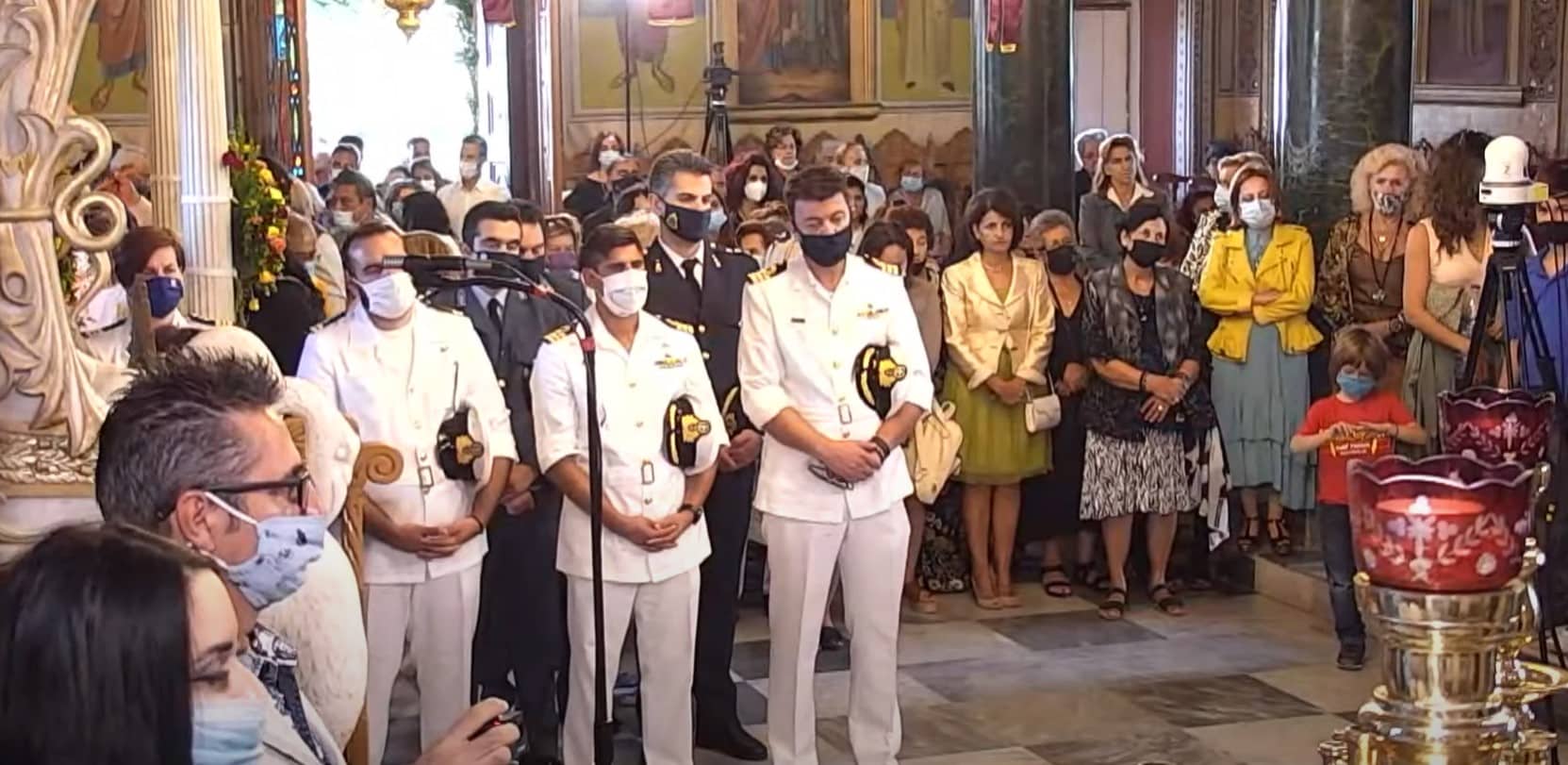
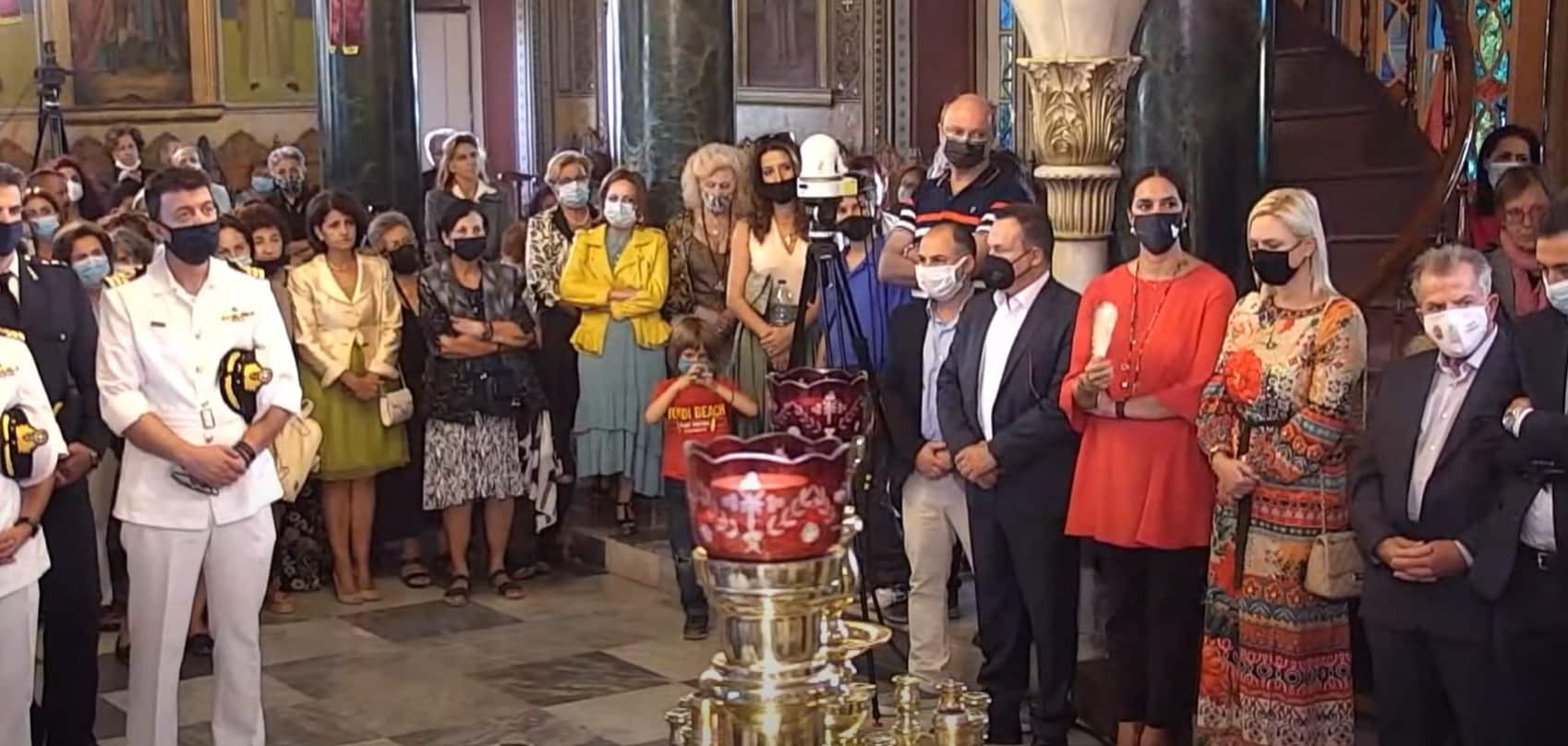
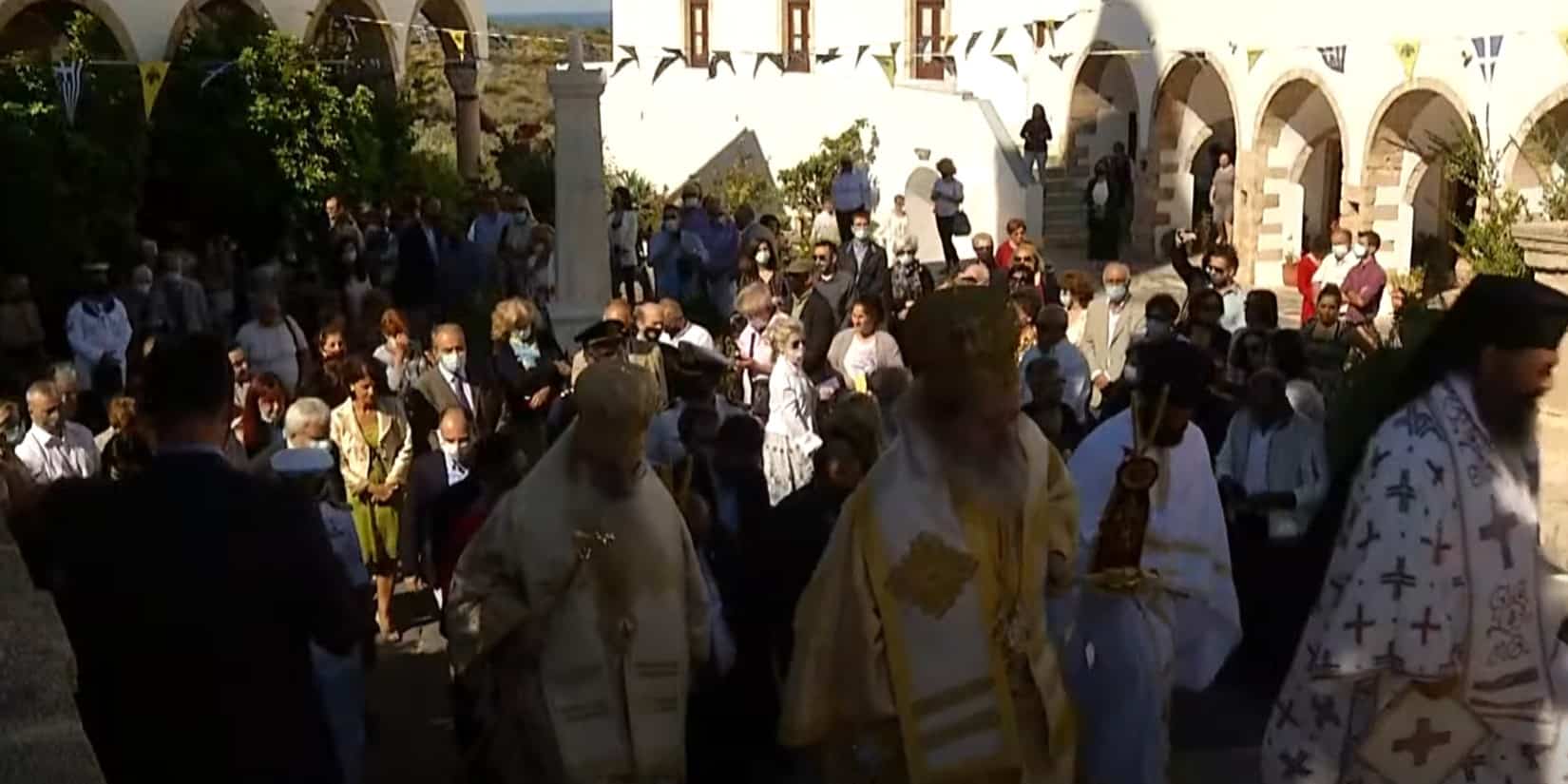
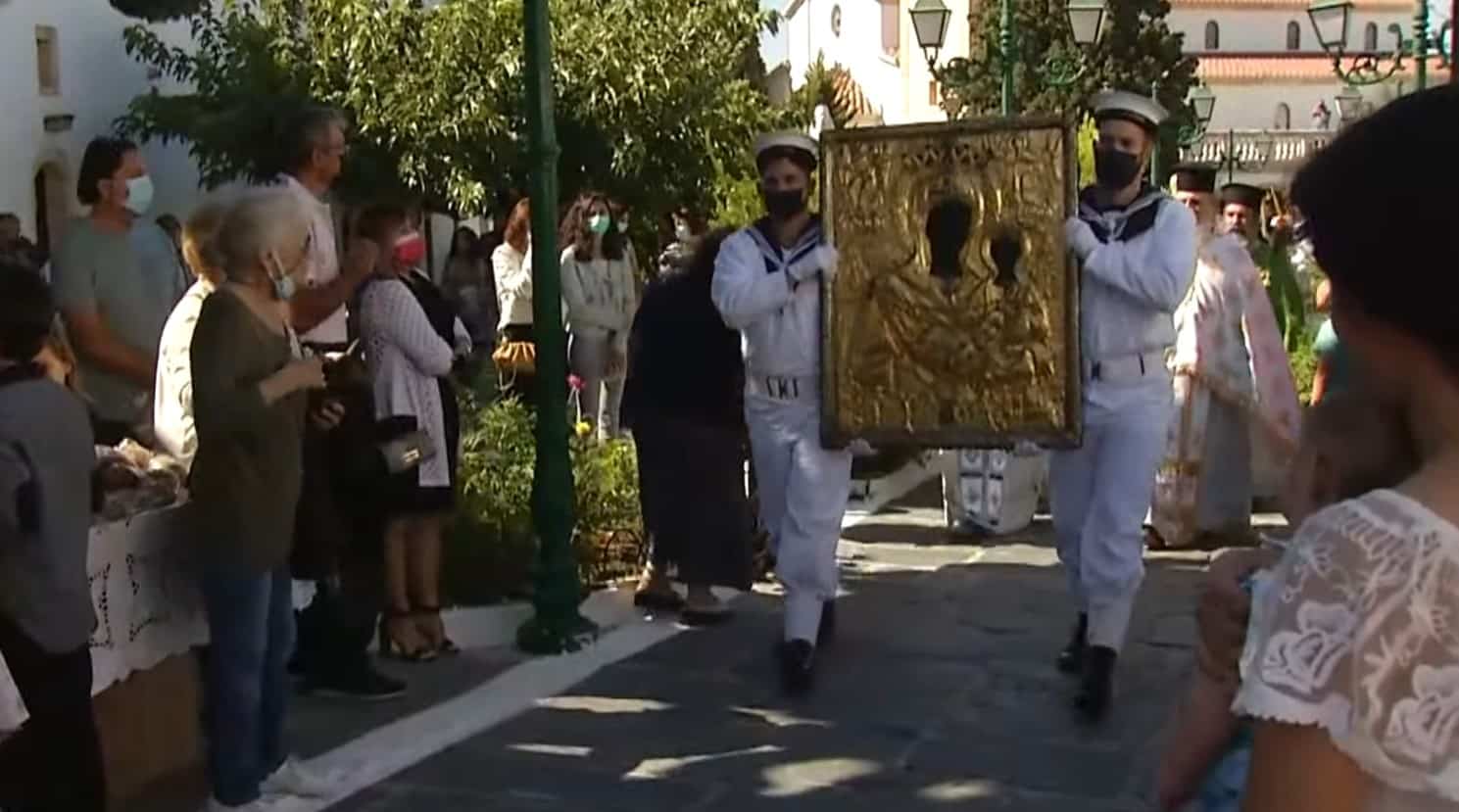
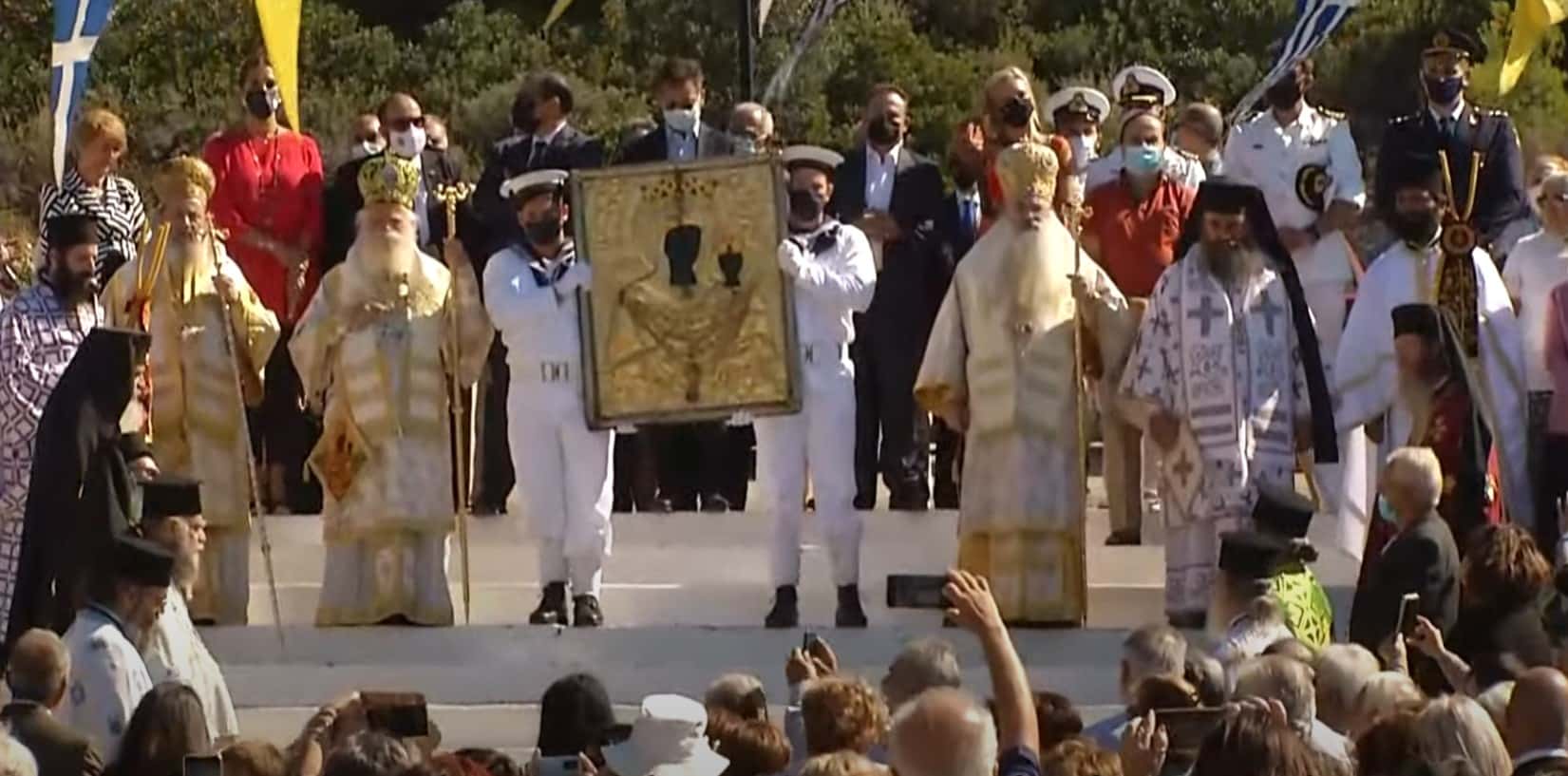
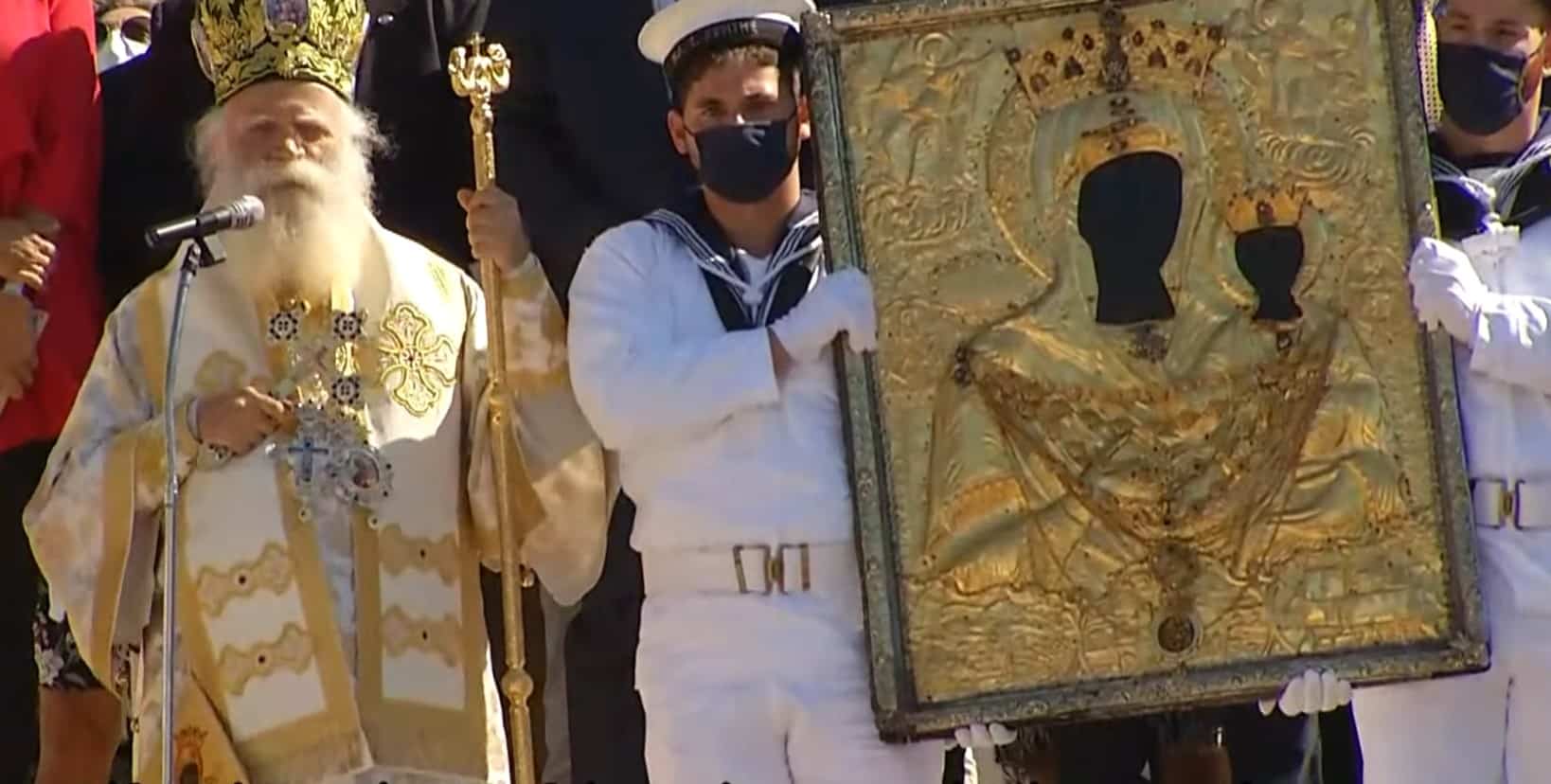
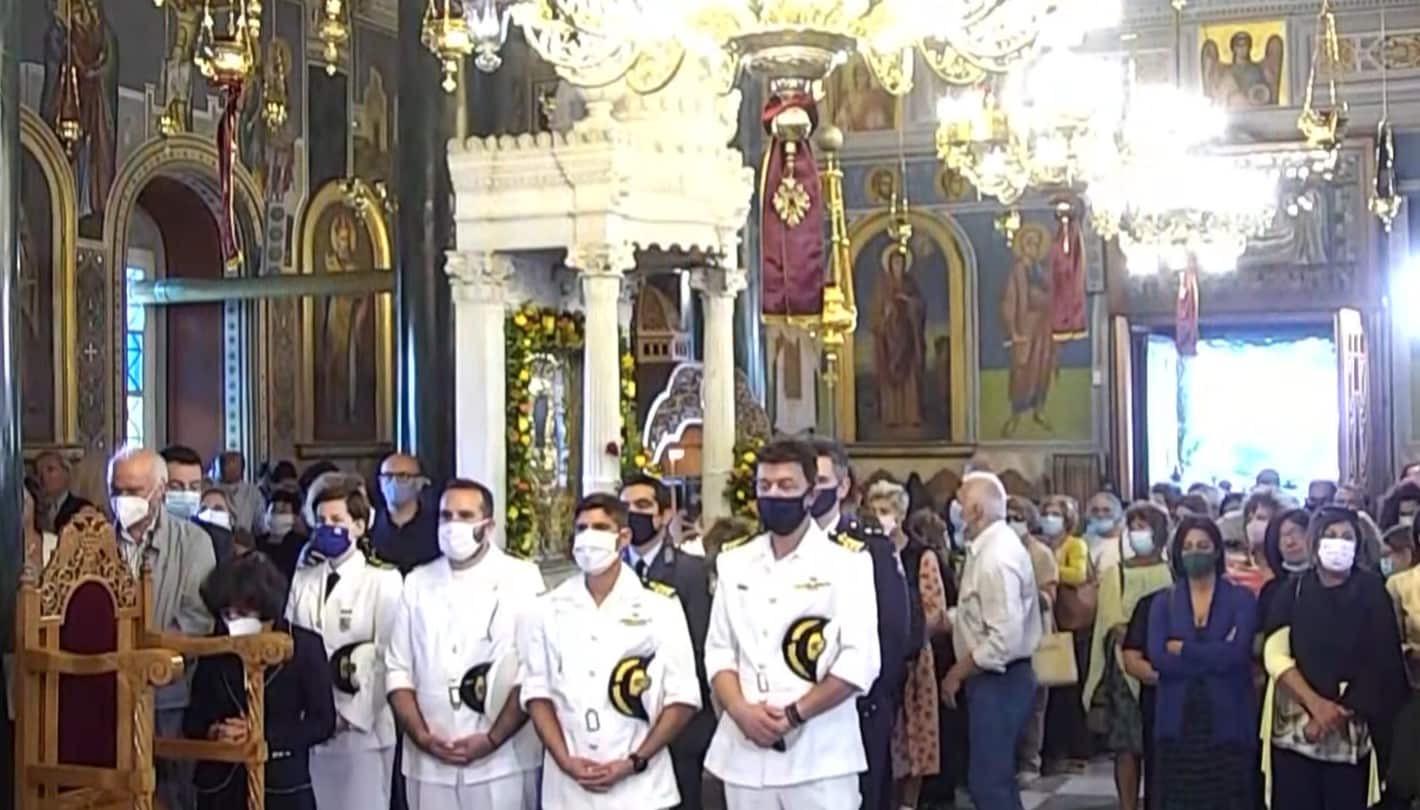
With the magnificence that befits the occasion, this year again the Arthros was celebrated, presided by His Grace Bishop Chrysostomos of Kernitsa, and the Panhellenic Divine Liturgy with the Archpriestly Collect, presided by the Archbishop of Axios His Eminence Bishop Seraphim of Kythera and Antikythera. Followed by the the procession of the Holy Icon of Our Lady of Myrtidosis.
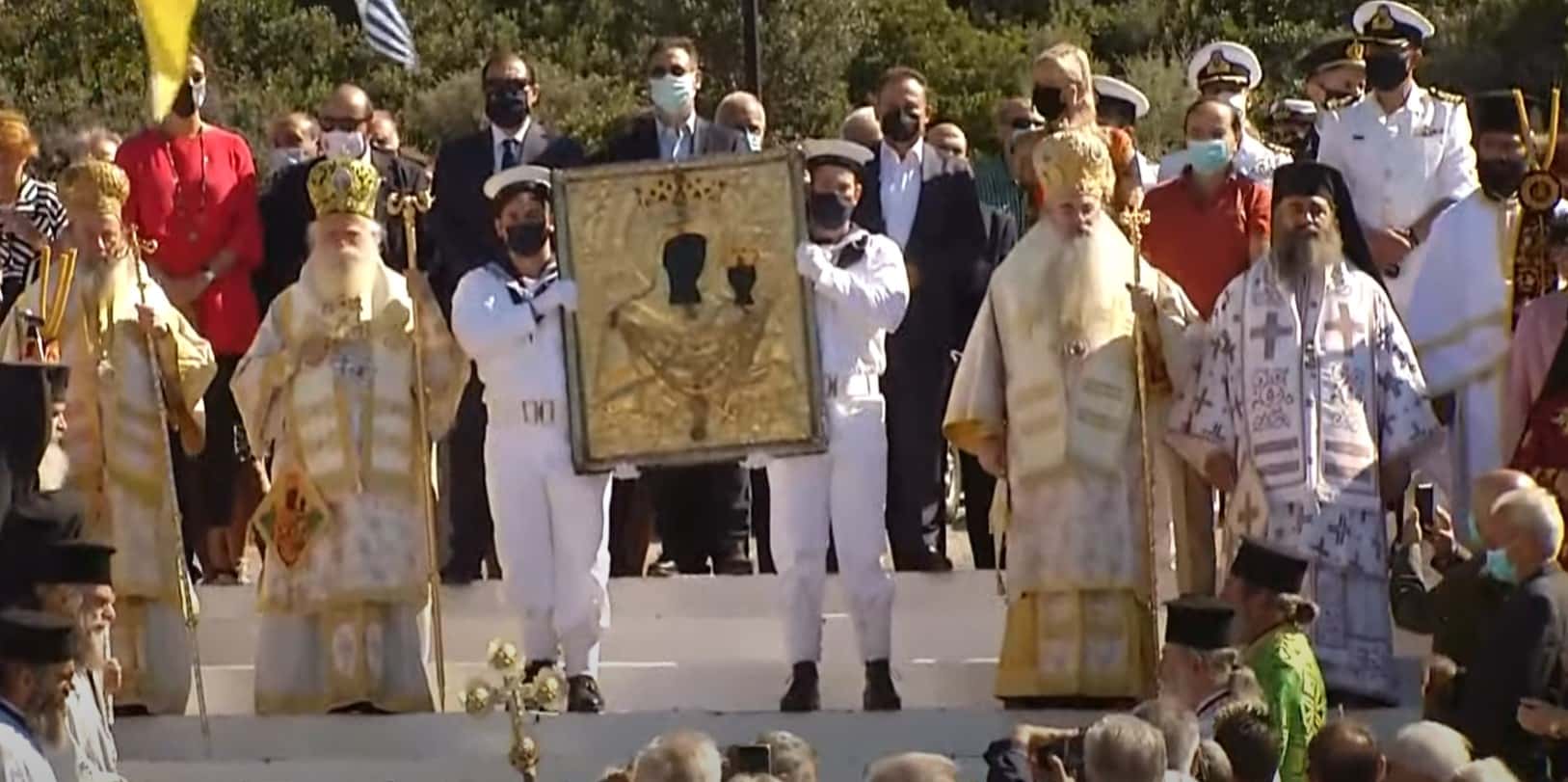
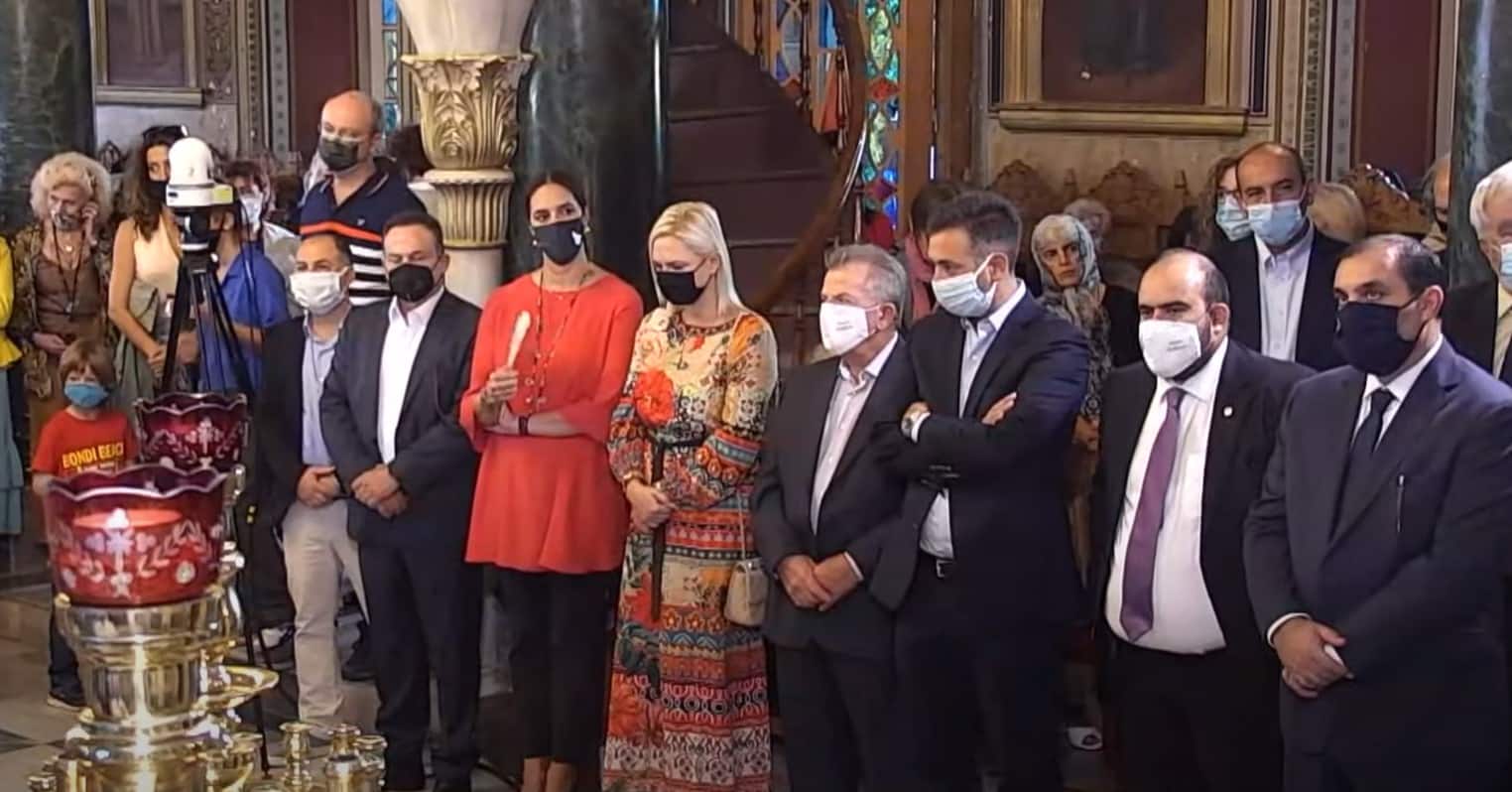
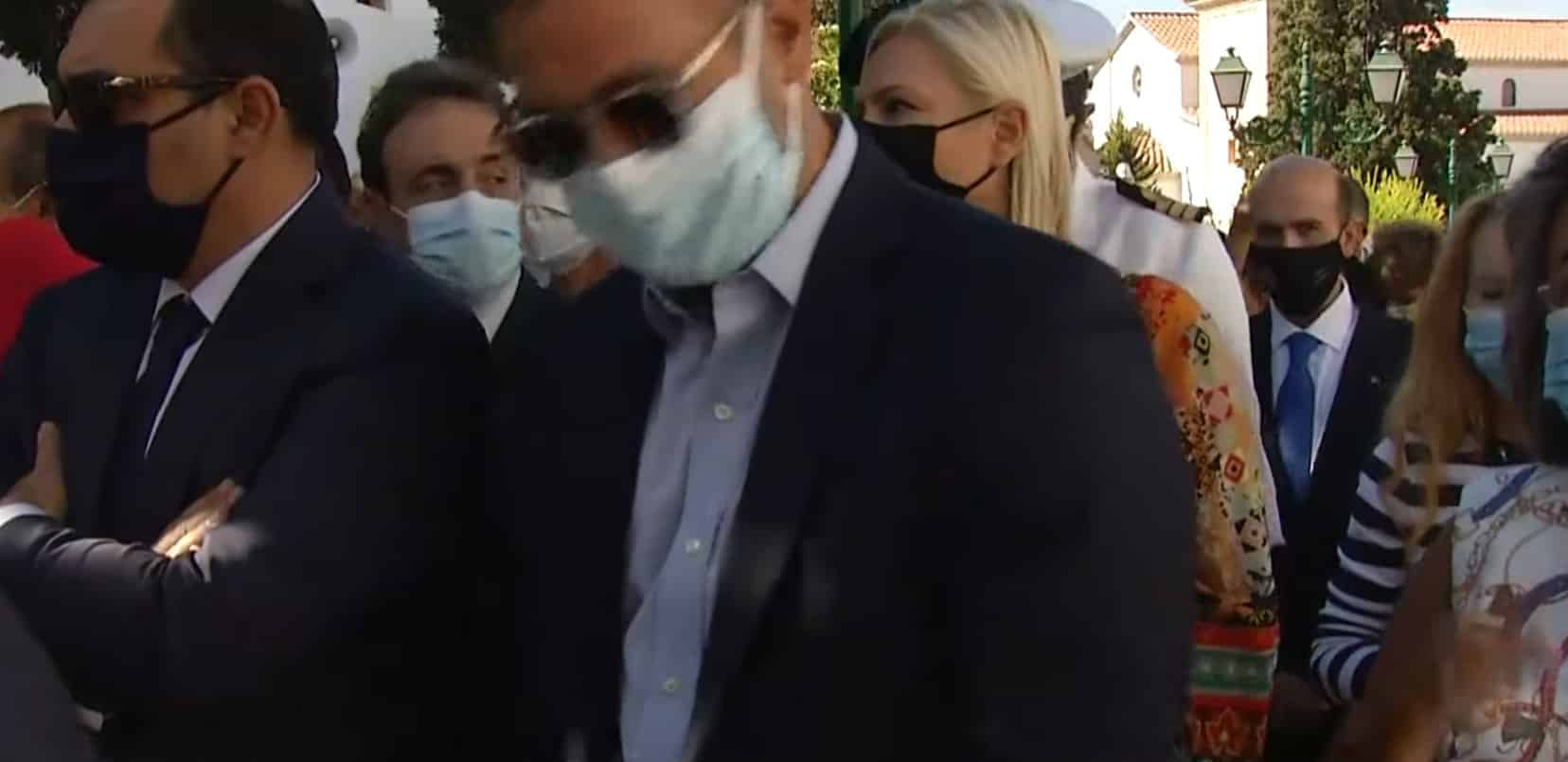
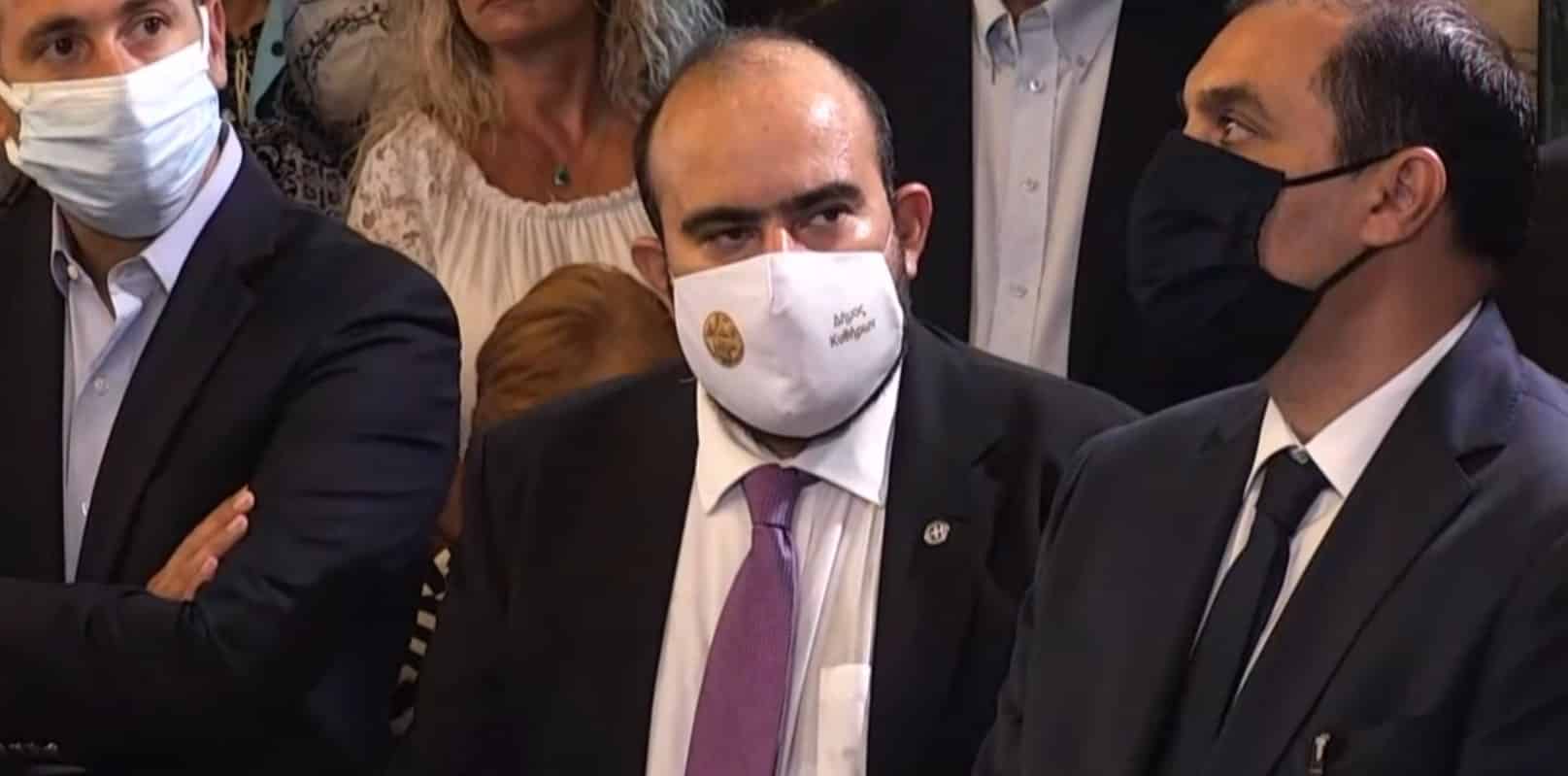
The Divine Liturgy was attended by the Deputy Minister of Shipping, Mr. Kostas Katsafados, the Vice-Regional Governor of the Islands, Vasso Theodorakopoulou - Bogri, the Mayor of Kythera, Efstratios Harhalakis, the Deputy Mayor, Charalambos Sougianis, the Deputy Mayor, George Kominos, the deputies of Piraeus and Islands, Noni Dounia, Yannis Melas and Nikolaos Manolakos, municipal councillors, heads of the security forces, representatives of local authorities and a large number of people.
The Holy Pilgrimage
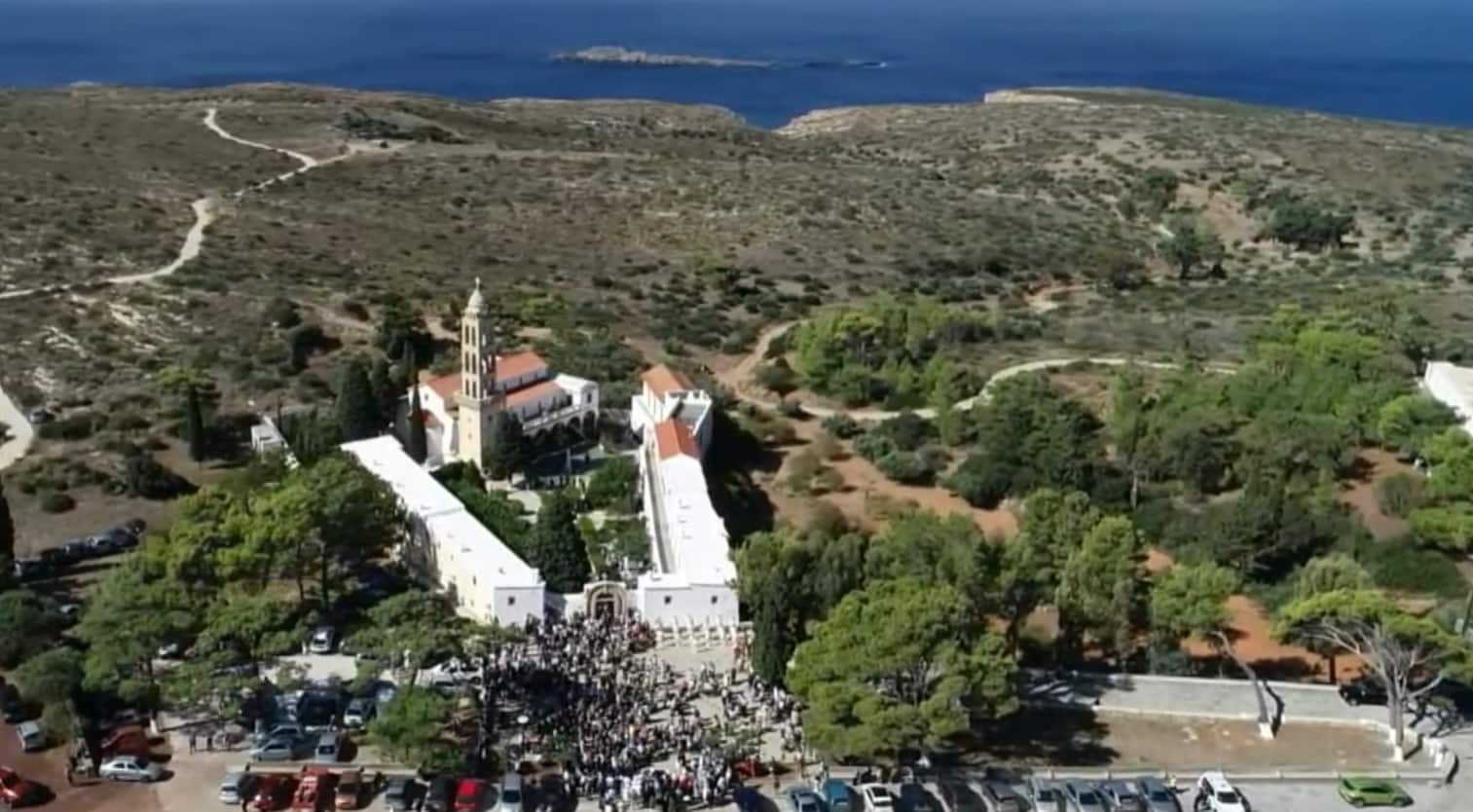
In the southwestern part of Kythera, at a distance of 8.5 km from Livadi, a village that preserves architectural samples and infrastructure works from the era of the English occupation, is built the holy pilgrimage of Panagia Myrtidiotissa.
The walled complex of the Myrtidia sanctuary, founded in the 19th century, consists of the katholikonion (a three-aisled basilica with a raised nave, narthex and narthex-gyneconite, on the lower level of which is the original church of the Virgin Mary), cells (arranged north and south of the katholikonion), where believers are accommodated for the fasting of the first fifteen days of August (the so-called Decapentism), the limestone bell tower with impressive arched formations on the fronts of its four storeys, to the north-east of the katholikon, and the single-room, arched-roofed chapel of the Holy Trinity (post-Byzantine period).
The original church of Panagia is adapted to the natural configuration of a rocky opening with a shallow niche to the north to accommodate the icon of Panagia Myrtidiotissa.
In the old katholikon there is an icon of the Virgin Mary of Myrtidiotissa with silver coating.
The newest katholikon in its present form (a three-aisled basilica with a marble iconostasis of 1856) was built by the abbot Agathangelos Kalligeros in the middle of the 19th century.
The miraculous icon
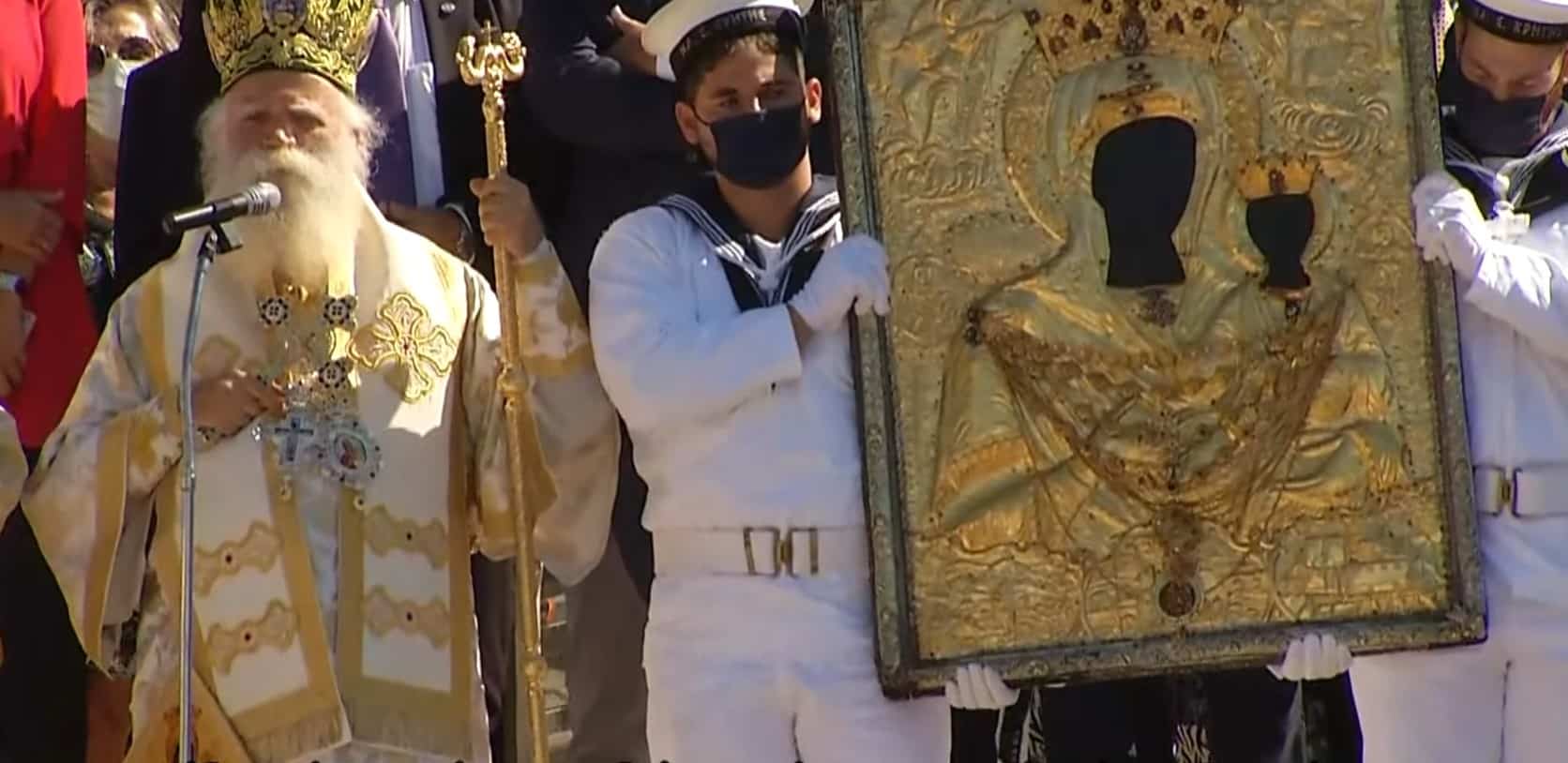
According to local tradition, the miraculous icon of the Virgin Mary of Myrtidiotissa was found by a shepherd in a deserted location full of myrtle trees (hence its name), either in 1160 or in the 15th century.
In this icon, initially «the features of the Theotokos and Christ were clearly visible up to the cisterns», but «over time it gradually acquired a dark colour».
It is most likely that the icon was created by the Evangelist Luke (1st century AD). On the site of the «find» the poor shepherd made a small chapel and devoted the rest of his life to its care. After the death of the pious shepherd, the care of the small church of Myrtidiotissa was taken over by the Monk Leontios, who with the financial help of Cypriots enlarged the original chapel a little and built around it a few cells for the hospitality of pilgrims.
But the multitude of pilgrims arriving from various places created the need for a large Temple. This difficult task of construction was begun with much zeal, efforts and fundraising by the active Hieromonk Agathangelos Kalligeros in 1841 A.D. and in sixteen years a magnificent complex consisting of a magnificent Church, a masterpiece towering bell tower and many hospitality cells was built.
The small Church of the «find», the Catholicos, as it is said, remained under the big Church, is kept in excellent condition and there is kept during the winter months the icon of the Virgin Mary that the love of the Cypriots kept in a gold lining, a true masterpiece made by the Cretan artist Nikolaos Spithakis in 1827 AD.
The lower part of the gold lining depicts three miracles: the miracle of the shepherd finding the icon, the miracle of the healing of the paralytus on 24 September (early 17th century) and the miracle of the saving of the fortress of Kythera from the thunderbolts (22 January 1829) during the storage of the icon of the Virgin Mary inside the fortress for fear of the pirates who were plaguing the Mediterranean.
The Holy Church celebrates on September 24, the day of the celebration of the miracle of the healing of the paralytic. In the Holy Church there are two chapels, one to the left of the Temple, dedicated to the Hosiarthe Martyr Elena (see 1 August) and the other to the right to Hosios Theodoros (see 12 May).
The miracles
According to tradition, on September 24 - 40 days after the Assumption - the Virgin Mary appeared to the shepherd and told him to look for the icon that had come to that place many years before.
The shepherd fell to the ground, full of awe, praying to the Virgin Mary. As soon as he got up and turned around, he saw the image on the branches of a myrtle tree. Crying with joy, he brought the icon home and told all his friends and relatives the story of finding the icon.
When he woke up the next day, the picture was missing and he was afraid that it had been stolen. With a heavy heart he returned with his sheep to the place where he had found it, but there he saw the icon again on the branches of the myrtle tree where he had first found it. Praising God, he took it home again, but at night the image disappeared as it had the first time. When the disappearance and reappearance of the image happened a third time, he understood that it was the will of the Mother of God that the image should remain where it had first been found.
It is worth noting that on the crown of the All-Seed Icon of the Virgin Mary of Myrtidiotissa, there is an adapted «Precious diamond-shaped gold jewel in the shape of a crescent moon». Let us remember its history:
According to what the late Sophocles Kaloytsis, the hymn writer of Myrtidiotissa, saved (sequence Myrtidiotissa, edition 5, p. 149), there was once in Kythera, a rich and prominent Turk, settled in Turkish-occupied Crete, who was a Mohammedan.
One day he noticed an unusual gathering of people in the square of the Metropolitan Church of Esteromenos in Chora.
He asked what was going on and was told that the Island was plagued by months of drought and that is why a Litany of the Holy Icon of Myrtidiotissa would be held, which had already come down from the castle that was guarded at the time and was inside the Crucifix.
But the sky was blue and there was not a trace of cloud on the horizon.
The Turk made this action easy because logic said that it would not bring results. And he was so sure of this that he declared that if rain followed the Litany, he would dedicate the gold jewel of the crescent moon he had with him to the Holy Icon.
The Litany took place with devotion and the Kythirians begged for the solution of the drought. And the miracle happened. As soon as the Holy Procession returned to the Temple, it began to rain rapidly.
The irreligious man kept his promise and dedicated the jewel to the Virgin Mary.
When this happened is not mentioned. Perhaps it was before 1837 AD. At that time the gold plating of the Icon was done by the artist Nikolaos Spithakis and he probably made the adjustment of the crescent to the crown of the Virgin Mary «In eternal memory of the miracle of the solution of the drought».
It is therefore likely that the dedication preceded 1837 AD.
The great feast of Panagia in Kythera
The great feast of Panagia in Kythera takes place on 24 September, when Panagia Myrtidiotissa is celebrated.
The holy pilgrimage of Myrtidia is connected with the top religious custom of Kytheria, the procession of the icon of the Virgin Mary of Myrtidiotissa, the «gyra», as the Tsirigians call it.
The procession begins on the Sunday of Orthodoxy, when the icon arrives from the holy pilgrimage in Chora.
There the icon is circumambulated and a feast follows.
Then the icon leaves Chora and, after a long procession through the villages of the island (in each village there is a festival on the day of the arrival of the icon), it ends up in the holy pilgrimage.
Myrtidiotissa Agni blessed,
The glory of the Cypriots, and the glory of the Cypriots, and the glory of the Cypriots,
And of the faithful of the land, the protection of the host, thou art there.
of the virgins the aglaism,
And of mothers the pattern and the pattern of the mothers and of the mothers.
Let us keep thee, and let us cover thy suppliant's face.
The Saviour that hath done and God,
of all dangers and calamities,
heresy of delusion,
of mania ripping,
In the meantime, you are exonerated,
Myrtidiot.